For Philippe-Aubert Gauthier, technology is never simply a tool. It is something shaped by history and culture. His practice moves between sound art, music, engineering, physics and critical studies of technology, often using one field to question another. What emerges is not a neat combination of disciplines, but an ongoing process of looking more closely at how things came to be and asking what else they could become.
His interest in this began early. As a teenager, he drew, made music and took bass guitar lessons. When it came time to choose a university path, he saw a way to keep both interests alive. He studied mechanical engineering because the physics of sound was part of the discipline, while his deeper motivation was to make sound art and music informed by science.
It was a strategic decision, but not one without purpose. “My goal was to really make art with science and technology as primary material,” he explains. He wanted to understand engineering from the inside, not simply represent it from an artistic distance.
That distinction has shaped his approach to art-science ever since.
Technology Is Never Just Technology
One of Philippe-Aubert’s most compelling ideas is that technology does not remain fixed. He is particularly interested in technologies that are either very old or very new because, as he puts it, they are “not crystallized” in terms of social practice.
When a new technology arrives, we have not yet decided exactly what it means or how it belongs in our lives. The same can happen with an older technology once it falls out of everyday use. A VHS player, for example, no longer carries the same established expectations as a smartphone.
This space between uses interests him because it creates room for questions.
His thinking is influenced by media archaeology, a way of examining technology through the histories that produced it. Even something as ordinary as the shift key on a keyboard carries traces of earlier technologies. Its upward arrow makes little sense until you know that typewriters once physically shifted the mechanism to produce uppercase letters.
These details reveal something larger. Technology contains histories, assumptions and decisions that can become invisible once we get used to them.
For Philippe-Aubert, understanding those histories is a way of becoming more empowered. Without that knowledge, it is easy to accept technology as inevitable. “You’re more like just going with the consequence of technology,” he says. Art can interrupt that automatic relationship by making the systems behind technology visible again.
This is where his practice becomes distinctly art-science. Scientific and technical knowledge provide materials for making, while artistic practice creates space to question the systems those materials belong to.
Making, Listening and Playing with Technology
Philippe-Aubert’s relationship with technology is also deeply hands-on. His practice has moved through computer-based music, modular synthesizers, 3D sound, computer graphics and older electronic instruments.
One project involved building a replica of a Roland 909 drum machine from more than 1,000 pieces. The process took thousands of hours to recreate a sound that had become almost ordinary through decades of popular music.
Yet the point was not simply to reproduce the sound. Building the instrument became a way of understanding how electronics were assembled during a particular technological period. He describes it as a kind of “meditative electronics”, a way of thinking through the material history of the technology itself.
That patience matters. Philippe-Aubert has deliberately moved back toward hardware after years of working with computer-based music. Modular synthesizers allow him to connect systems, signals and feedbacks physically rather than only through software.
The process becomes exploratory. Technology is not just executing a predetermined idea. It becomes part of the thinking.
A recent performance with artist Tanya St-Pierre offers another example. They used scanned paper collages based on the history of photography as raw visual material. The images controlled the sound while Philippe-Aubert performed the audio live. The work happened to be presented alongside pieces heavily using AI, creating an unexpected contrast.
At the end of the performance, they included credits naming the photographic sources they had used. The gesture was subtle but deliberate. It invited audiences to think about attribution and the source material behind technological systems without turning the performance into a lecture.
For Philippe-Aubert, this is an important balance. He wants the work to remain enjoyable. People can move, smile or simply listen. But ideally, something stays with them afterwards. A joke, a reference or a sudden change can create a small opening for reflection.
He describes this as keeping a “fun critical” approach rather than making the work overly moralistic. If an artwork leaves people feeling only depressed, it may not encourage them to act.
Art-Science Requires More Than Collaboration
Philippe-Aubert’s perspective also challenges a common assumption about interdisciplinary work. Collaboration can create valuable exchanges between fields, but he argues that there is a limit to what can happen when each person only understands their own discipline.
He recalls artists visiting an engineering laboratory and encountering the word “resonance”. The artists brought their own associations to the term, while engineers understood it as a specific physical phenomenon. The conversation could be interesting, but the scientific understanding of resonance itself did not necessarily change.
For him, stronger interdisciplinary work requires depth.
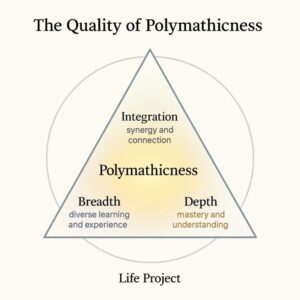
He suggests that people interested in art-science should take the time to become genuinely knowledgeable in more than one field. His own experience involved years of scientific study alongside artistic practice. He says he studied sound for six or eight years before feeling comfortable claiming expertise.
That depth gives an interdisciplinary practitioner more than credibility. It changes what they are capable of making and questioning.
It also changes collaboration. Instead of one person translating their discipline for another, collaborators can begin to work from a more shared foundation.
This is one reason Philippe-Aubert is critical of the speed of contemporary research culture. Grants, publications and productivity metrics can encourage people to form collaborations before they have had enough time to understand one another or even establish whether they share meaningful questions.
He is drawn instead to the idea of slow research. Research, he points out, is essentially a process of continuing to search. You ask a question, find an answer, realize that the answer is incomplete and continue searching.
For interdisciplinary practitioners, that patience can be especially valuable.
Don’t Let Technology Decide Your Future
Perhaps the most encouraging part of Philippe-Aubert’s approach is that his critical perspective is not an argument against technology. It is an argument for understanding it.
He encourages people coming from science or engineering to read the humanities around their fields, including science and technology studies. Understanding the social history and power relationships surrounding technology can change how we see the systems we work within.
He calls this part of taking control of our “digital destiny”.
The same principle applies to art-science. Interdisciplinarity does not have to mean finding a perfect balance between two identities. It can mean becoming curious enough to study deeply, make things, question assumptions and allow one field to change how you see another.
Technology does not crystallize. Neither should we.
The tools around us will continue to change, but so can our relationship with them. Philippe-Aubert’s practice offers a reminder that we do not have to simply adapt to whatever comes next. We can study where it came from, question why it exists and use what we learn to imagine what might come after it.
See Philippe-Aubert’s full episode here