Our recent article, The Myth Of The Polymath (Adams, 2026), observes two trends that emerge by looking across certain domains of the scientific literature, mainstream news coverage and developments across social media.
Over the past two decades, there has been growing interest in interdisciplinarity and, particularly, polymathy research. As society continues to experience shifts in how we define careers, expertise, and professional identities, increasingly diverse and interconnected career trajectories are reshaping the way we relate to our work. These societal changes may seem unrelated, but The Myth of the Polymath suggests there may be a deeper connection.
We’ve followed up this idea in a conversation with Michael Araki about his research and the role of polymathy in shaping an interdisciplinary way of being, exploring how diverse experiences can inform new forms of creativity and discovery.
For many people, the idea of being a polymath feels distant. It brings to mind famous historical figures or the rare individuals who seem to master everything. But for Michael Araki, polymathy is not about becoming a mythical figure who knows everything. It is about developing a way of living where curiosity, knowledge and practice continuously interact.
His work explores a question that many interdisciplinary thinkers quietly carry: how do we honour multiple interests without feeling pressured to choose only one? For Araki, the answer is not about abandoning depth for variety. It is about learning how different parts of ourselves can inform each other over time.
“Polymath is not only about that,” Araki explains. “It is about depth in your lived experience” and how that experience can become useful in another domain.
This perspective shifts polymathy away from being a title someone earns and towards being an active process. It becomes less about saying “I am a polymath” and more about recognizing a pattern of thinking: a person who learns deeply, explores broadly and searches for meaningful connections.
Polymathy as a Way of Thinking
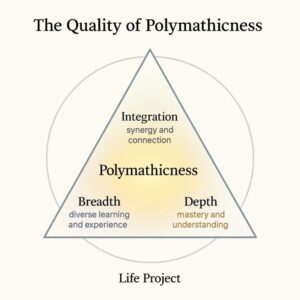
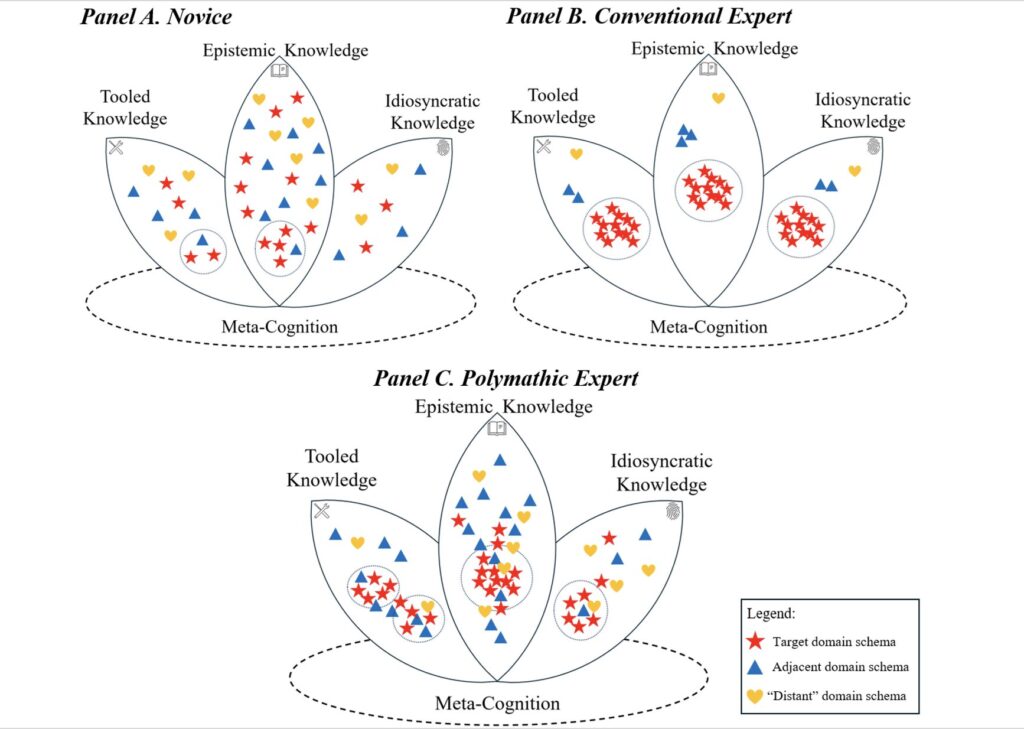
Araki’s research centres around three dimensions of polymathy: breadth, depth and integration.
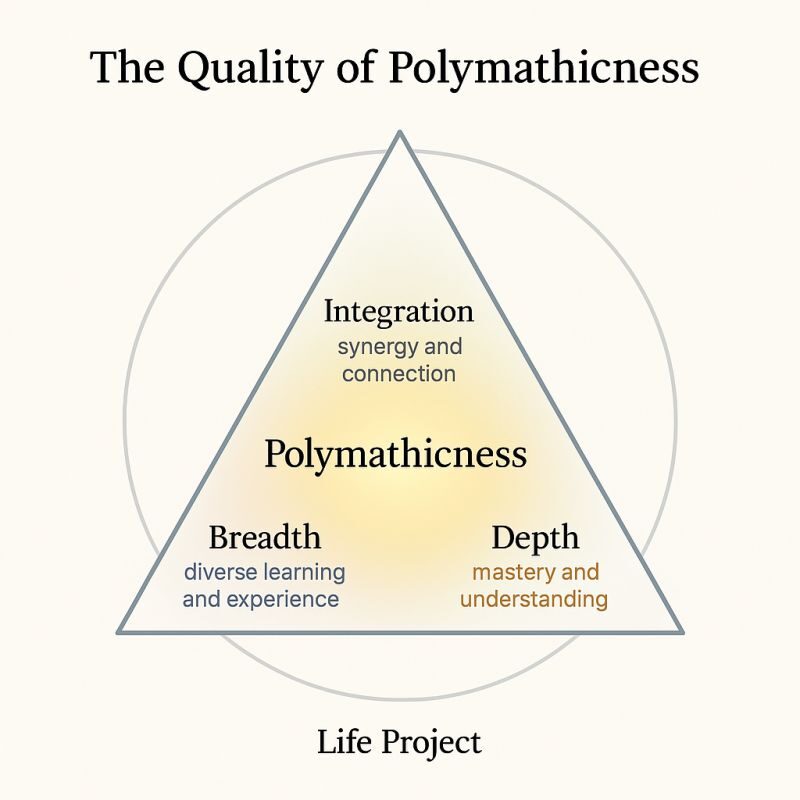
Outlined in The Myth of The Polymath, it is worth reiterating here that breadth is the ability to explore multiple domains. Depth is the commitment to developing meaningful expertise. Integration is the ability to combine ideas, skills, and experiences in ways that are productive rather than passive. The third part is where many people struggle. Having many interests is not automatically polymathy. The challenge is understanding how those interests interact.
“Most of the combinations are going to be either useless or false positives,” Araki says. “They will look like they will lead to something, but they will not work, really.”
This is an important part of his theory. Interdisciplinary thinking is not simply collecting interests. It requires experimentation, patience and a willingness to discover which connections create something new. Araki describes integration as unfolding across three related facets. First, people connect ideas from different domains, generating new perspectives and insights. Second, they learn to balance and find synergies among their daily activities and ongoing projects, so that different pursuits reinforce rather than compete with one another. Finally, this process culminates in making a productive contribution to society by offering something uniquely their own, a contribution that emerges naturally from successfully integrating ideas, interests, and activities. In this way, integration develops across different levels: from connecting concepts, to aligning one’s networks of enterprise, to creating meaningful value in the broader world.
A person does not need to have everything figured out from the beginning, and he says it is rare to claim polymathy at a young age. Polymathy develops through time and practice, making the outputs of a person’s learning journey understandable in hindsight, when years of exploration begin to form a wider perspective and a unique way of creating.
Can Polymathy Be Taught?
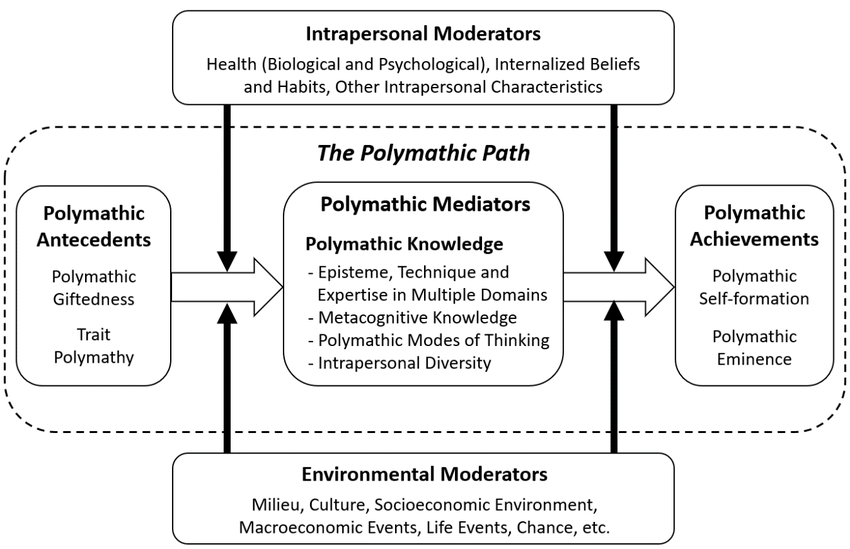
One of the most encouraging parts of Araki’s perspective is that polymathy is not reserved for a small group of exceptional people. He challenges the idea that polymaths are simply born with unusual abilities. Instead, he sees polymathy as something that can be supported through environments that allow curiosity and exploration.
However, he also acknowledges that the process requires work. “Education with the qualities ascribed from polymath research, breadth, depth and integration, is a powerful thing,” he explains, but making it work requires more than just having ideas. Araki compares this to entrepreneurship. An idea is only the beginning. The difficult part is testing it, refining it and learning through failure. This makes polymathy less like a destination and more like a lifelong practice.
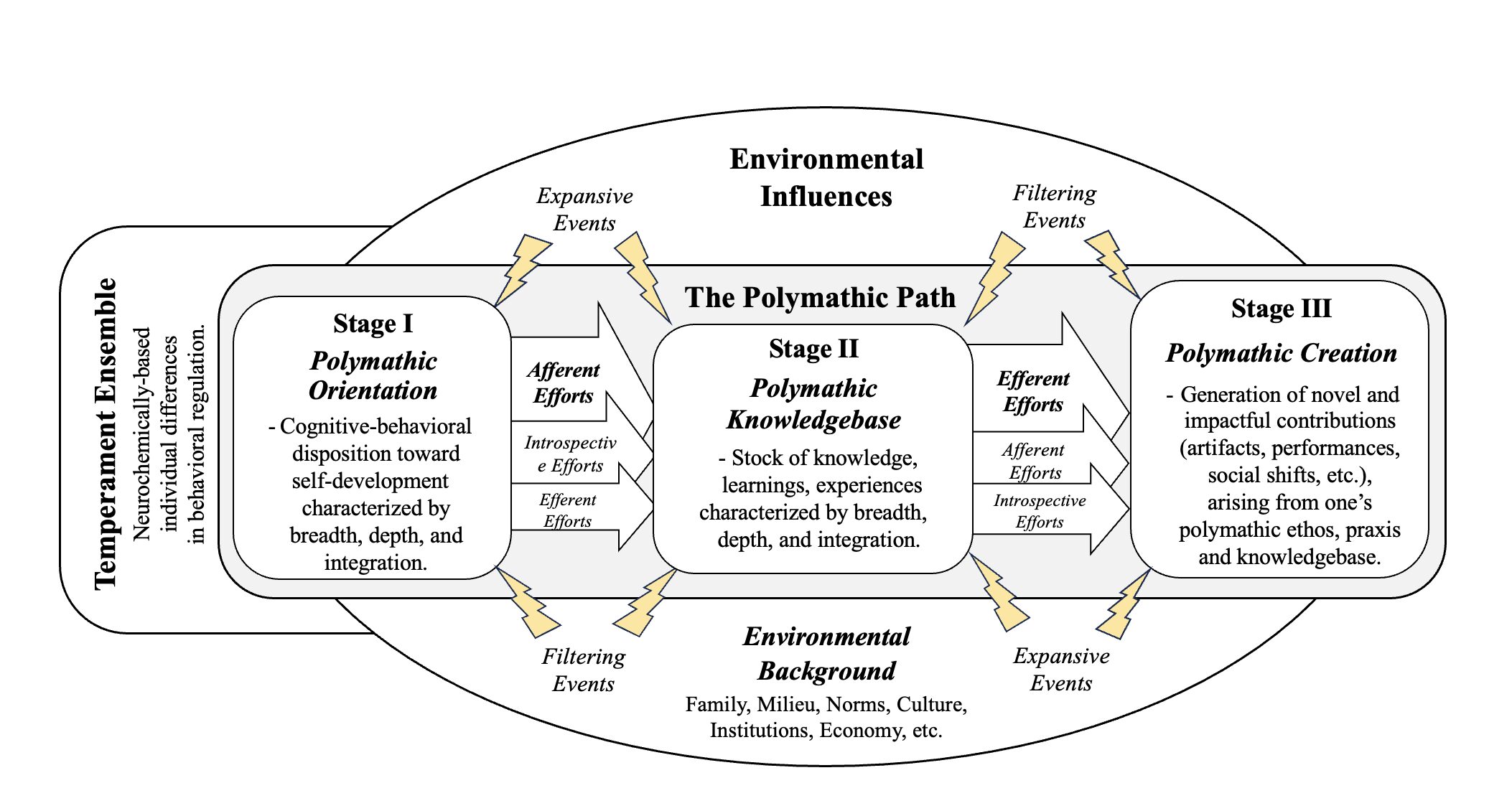
It also challenges the way many people understand success. In traditional systems, people are often encouraged to specialize early and stay within clearly defined categories. But interdisciplinary thinkers often develop through movement between fields. The question becomes less “what are you?” and more “what are you exploring?”
“You have to have a long term vision!”
Creativity, Research and the Science Behind Making Something New
Creativity is a central part of Araki’s research, but he views creativity beyond artistic expression alone. He explains that the standard definition of creativity involves novelty. If something has already been done in the same way, it is not considered creative.
Yet, even novelty alone is not enough! Creativity requires the ability to create something meaningful by combining existing knowledge in new ways, and it is a human capacity that appears when people have the freedom to explore connections.
This is why interdisciplinary spaces matter. They allow people to bring together perspectives that may not traditionally sit beside each other.
A dancer’s understanding of movement may influence research. A scientist’s methods may influence artistic practice. A writer’s storytelling skills may change how information is communicated. The value is not in replacing one field with another. It is in creating new possibilities through interaction.
Beyond the Myth
Araki is careful to challenge the idea that polymathic people are successfully combining everything they do.
“Sometimes things will combine well. Sometimes they will conflict,” he explains.
A polymathic life is not a perfect system where every interest fits together neatly. Sometimes different pursuits compete for time and energy. Sometimes they exist separately. A person may spend months focusing deeply on one area while another interest remains in the background. That does not mean they have abandoned their polymathic identity. It means they are moving through different phases of the process.
This idea makes polymathy more accessible. It is not about doing everything at once. It is about allowing different parts of yourself to exist and trusting that connections can emerge over time.
Interdisciplinarity as a Practice
Both art and science often begin with the same process: observing, questioning and experimenting. The future of art-science and interdisciplinary work depends on people feeling they have the permission to explore beyond traditional boundaries.
Araki’s perspective through polymathy research offers a reminder that curiosity does not need to be justified before it begins. There is no need to wait until every connection is obvious before exploring an idea. Furthermore, polymathy is not simply another label to add to an identity. It is a practice of paying attention to what interests you, developing skills with intention and allowing different experiences to shape how you see the world, not to escape expertise, but to expand what expertise can become.
—
Araki, M. Interview by Nicia John and Wilnelia Adams. The Crearte Foundation for Art-Science Innovation [June 19th, 2026].