When you think of the word polymath, who comes to mind?
Leonardo Da Vinci is probably the most famous example. A prolific artist, best known for painting the Mona Lisa, he was also a prolific investigator who made numerous contributions to the sciences and engineering. Several other historical figures had polymathic biographies, like Benjamin Franklin, Gottfried Leibniz, Ada Lovelace, or Dr. Agnes Forbes Blackadder Savill. Some were even inventors. Their polymathic endeavours afforded them the insight and foresight to design new devices or develop entirely new technologies.
Going down in history is one thing. Going down in history as someone historians, biographers, and scholars of human creativity would agree was a polymath is another. Perhaps that explains why the figure of the polymath, in our popular understanding, is of such mythic proportions.
The polymath is an exceptional individual with a type of genius intelligence that is rare amongst the geniuses.
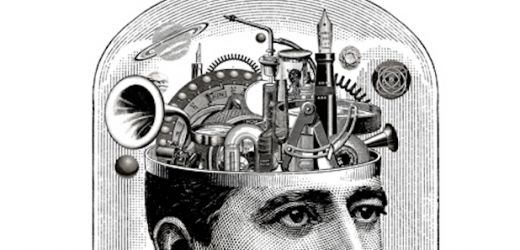
The Modern Polymath
Yet, polymathy remains poorly understood. It is simply not well studied. A slow uptick in interest from educational researchers occurred over the past two decades, but recent developments stem from the intersection of entrepreneurship, innovation, and creativity research.
Michael Araki is one such researcher. As a graduate student, Araki sought to articulate a definition of polymathic traits and activities. He also presented examples of what to exclude from the definition. Reading across many disciplines does not make an individual a polymath. If the knowledge consumed does not get applied to domains that are new to the individual, then there is little value in the amassed information. Tending to several hobbies is not a polymathic trait either, because low engagement and low mastery never results in expert skill in any of the activities.
In his Developmental Model of Polymathy (2018), Araki explicitly states that most individuals can be taught to be polymathic in their thinking and practices. Exceptional intelligence at birth is not required. Instead, a polymathic mindset requires a set of psychological attributes that encourages curiosity, flexible thinking, and the ability to connect the dots across disciplines. He emphasised the importance of the learning environment, modes of instruction, and the nature of curricular design for educating polymaths.
A common trait amongst historical and modern polymaths often gets overlooked by other researchers. Polymathy develops over the entire lifespan of the individual. Periods of intensive study in different disciplines, which might occur in parallel or staggered over time, are followed by periods of transdisciplinary activity. What emerges is a polymathic way of life, an important criterion for Araki.
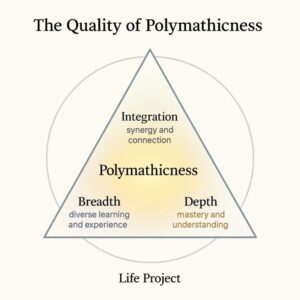
The Triadic Approach to Polymathy (Araki, 2025) refined the three dimensions of the developmental model: breadth, depth, and integration. Breadth refers to the diversity of knowledge, depth to the level of expertise in that knowledge. The final dimension is most intriguing. Integration of diverse, expert knowledge and skills that stem from multiple disciplines, requires “the capacity for connecting, articulating, concatenating or synthesizing different conceptual networks, which in non-polymathic persons might be segregated” (Araki, 2019).
Are Multi-Disciplinarians Polymaths?
Araki’s LinkedIn essays are accessible and thought-provoking, posing pertinent questions. Are we preparing graduates for careers that will go extinct in the near future? Is narrow specialisation at all relevant in a rapidly-changing economy? Do the unprecedented challenges of the modern world require a new type of problem-solver?
As work keeps shifting, our work identities keep shifting, and one can’t help but wonder what modern polymathy means for our hybrid offline/online identities. Shortly before the Covid-19 pandemic, media attention started turning towards unconventional career trajectories. A new trend was emerging from the gig economy and the advent of influencer culture.
The multi-hyphenate emerged on social media and started appearing on podcasts. This was more than just a job title. This was a new way of self-identifying that merged the private individual with a personal brand for business and a life orientation. Journalist and storyteller collective, The Outline, featured an article which was aptly titled, “The Rise of the Multi-Hyphenate: What do you do? I’m a podcaster-vlogger-model-DJ” (2019). The self-employed multi-hyphenate wears many hats, juggling the tasks that keep their fledgling business afloat. They document their process on social media.
One might pause to observe that this framing of the multi-hyphenate professional bares striking semblances to a generalist. And where does that observation leave the multi-passionate, a term that seems to signal the same message as the multi-potentialite? These are individuals with many interests and creative pursuits that are connected by transferable skills, experiential learning, and applied knowledge. One might be tempted to assert that we’re confronted with a family of modern personas that have polymathic traits.
We wonder what this means for the art-scientist. From our perspective, the art-scientist is one who dabbles in transdisciplinary thinking and research practices. Ironically, there is a strong connotation of “job title-ness” to the term, not present in the other personas. Modern science is advanced, practiced, and taught by the scientist after all.
Perhaps the art-scientist is a member of this family of modern polymathic personas, the one who investigates, generating new knowledge founded on the basis of art-science integration.
Source material
Accessed March – April 2026.
- Michael Araki’s LinkedIn essay (Feb. 2026), Polymathy: from a “historical curiosity” to a mainstream psychological construct.
- Araki (2019), Modern Literature on Polymathy: A Brief Review.
- The Outline (2019), The Rise of the Multi-Hyphenate: What do you do? I’m a podcaster-vlogger-model-DJ.
- The Post (2026), The rise of the multi-hyphenate woman and why doing more than one thing is the future of work.