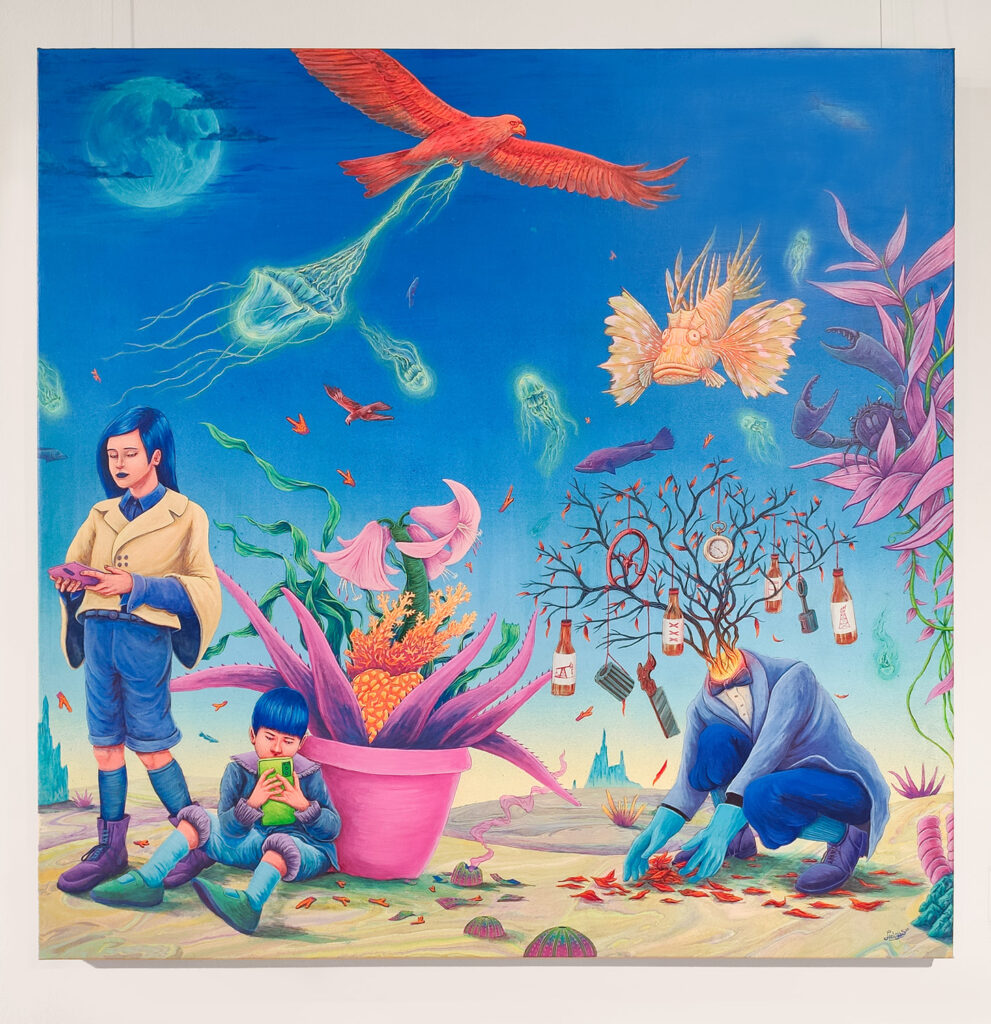
For illustrator, muralist and artivist, Ladislas Chachignot, art begins with curiosity but it ultimately serves a purpose. His work sits at the intersection of visual storytelling, environmental communication and public engagement. Through what he calls eco-surrealism, he invites audiences to reconnect emotionally with the natural world, particularly through ocean art.
“My focus is really ocean preservation and nature in general,” he explains. “The purpose I want to use through my art is trying to reconnect emotionally the public with the richness and the beauty of nature.”
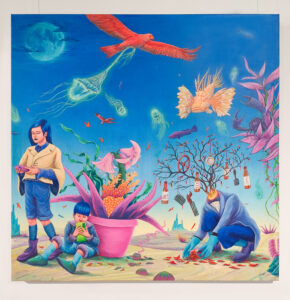
That goal sits at the centre of his artistic practice. Inspired by surrealist traditions and driven by environmental concerns, his work blends imagination with ecological storytelling. The result is artwork that invites viewers to see familiar ecosystems in unexpected ways and to reconsider their relationship with the natural world.
His approach highlights an important role that art can play within art-science collaboration. Science helps us understand environmental challenges. Art helps us feel connected to them. Together, they can create pathways to awareness that neither discipline could achieve alone.
From Surrealism to Eco-surrealism
The idea for Eco-surrealism emerged gradually. Ladislas had been creating art for years while searching for ways to contribute to environmental causes that mattered deeply to him. As concerns about ecological degradation grew, he began exploring how his artistic identity could intersect with environmental advocacy.
“I was wondering how I could contribute,” he says. “Ecology is something important for me.”
His answer came through experimentation. Drawing inspiration from surrealist masters such as Salvador Dalí, Giorgio de Chirico, René Magritte and Man Ray, he began creating images that combine reality and imagination in unexpected ways.
“I found that combining reality in some unusual way and showing it in some different ways was a recipe I was really excited about.”
Rather than presenting environmental issues through statistics or warnings alone, Eco-surrealism uses symbolism, visual metaphors and dreamlike imagery to spark curiosity. Viewers are encouraged to pause, reflect and ask questions. “What is represented here? Why is this element there? What does it mean? » For Ladislas, those questions are often the beginning of deeper engagement.
A Life Shaped by the Sea
The ocean has influenced his work long before he became an environmental artist. Growing up in France, Ladislas spent summers camping with his family in Corsica and visiting an island home owned by his aunt on the Atlantic coast. These experiences exposed him to both the Mediterranean Sea and the Atlantic Ocean. “In both of the places I feel very connected,” he says. “It gives me a lot of peace being surrounded by the sea.”
He recalls being drawn to the horizon, the changing light and the sense of wildness these coastal environments offered. Those feelings continue to shape his artistic vision today. “I try to transmit this into the art that I’m creating.” His fascination extends beneath the surface as well. He remains captivated by marine biodiversity and the extraordinary organisms that inhabit the ocean.
“We know the moon, but we don’t know what’s out there on our planet,” he says. “They want to go to Mars. I want to see what’s out there in our planet.”
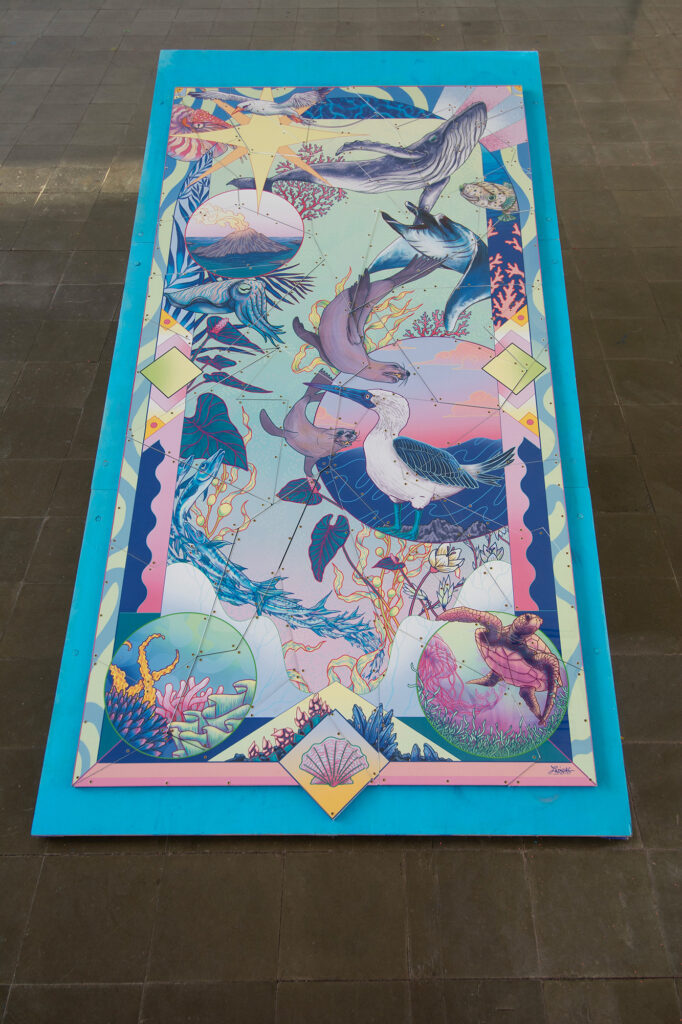
That sense of wonder fuels much of his work. Some paintings celebrate biodiversity directly through colour, texture and form. Others address environmental challenges through symbolism and visual storytelling. One mission, he explains, is helping people rediscover what is already around them.
“Sometimes we are bombarded with many things all day long and we are not able to stop and see and stare around us and say, ‘Hey, wow. What we have here is unique.'”
Where Art and Science Meet
Ladislas sees enormous potential in collaboration between artists and scientists. While his own connection to the ocean began emotionally, working alongside researchers and conservation professionals has expanded his understanding of marine ecosystems and environmental challenges.
“Collaborating with scientists and being surrounded with ocean people, I learned a lot,” he says. His description of art-science collaboration captures the value each discipline brings. “I can bring the emotional part and they can bring the knowledge part and we can explore how to transmit this in a proper way.”
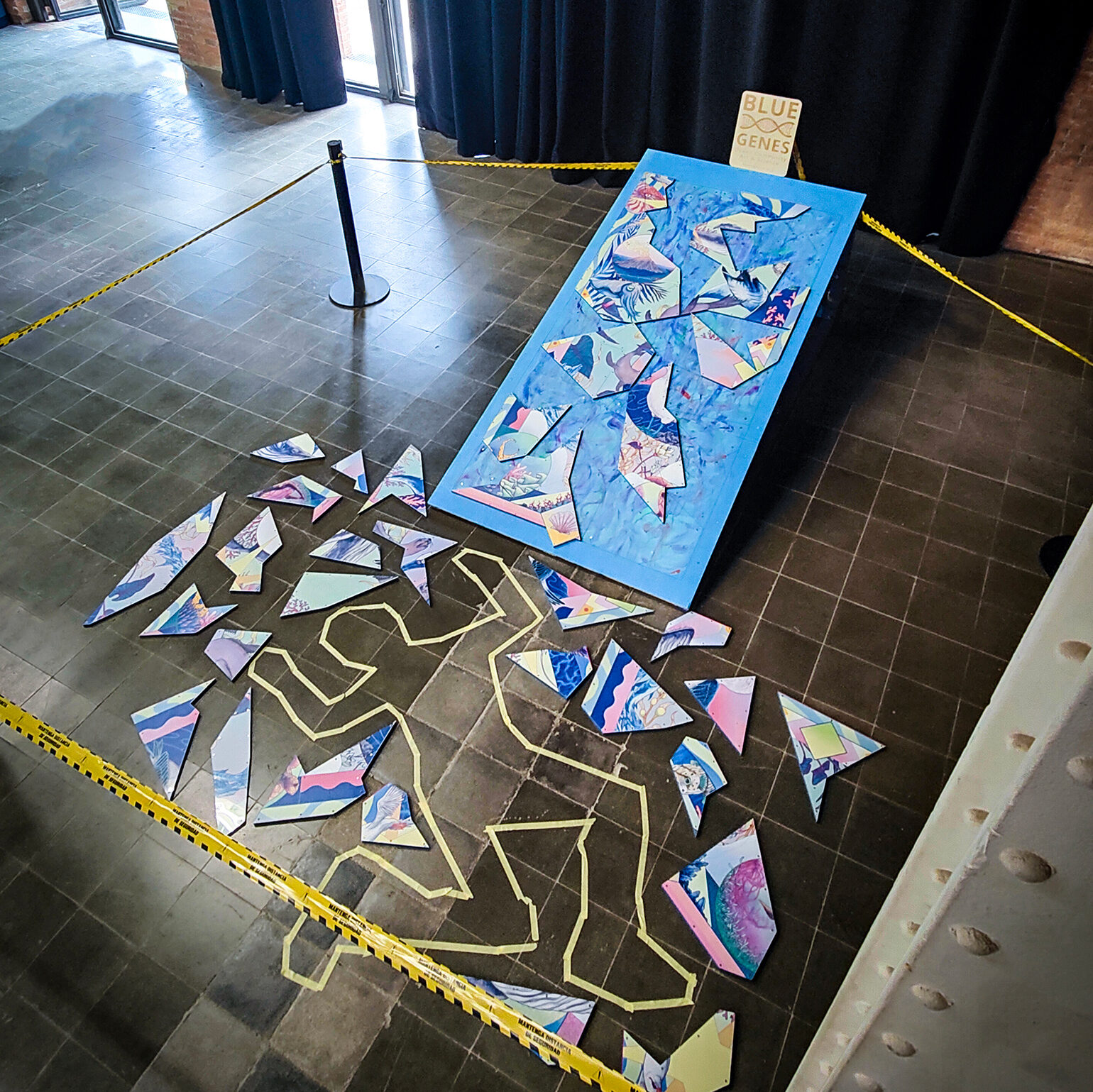
This perspective reflects a growing movement within art-science practice. Scientific knowledge often struggles to reach audiences beyond specialist communities. Art can help translate complex information into experiences that are accessible, memorable and emotionally resonant. For Ladislas, collaboration does more than improve communication. It enriches the creative process itself.
“When we all gather and have a talk and exchange ideas, we end up discovering things from other people. The process is very interesting.”
Collaboration at the UN Ocean Conference
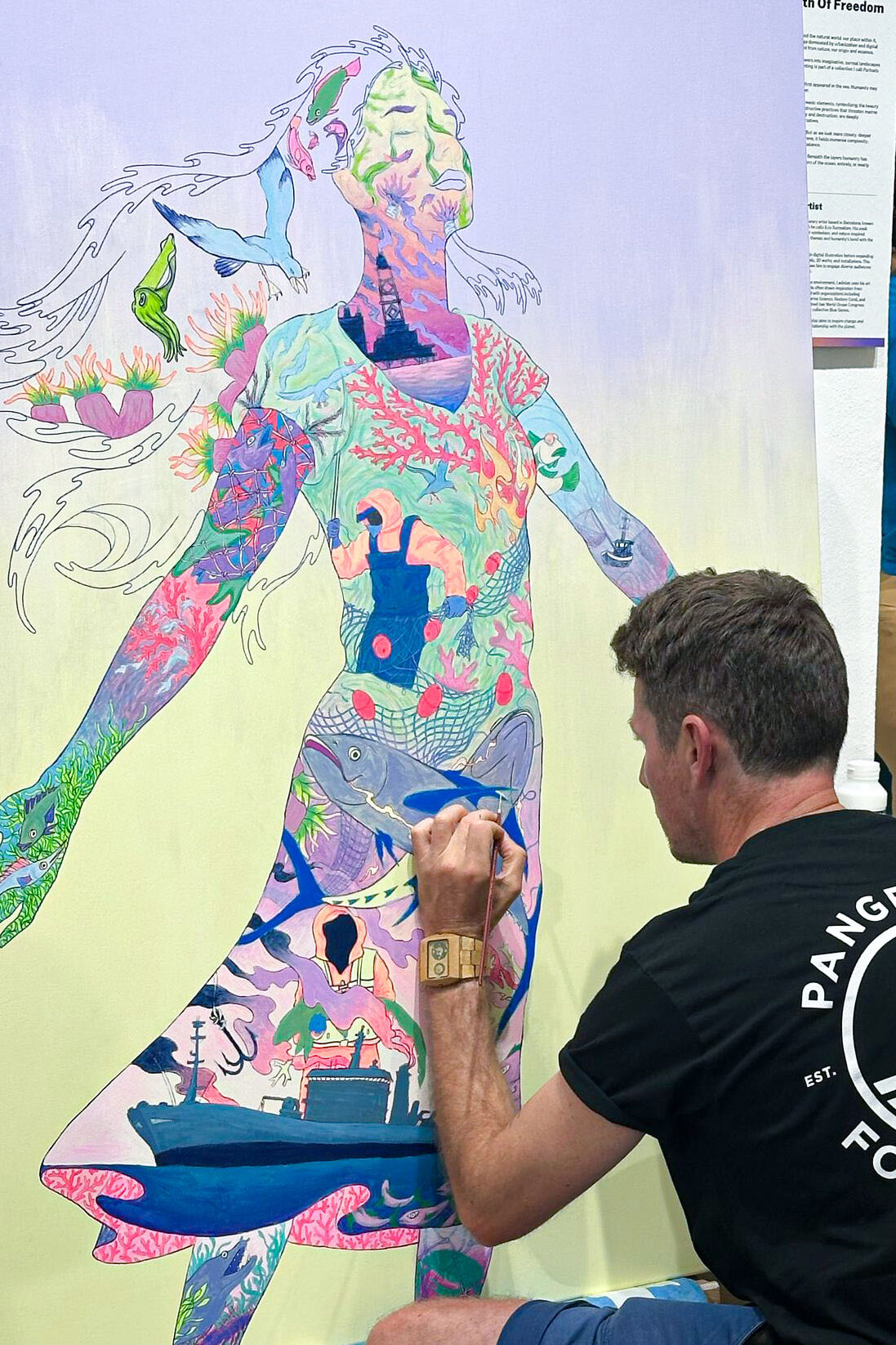
One collaboration that stands out took place during the United Nations Ocean Conference in Nice, France. There, Ladislas was invited by the Hawaiian conservation organization PangeaSeed, a group he describes as a major inspiration, to participate in a live painting event focused on ocean preservation. The experience placed him in direct conversation with marine scientists, conservationists and ocean advocates while he worked.
“I had a lot of feedback while I was painting,” he recalls. “Their own interpretation. ‘Why are you doing this?'” Watching people engage with the artwork in real time revealed something he values deeply. “Each [person] has [their] own interpretation. It’s very cool.”
The event demonstrated how art can create dialogue between different communities. Scientists, environmental practitioners and members of the public all brought their own perspectives to the work, creating a shared space for discussion and reflection.
Art for the People
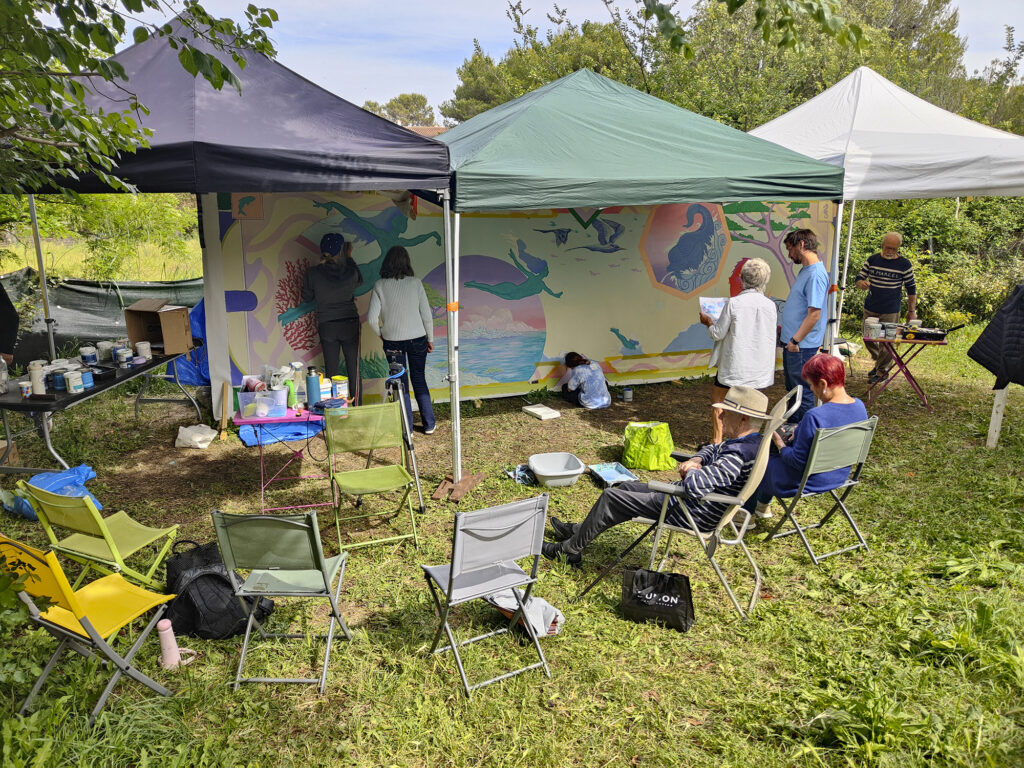
Perhaps the most defining aspect of Ladislas’ practice is his commitment to accessibility. He is less interested in producing expensive works for private collections than creating experiences that reach communities directly. “I would love to collaborate more with museums, NGOs and public projects,” he says. “I want to share my artworks with the general public.”
His vision includes murals, exhibitions, immersive installations and collaborative community projects. At its core is a belief that meaningful change happens when people feel connected to something larger than themselves. “It’s all about finding a purpose that is bigger than your own.”
That purpose continues to guide his work. Through eco-surrealism, Ladislas transforms environmental knowledge into emotional connection, creating opportunities for people to see the ocean not as something distant, but as something they are already part of. As he reminds us, “We are coming from the water,” and perhaps reconnecting with that truth is where both art and action begins.
Chachignot, L. Interview by Nicia John for The CreMAP Directory. The Crearte Foundation for Art-Science Innovation [May 25, 2026].