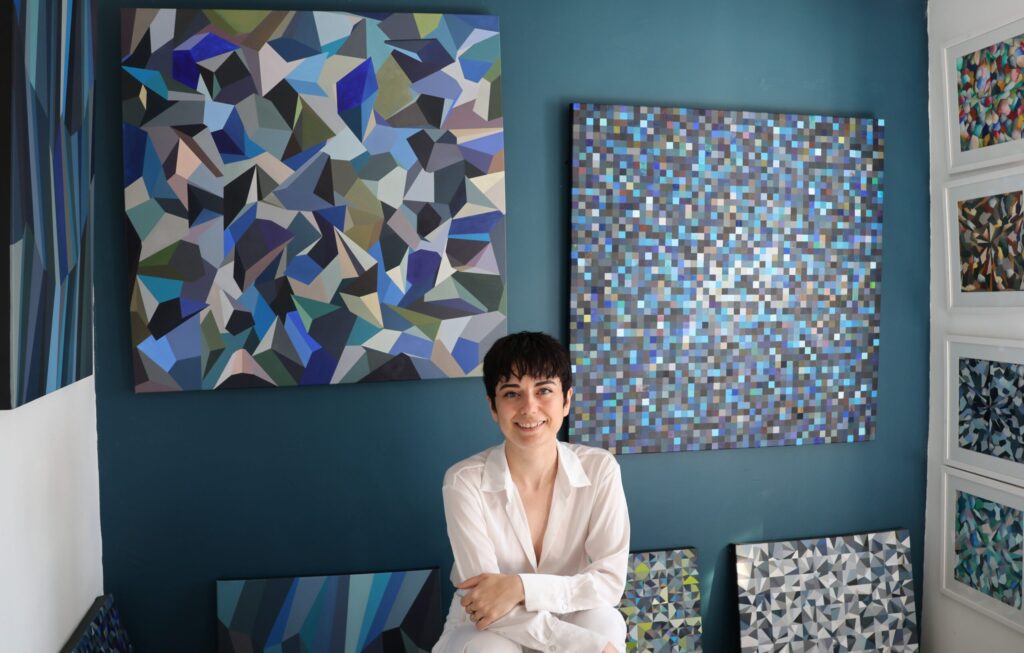
For Dilek Ozgit, art and engineering were never separate identities competing for space. They were always connected ways of understanding the world. Dilek, an engineer, entrepreneur and artist, moves naturally between painting, materials engineering and creative experimentation. Her work draws from nanomaterials, microscopy and scientific observation, but it is also shaped by curiosity, emotion and a willingness to create without waiting for permission.
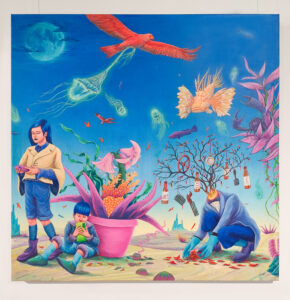
Based in Cambridge and originally from Istanbul, Dilek first studied mining engineering before transitioning into metallurgical and materials engineering. During her studies, a course on nanomaterials completely shifted her perspective. She later pursued a PhD focused on nanomaterials for energy store devices and spent long hours examining microscopic structures through scanning electron microscopes. Eventually those forms began appearing in her paintings.
“I was painting images that began to mirror the structures I saw through the microscope,” Dilek explained during her conversation with The CreMAP Directory.
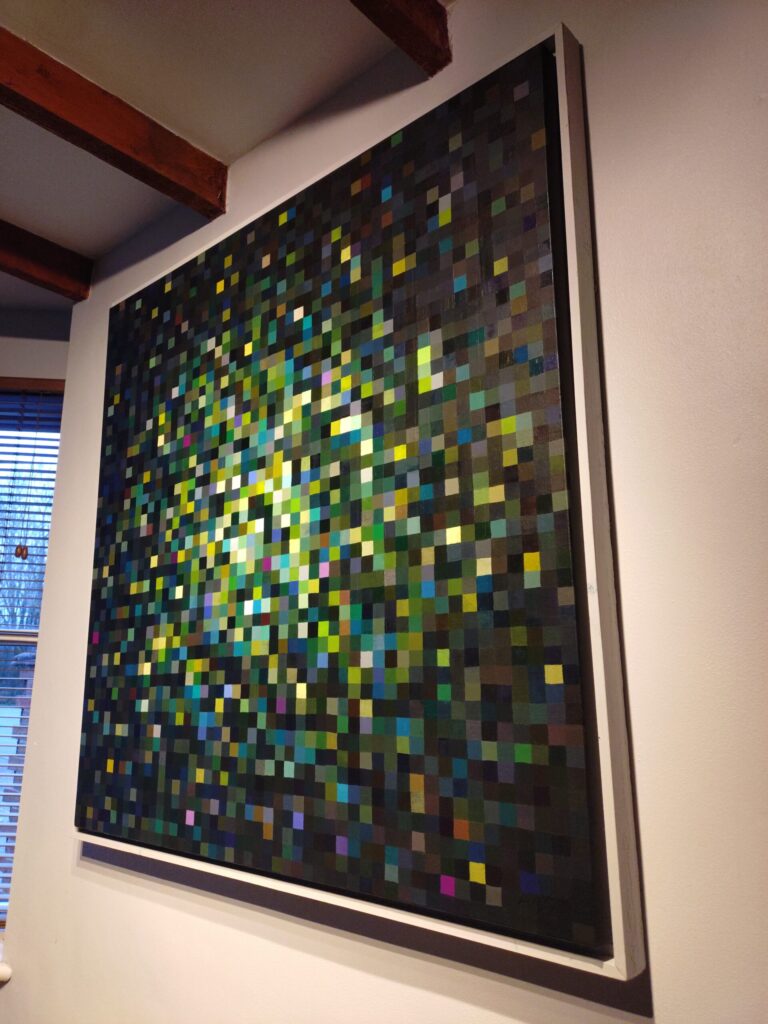
The branching structures, textures and dendritic patterns she observed in the lab became visual inspiration. Scientific observation slowly transformed into artistic language.
“That’s how I started,” she said. “I think it’s the result of spending countless hours watching zinc dendrites and graphene do their wonderful things.” Yet, her paintings are not literal scientific diagrams. Instead, they are interpretations of hidden worlds. They capture the rhythm and structure of microscopic matter while still leaving space for emotion and abstraction.
From Mining Engineering to Microscopic Worlds
What makes Dilek’s work especially compelling is the way she speaks about process. Even when discussing engineering, she often returns to ideas of feeling, intuition and exploration. She explained that her scientific training shaped the structure behind her artistic practice.
“In the lab there was lots of planning your work, structuring it,” she said. “Eventually that discipline made it to my artwork.”
At the same time, art became a place where she could release some of the pressure that often comes with research. Watercolour, in particular, became important to her because of its unpredictability. Unlike tightly controlled scientific experiments, watercolour demands flexibility and trust in the process. Speaking about painting, she reflected on the importance of not “designing the process and then expecting the outcome.” That balance between control and surrender appears throughout her work and thinking. Her engineering background brings structure while painting allows room for uncertainty.
This tension is something many people working in art-science spaces understand deeply. Scientific environments often prioritize measurable outcomes while artistic practice can hold ambiguity, experimentation and failure more openly. Dilek does not see those approaches as opposites.
“Actually, science and art are very similar,” she said. For her, both require experimentation, resilience and curiosity. Failure is part of the process in both disciplines. “Art is somewhere I could just pause for a moment and fail,” she explained.
On Creating Without Permission
That perspective became especially important as she navigated life beyond academia. Toward the end of her PhD, Dilek co-founded a startup, Zinergy, focused on manufacturing and design of printed batteries. Rather than seeing art as separate from entrepreneurship, she believes creative practice helped her become a better founder. Art gave her vision. It also gave her confidence to continue building ideas before external validation existed.
She described using “passion to do without external validation.” That mindset shaped both her artwork and her startup journey. “When you start, you really don’t have much,” she said while reflecting on entrepreneurship. The uncertainty of building a company reminded her of making art. Both require people to trust instincts, continue experimenting and move forward before recognition arrives.
Her willingness to act without waiting for approval also appeared in the way she spoke about exhibiting her work. Dilek shared that doing a solo show felt brave. There was vulnerability in putting her work into public space, especially while balancing scientific and entrepreneurial identities.
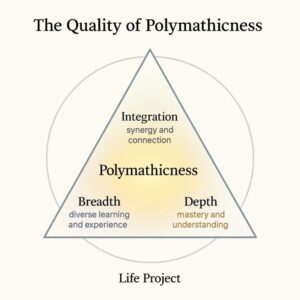
Yet she continues to encourage people not to wait for someone else to authorize their interests. That message feels especially important within interdisciplinary communities where many people feel pressure to specialize. Dilek repeatedly challenged the idea that people need to choose one identity or remain inside one professional box.
“I don’t think now I’m an artist, now I’m a scientist or engineer,” she explained.
Instead, she moves between different forms of making naturally. Even outside of her formal work, her interests reflect this integrative mindset. During the conversation, she spoke about coding and crochet almost side by side. One involves logic and systems, the other repetition and tactile creativity, yet for her they exist comfortably together.
Why Art and Science Are More Similar Than We Think
That way of thinking reflects a broader shift happening across art-science communities internationally. More artists, engineers and researchers are beginning to reject rigid disciplinary boundaries and explore how creative thinking can shape innovation. Dilek has seen this change herself through the growing number of interdisciplinary spaces and conversations emerging in recent years.
At the same time, she acknowledged that balancing multiple identities can still feel difficult. Artistic practice is often dismissed as secondary or treated like a hobby when someone works in a technical field. Many question whether pursuing art seriously is realistic. Despite similar assumptions, she continues to approach art and engineering as equally meaningful parts of her life. Looking ahead, Dilek is interested in collaborating with scientists and engineers alike, developing new technologies and translating those ideas into visual work.
“It would be even more interesting if I collaborate with an engineer or scientist who is developing a new technology,” she said.
That collaborative spirit sits at the centre of her practice. She is not simply using art to illustrate science. She is exploring how scientific ways of seeing can transform creative expression and how artistic thinking can expand scientific imagination. In a culture that often rewards specialization, Dr. Dilek Ozgit represents another possibility. Art and nanomaterials, engineering and painting, coding and crochet, structure and experimentation can all exist together. Through her work, she reminds people that they do not need permission to explore the full range of their interests. Creativity does not weaken scientific thinking. It deepens it!
———
Ozgit, D. Interview by Allie Harrison for The CreMAP Directory. The Crearte Foundation for Art-Science Innovation [May 20, 2026].