This episode of Art-Sci Currents, featuring designer, researcher, and diver Rasa Weber, is one of them. Rasa moves between industrial design training, marine ecology, and years of underwater fieldwork in the Mediterranean and the Caribbean, and what she brings back from that mix is a way of thinking about design that has very little to do with clean solutions.
Rasa’s path into the ocean did not start with a love of pristine coral reefs. It started with a dive off Curaçao, at a site torn apart by the construction of a cruise ship pier. Instead of turning away, she found the wreckage instructive. “It really struck me how this marine ecology is so much more representative of what we are confronted with right now than any beautiful coral reef that you could visit as a tourist,” she said, describing how the site held together everything humans do to ecosystems: the drive to master them, reshape them and bend them to our needs.
Staying with Damaged Landscapes
That instinct, to look toward damaged places rather than away from them, runs through her entire practice. She has spent years researching what she calls blasted seascapes, sites that are not dead but also do not match our expectations of what a thriving ecosystem should look like. A container shipping channel near Cartagena, thick with diesel and traffic, turned out to host a
small reef that may have survived precisely because suspended particles shielded the coral from sun-driven bleaching. Rasa is careful not to romanticize this. She is clear it does not excuse further destruction, and that the loss at Curaçao still deserves to be mourned. But these strange, resilient patches point toward a different kind of hope, one built on cohabitation rather than a
return to some pre-human baseline.
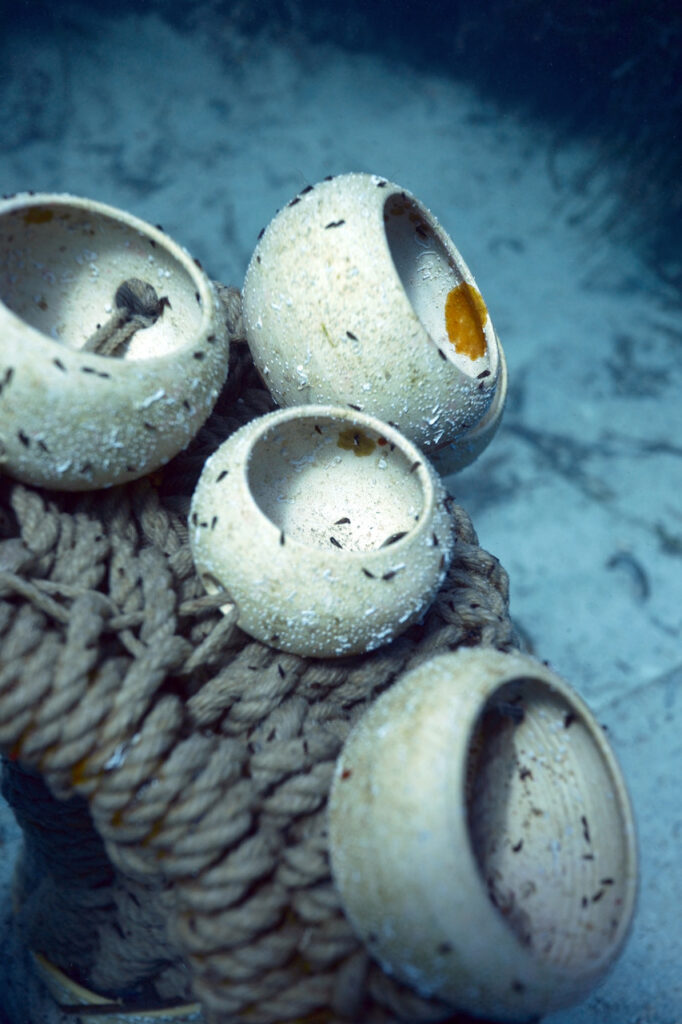
Her design process changed in step with this research. Her first underwater structure, a large metal sphere called Kiki, photographed beautifully but held no appeal for fish. There were no crevices, no small hiding spots, nothing a fish could actually use. From that failure she scaled down, turned to traditional materials like willow, and studied artisanal fish trap techniques, this
time leaving the door open instead of closing it. The shift, as she put it, was less about new technology and more about listening to what a place and its residents actually needed.
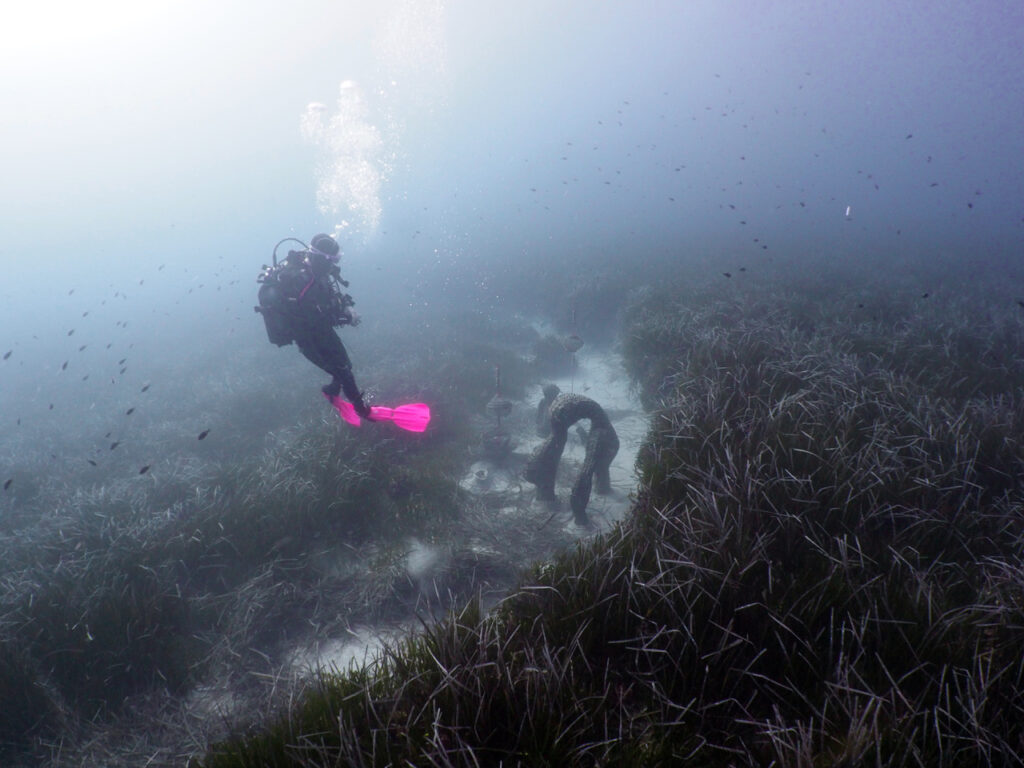
Timmermann. Location: STARESO, La Revellata (FR). Date: August 2025.
Design Begins by Listening
Listening, in Rasa’s telling, is not a soft metaphor. It shapes her entire method. She works closely with marine biologists at the STARESO research station in Corsica, learning their patient, repetitive observation techniques, and with artisans such as weaver Marie Drouet, who trained under fishermen on the Brittany coast. She described her practice as Sympoietic Design, borrowing from Donna Haraway’s idea of making with rather than making for, and she is honest about how uneven and slow that kind of collaboration can be. Real interdisciplinary work, she argued, is not about designers making scientific findings look attractive. It requires two fields with genuinely overlapping questions and a willingness to sit with not knowing where the work will land. She
put it simply: designers are “like sponges,” pulling in different disciplinary knowledge and translating it back and forth into forms of making.
Staying with the Trouble
Rasa traces trouble back to its French root, meaning “to stir up,” making the water cloudy, which she finds fitting for diving itself. Staying with the trouble means resisting the pull toward tidy narratives and fast fixes, and accepting that design has historically been complicit in the very damage it now hopes to repair.
When a colleague asked her recently why designers do not simply stop making altogether, given design’s colonial and extractive legacies, she concluded, “I’d rather risk to make things wrong than to not make any more.”
Small, strange details run alongside the bigger theoretical threads, and they are part of what makes Rasa’s account of the sea feel lived rather than theorized from a distance. She also returned often to biologist Lynn Margulis’s reminder that survival favours “the most collaborative,” not simply the fittest, a line that echoes through Rasa’s own approach to working across disciplines and species.
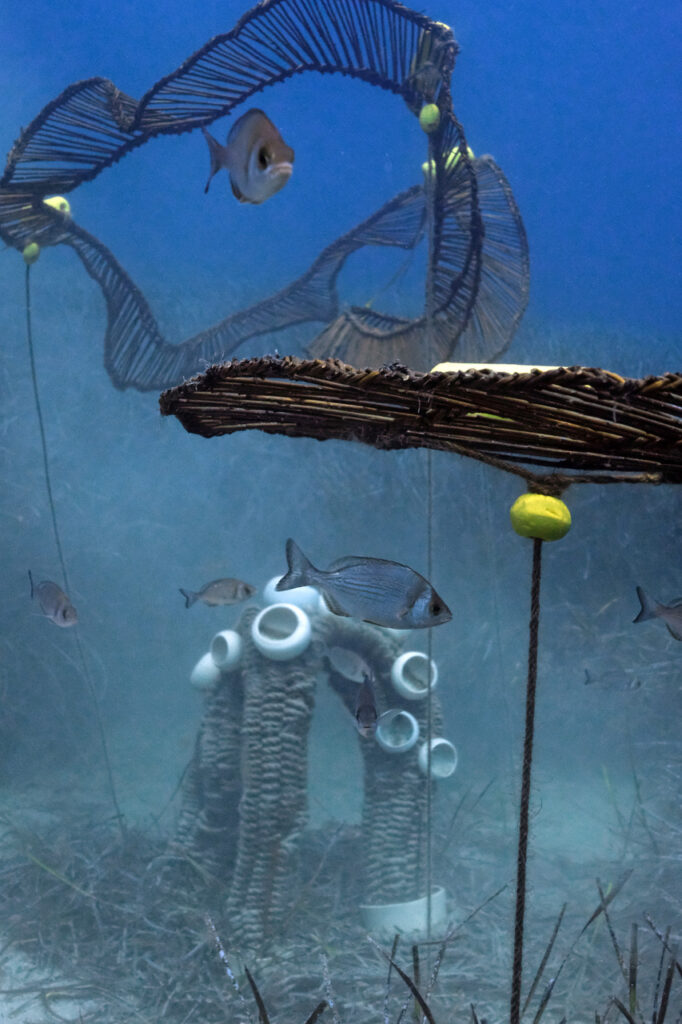
weaver Marie Drouet. Photo: Till Timmermann. Location: STARESO, La Revellata (FR). Date: August 2024.
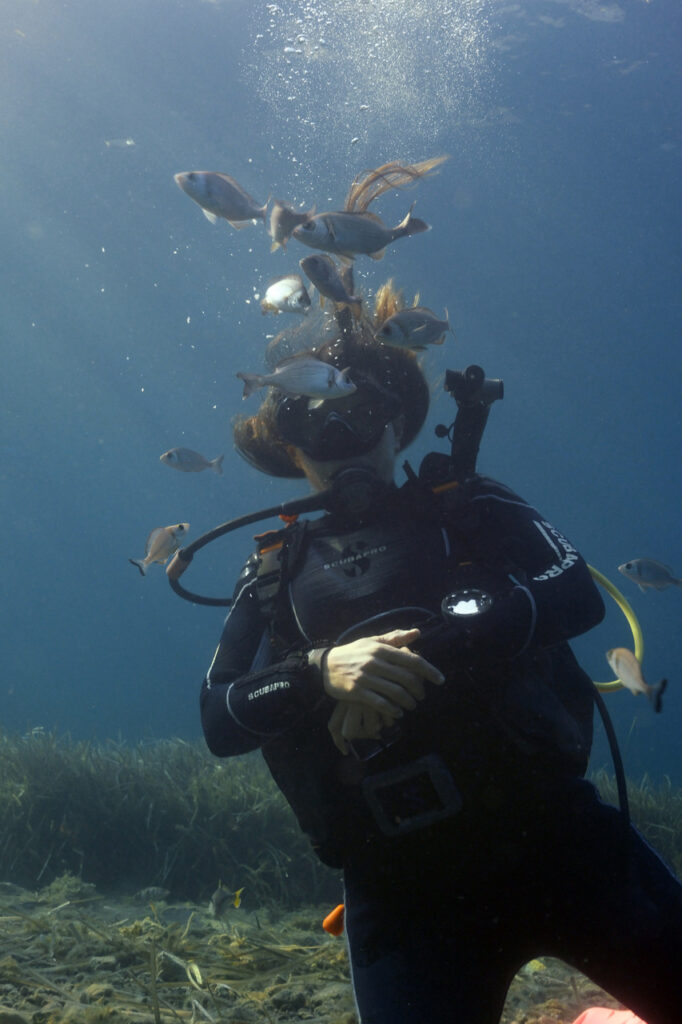
weaver Marie Drouet. Photo: Till Timmermann. Location: STARESO, La Revellata (FR). Date: August 2024.
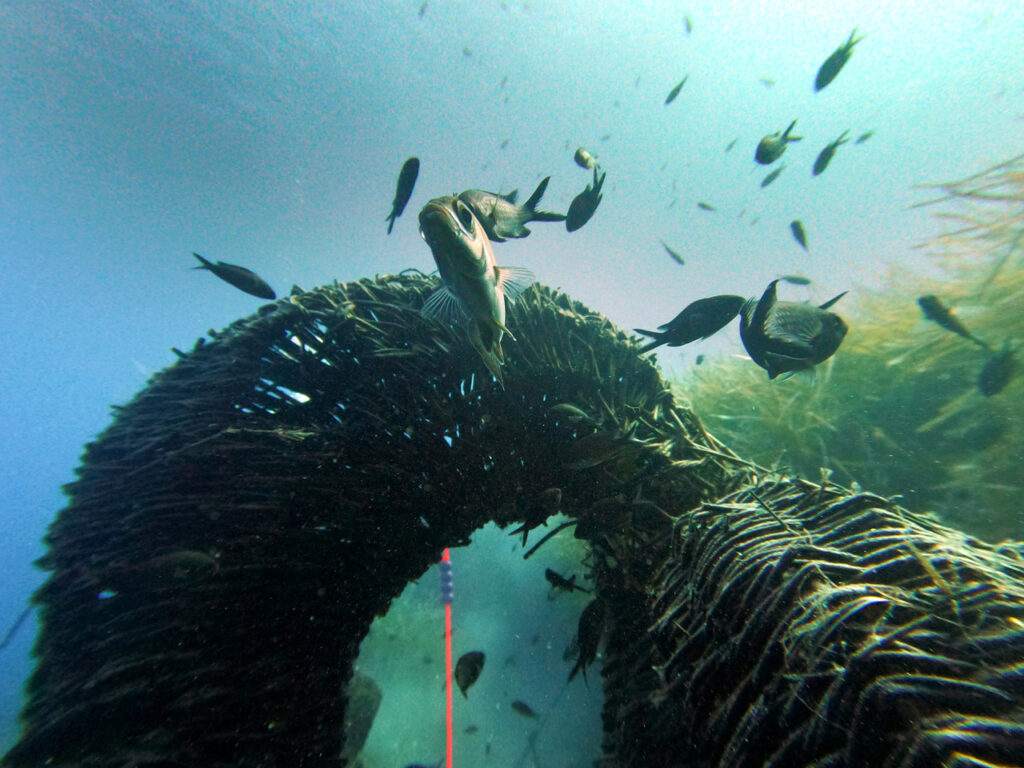
weaver Marie Drouet. Photo: Aubin Woehrel. Location: STARESO, La Revellata
(FR). Date: December 2024.
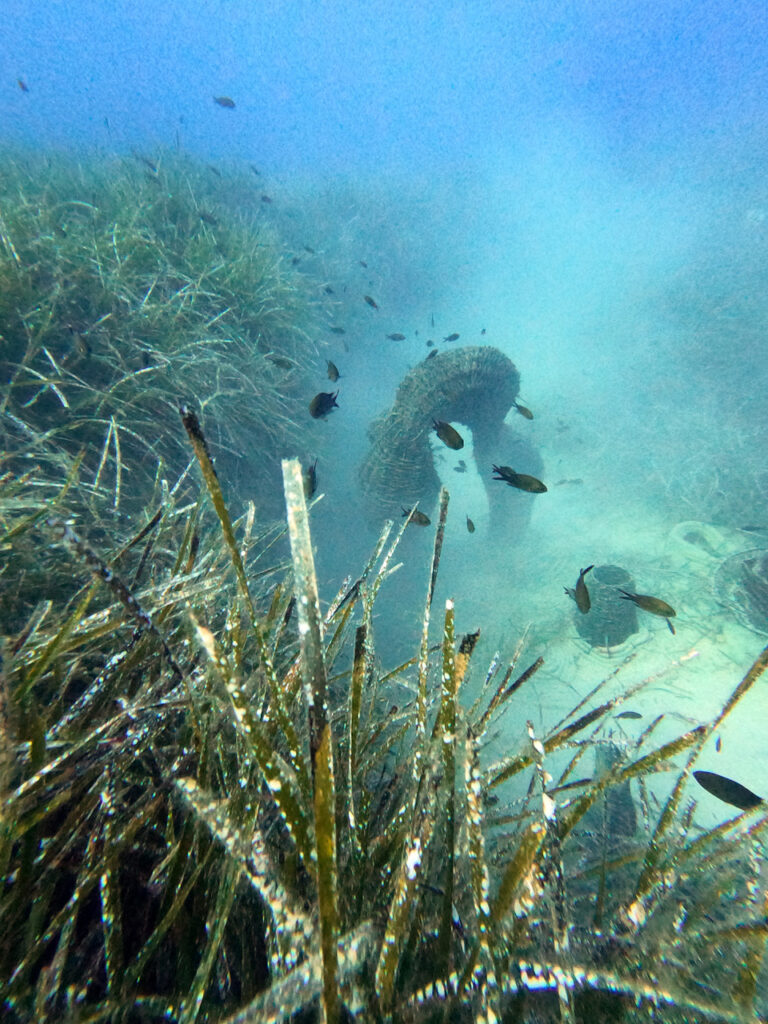
Teaching the Next Generation to Notice
Rasa now seeks to bring these questions of ecological stewardship and cross-disciplinary practice into university classrooms or higher education, so that younger designers grow up with the tools to sit with uncertainty rather than rush past it. She hopes students learn that design is not simply about producing solutions, but about observing carefully, asking better questions and understanding the relationships that shape a place before intervening. In many ways, learning to notice is the foundation of learning to design.
Her advice for anyone drawn to the art-science space is refreshingly grounded. Persistence matters more than prestige, and the right collaborators are found through genuine curiosity about people rather than by chasing the most recognizable lab or institution. Meaningful collaborations grow from shared interests, open conversations and a willingness to learn from one another. For Rasa, interdisciplinary work is built over time, through trust, patience and the understanding that no single discipline holds all the answers.
Learn more about Rasa! www.rasaweber.com