Ann Piché
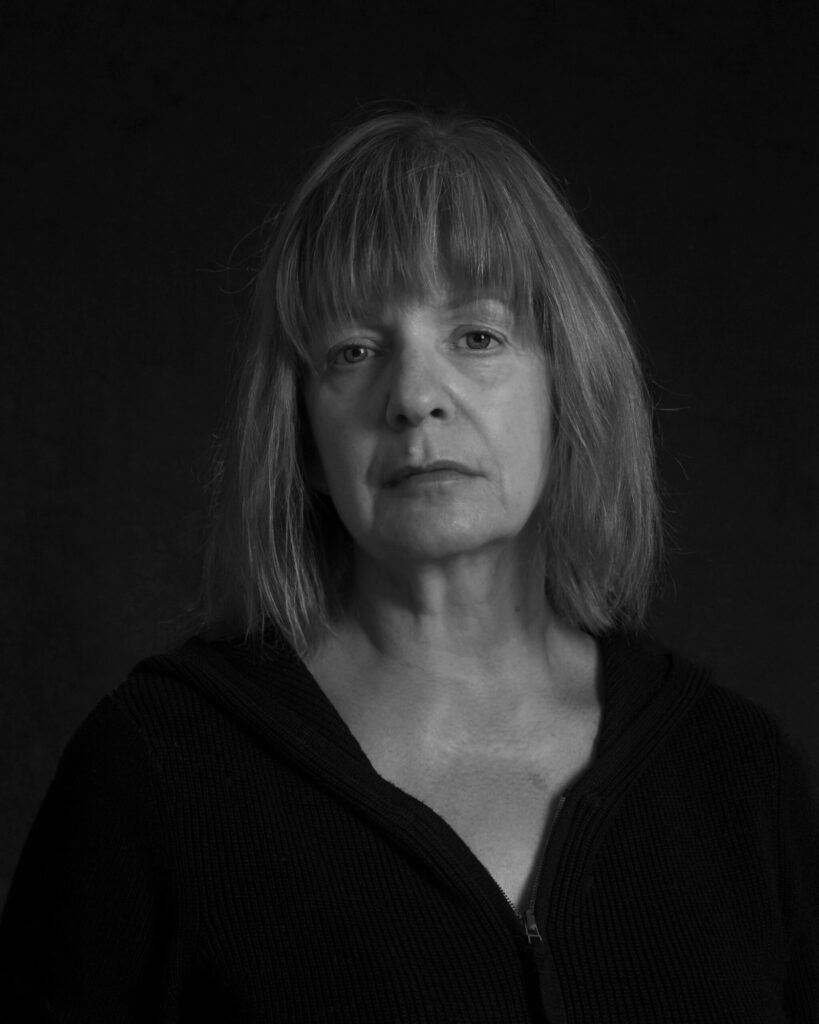
Working in technology since the early 1990’s, Ann was the first female electronic technician hired by the Royal Canadian Mounted Police (RCMP). Experiencing the disconnect that can exist between science and the arts she constructs visual links to build those connections, creating accessible entry points for conversations about the less familiar. A graduate of the School of the Photographic Arts: Ottawa (SPAO), Ann’s work has been presented in solo exhibitions in Canada and in group exhibitions internationally. Her collaborations include the Department of Mathematics at the University of Toronto. Ann’s work has been supported by the Jackman Humanities Institute | University of Toronto, the City of Ottawa and the Ontario Arts Council, She has been published in North American magazines such as SHOTS and PhotoED. Ann’s images are not software generated. Working primarily in digital photography, she stages her images using real and constructed landscapes with custom-built sets. Her work explores photographic abstraction and experimental camera techniques, a visual acknowledgement of the anxiety we can feel when facing the unfamiliar.
Ada Zejun Shen
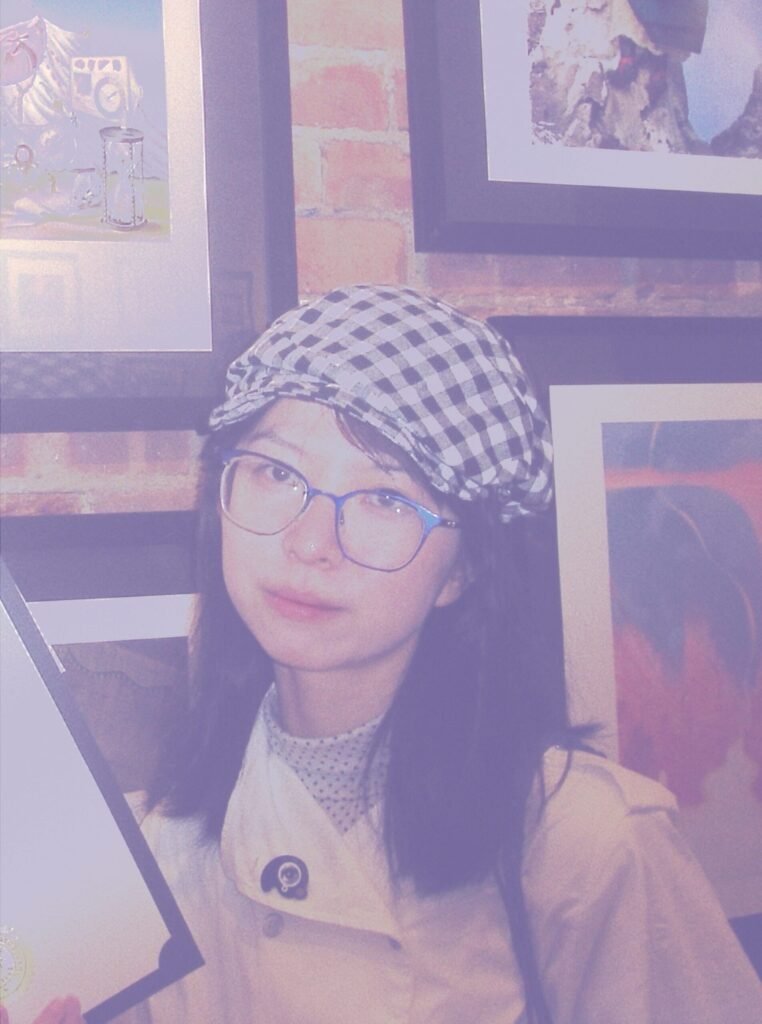
Ada Zejun Shen is an award-winning illustrator and interdisciplinary artist based in New York whose work bridges scientific inquiry and visual storytelling. Drawing on imagery from biology, natural history, and mythology, she transforms research and her curiosities into layered, symbolic illustrations that clarify complex ideas while sparking curiosity. Her practice blends traditional and digital techniques, weaving intricate, organic forms into compositions guided by precision, balance and clear intent. Ada’s illustrations have been recognized by the Society of Illustrators, Communication Arts, ADC Young Ones, 3×3, Graphis, and the World Illustration Awards. Her work has appeared in art book fairs and exhibitions internationally, including presentations at the Cairo Art Book Fair, Booksmart at Art on Paper, and Yeh Art Gallery at St. John’s University.
Dr. Francisco Enguita
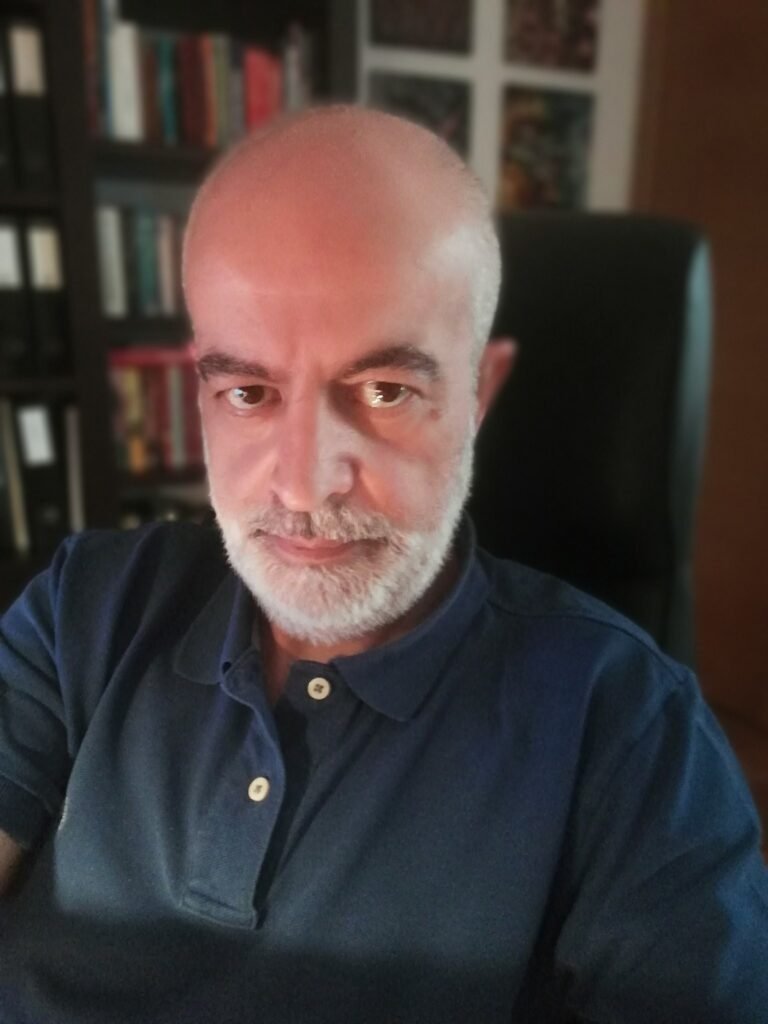
I am a teacher at the medical college and research scientist working in molecular biology. I always had passion for the beauty of the molecular structures and their function. If you like them too, join me in this journey.
Mary Abma
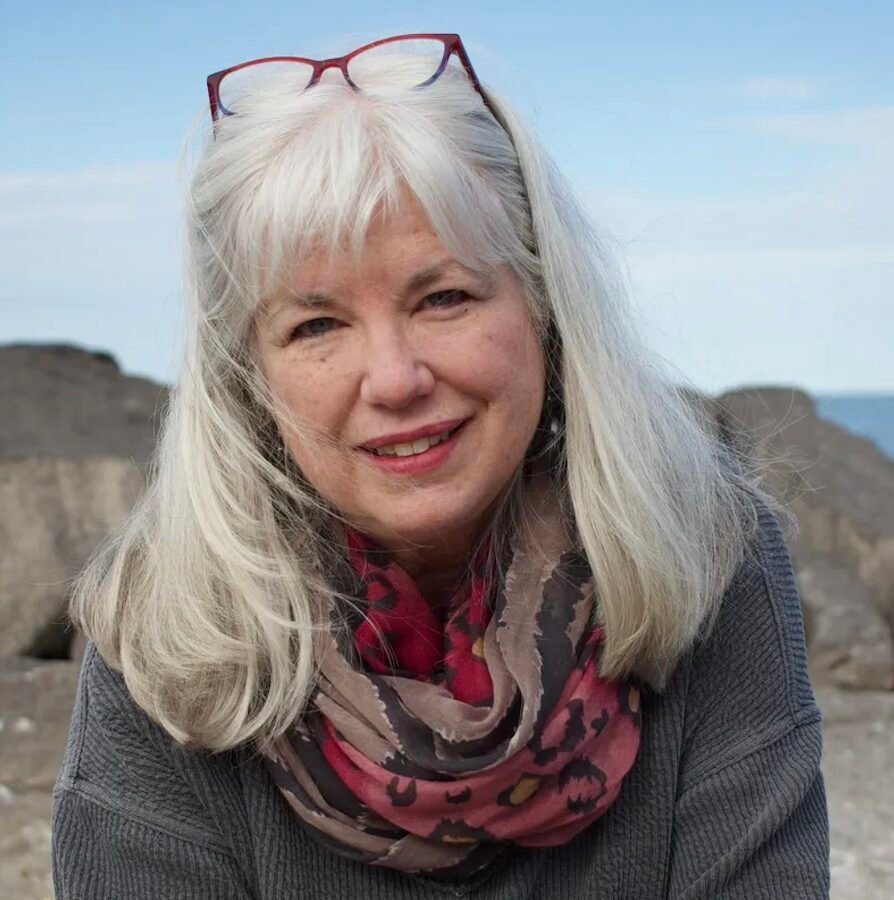
I am a transdisciplinary artist who works in a variety of media. My artwork emerges from a synthesis of science, history, sociology and storytelling and thrives on collaborations with people who work in other disciplines and with those who live in communities impacted by change. I choose projects about which I have limited expertise so that my own learning process becomes part of the work itself. My interest in how communities, both human and non-human, reflect and adapt to change is at the core of my art works. My studios range from my yard in suburbia to the world’s coastlines and edge spaces. I am fascinated by humanity’s deep connection to time and place, and the collective longing to understand what exists beyond our lived experiences. Through the lens of my work, I offer points of entry into the ecosystems that weave all living beings together and sustain life. I acknowledge the complexity of human interactions with the natural world by translating the rhythms and patterns that I observe into artworks which bring that which is often overlooked and elusive into view. A qualified teacher, I specialize in facilitating community-engaged artworks.
Pauline Woolley
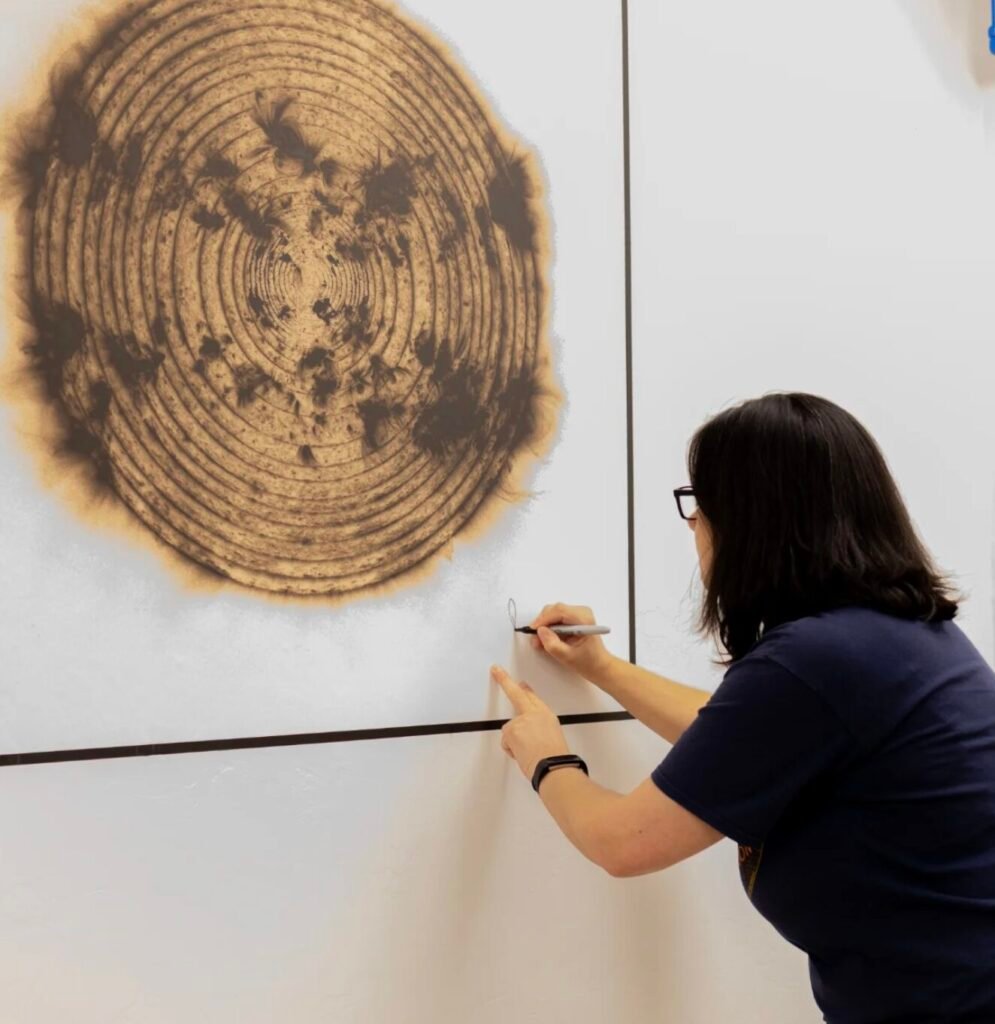
Pauline Woolley’s practice is concerned with sky, time, place and astronomy. She uses many different photographic practices to explore the human relationship to our home planet and deep time through the area of astronomy. She has collaborated on the long term project ‘Writing Skyscapes’ at NTU which explores the publics thoughts and feelings on the night sky. In 2025 she was awarded the Agnese N. Haury Visiting Scholar fellowship at the Laboratory of Tree Ring Research, University of Arizona where she research the archival photographic glass plate archive of dendrochronology founder and astronomer A E Douglass and learnt more about the connection between solar activity and tree ring data.
Jess Holz
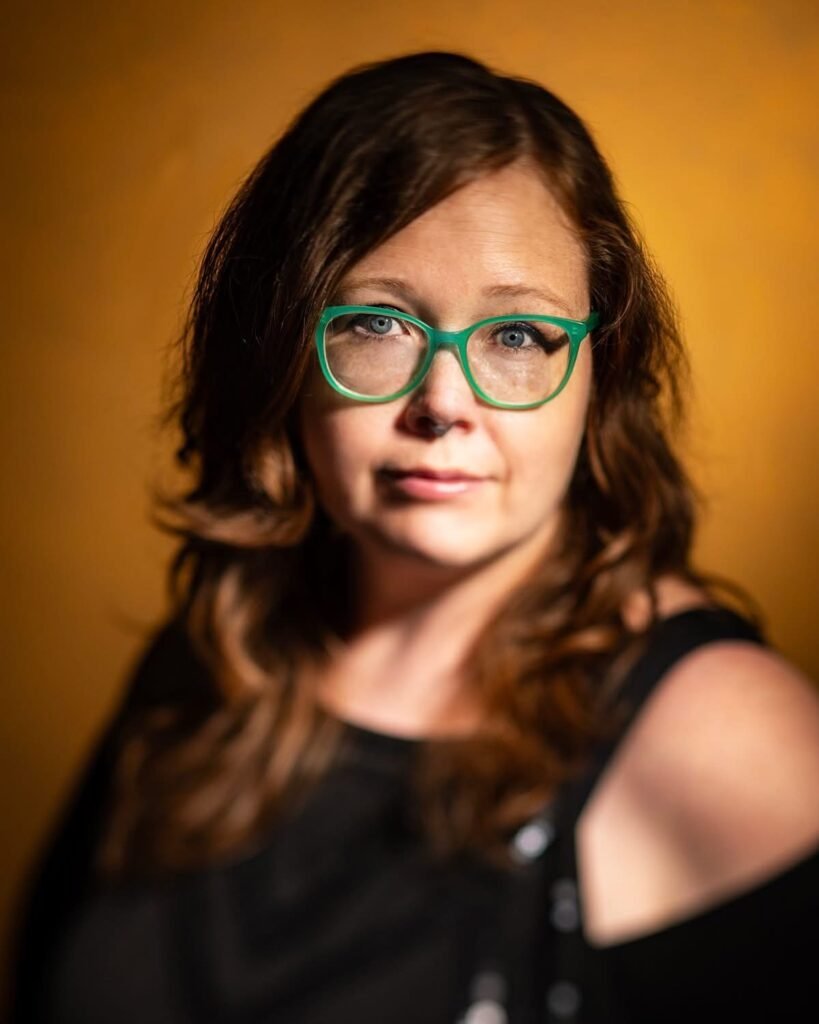
Jess Holz is an art–science practitioner who works with optical and electron microscopy to examine structures that fall outside normal human perception. She holds an MFA in Art + Technology from the University of Wisconsin–Milwaukee and a BA of Arts with a minor in Neuroscience from Lawrence University. Combined with over eighteen years of experience in scientific imaging, she bridges the visual languages of research and creative practice. Jess currently works as an electron microscopy research fellow in a Boston University laboratory studying the neural circuitry underlying thought and emotion. Her scientific work directly informs her creative practice, which focuses on the differences between human perception and the images produced by scientific instruments. She uses scanning electron microscopy, photography, video, and installation to create work that addresses issues of scale, material properties, and visual interpretation. Her work has been featured in Plaxall Gallery in New York City, Manifest Gallery in Cincinnati, Boston Cyberarts Gallery, and others. She has received the Frederick Layton Fellowship and the UW–Milwaukee Chancellor’s Award. By merging scientific methodology with artistic inquiry, Jess examines and communicates phenomena that lie beyond the reach of the naked eye.
Inês-Hermione Mulford
Inês-Hermione Mulford is a realist painter and botanical artist whose work focuses on anatomy, surgery, and bryophyte science. Based in Edinburgh, she holds an M.A. in Social Anthropology from the University of Edinburgh and a B.A. in Painting from Edinburgh College of Art, where she also studied anatomy. Her research on drawing as a method of ethnographic participation, combined with time shadowing surgeons and working from cadavers, inspired her surgical paintings, which explore surgical craft and patient–robot relationships. Her botanical work reflects a long-standing interest in bryophytes (mosses, lichens, liverworts, and hornworts) and their often overlooked role in biodiversity. Through fieldwork, photography, and studio observation, she produces detailed macro-landscape drawings and paintings that reveal the complexity of these plant communities. She is the project artist for the Body Voyager permanent gallery at Surgeons’ Hall Museum in Edinburgh and has exhibited in the Society of Botanical Artists’ Plantae exhibition and the 2025 More Than Human show at Custom House Gallery. Her awards include the Society of Botanical Artists’ “Making a Mark” Award (2022) and the John Byrne Award (2022). As founder and director of the Art & Nature Collective, Inês-Hermione emphasizes cross-disciplinary approaches that deepen understanding of the natural world and humanity’s role within it.
Daniela Stubbs-Leví
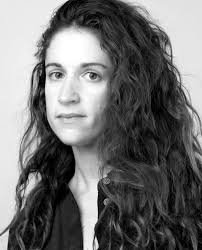
Daniela Stubbs-Leví is a Peruvian artist and poet based in Paris whose work traces emotional and sonic geographies shaped by absence. Through installations, performances, and poetic scores, she maps the shifting boundaries between sound, memory, and place, treating listening as a technology capable of revealing what is felt rather than heard. Her practice engages inaudible vibrations, engraved texts, and astrophysical data to probe how loss reverberates across scales, from collapsing stars to unspoken languages, leaving traces long after its source has vanished. Stubbs-Leví’s projects often unfold as participatory rituals: a poem reimagined as the trajectory of a supernova, a silent space that summons interior voices, or a soundwalk that becomes a shared act of invocation. Central to her work is The Five Laws of Absence, an evolving cycle that weaves psychoanalytic ideas with NASA research and spatial acoustics to explore how memory becomes material. For her, listening is both poetic and political. It’s a means of honouring the unseen and resisting the erasures that shape collective experience.
Aroussiak Gabrielian, PH.D, FAAR
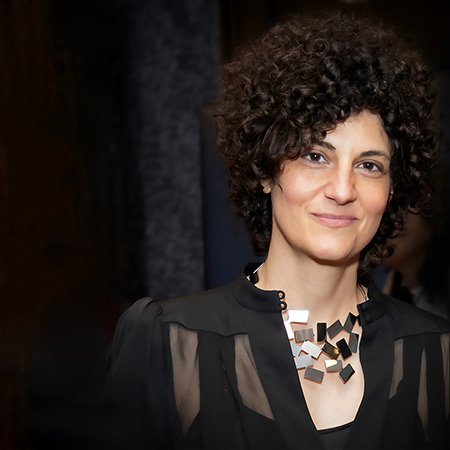
Aroussiak Gabrielian is an environmental designer and bioartist whose practice engages living organisms, natural systems, and atmospheric phenomena to explore multispecies relationships and ecological entanglements across scales. Her work seeks to expand our imagination, encouraging new ways of thinking about interactions with both human and non-human agents on the planet. Gabrielian has received numerous awards, including the Emerging Designer Award from the Design Futures Initiative, the Tomorrowland Projects Foundation Award through NYFA, Fast Company’s World Changing Ideas Award, and the Rome Prize from the American Academy in Rome. Her work has been exhibited internationally at venues such as the Getty Center, SXSW, Ars Electronica, Science Gallery Detroit, Hyundai Motorstudio Beijing, and the Eli & Edith Broad Museum Art Lab. She is Assistant Professor of Landscape Architecture + Urbanism at USC, Affiliate Faculty of Media Arts Practice, and Founding Director of the Landscape Futures Lab. Outside academia, she is a member of NEW INC, a trained futurist, and Founding Design Principal of foreground, a critical design agency.
Jo Liu
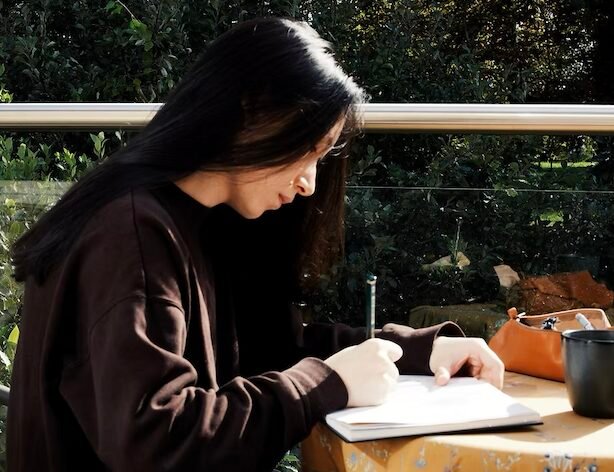
Here’s the revised bio with two additional sentences added naturally: Jo Liu is an illustrator whose work explores the beauty and intricacy of nature and science. She blends traditional media, digital techniques, and photography, often capturing details invisible to the naked eye. She also creates pottery, combining sculptural forms with illustrative detail, and develops virtual reality illustrations that immerse viewers in interactive, otherworldly environments. Her interdisciplinary practice bridges tangible and digital realms, inviting audiences to explore the unseen and the imaginative in equal measure. Her academic path through Western University and the University of the Arts London helped shape her approach, and her graduate project earned Distinguished Merit in the 3×3 Student Show No.19. Through her work, Jo continues to bridge art and discovery, creating experiences that reveal the hidden intricacies of nature and science.