
Imagine I told you, there’s a city that achieved a two-degree Celsius (2°C) reduction in average air temperatures over a three-year period.
The mayor’s office collaborated with the local university, and together they launched an initiative to distribute 880 000 trees and 2.5 million plants across the city’s severe heat pockets. Streets, boulevards, and former waterways were lined with trees and vegetation to provide relief from the scorching heat. The new green spaces needed maintenance, so the city’s botanical gardens started training urban gardeners and planting technicians, which created new job opportunities. Residents noticed birds and insects returning, butterflies fluttering amongst wildflower beds.

Air pollution plummeted, which had a measurable effect on public health. Acute respiratory infections dropped by 30% over the same three-year period. Neighbourhoods transformed into forest-like community spaces. Families started spending more time outside with their children. Traffic and commuter behaviour changed as new bike lanes, 80 km in total, were laid down under a dense canopy. People reported feeling safer, and they started covering walkable distances by foot instead of taking the car.
Medellín, Colombia’s second largest city, introduced 30 green urban spaces with the Green Corridors Initiative (2016 – 2019). The team behind this award-winning conscious design concept has since gone on to work with the Colombian city of Barranquilla to replace pavements with healthy soil and to plant 100 trees across two open concrete squares.
Conscious Design Improves Physical Health
A busy street in downtown Toronto. He stops to take in the scene. A quick body scan, How do I feel standing here, right now? A moment of reflection led Colin Ellard to ponder, How do the streetscapes in big cities affect people’s well-being?
Ellard, a cognitive neuroscientist at the University of Waterloo (Ontario, Canada), works at the intersection of neuroscience, psychology and architectural design. Across the globe, major cities invest in street design that is becoming increasingly dense. Minimalistic façades are cost-effective and easy to replicate across several blocks. His research interest centres on the long-term mental health effects of urban spaces that are devoid of aesthetically pleasing design and visual complexity.
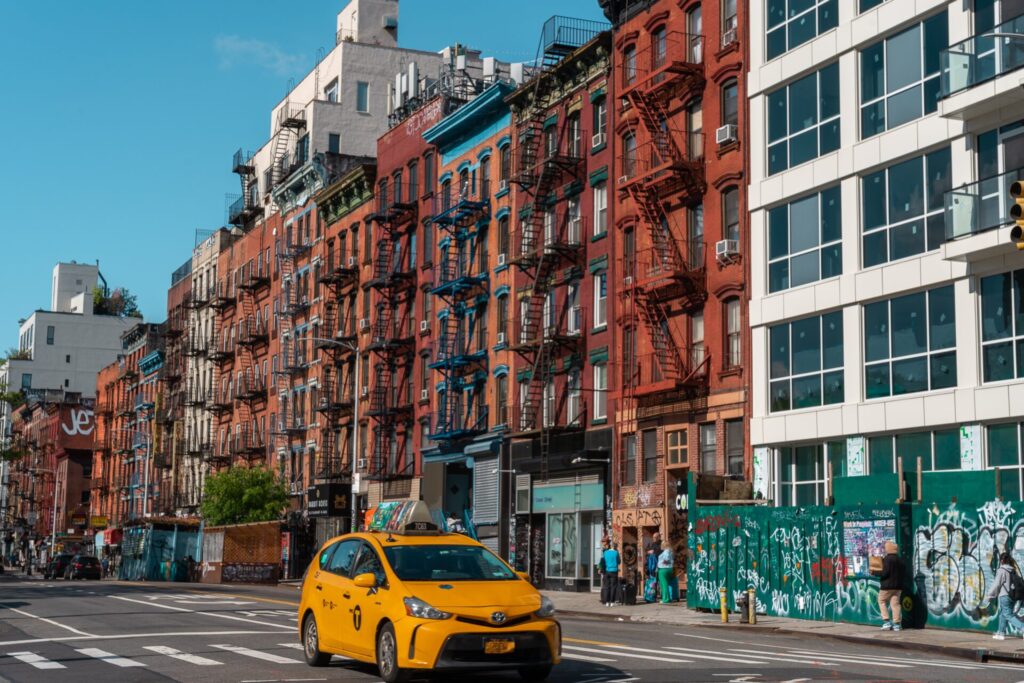
In 2011, Ellard designed a study to investigate his research question. The study was conducted in New York’s Lower East Side, and study participants had to walk around selected study sites in the neighbourhood. They were asked to remain at each site for a fixed observation time to simply look around and take in the surroundings. They completed a questionnaire on a smartphone about their emotional state, and they were asked to describe each site. An arm bracelet recorded physiological data as they completed the route.
Study sites dominated by tall, featureless buildings were strongly associated with elevated levels of the stress hormone, cortisol. Elevated heart rates were measured, and levels of skin conductance (the electrical conductivity of the skin surface) indicated a nervous system ready to respond to physical threat. The surroundings were described as uninviting or uninspiring. Some participants felt frustrated or impatient at having to wait out the observation time before moving on.
At visually pleasing sites, changes in the participants’ body language and their behaviour towards each other were observed. At one particular site that boasts lively cafés, colourful façades, historical charm and green spaces, participants became chatty, all but abandoning study protocol. They were required not to interact nor to influence each other’s self-reporting. Chatter about which cafés to visit and activities to explore in the area were positive, sociable behaviours that Ellard’s team documented at these sites.
Since that 2011 study, Ellard has seen progress in architectural design and urban planning practices. There’s greater awareness and understanding of how the built environment affects our physical health. During a recent interview on the topic of neuroarchitecture, he was quoted as saying, “the effects on our psyche are just beginning to gain traction” (Untapped, 2025).
Conscious Design Changes Learning Environments
Students rush down a blueberry staircase into a hallway. Wall tiles, shaped in the hexagons of a beehive, accentuate the hallway’s length. Arranged in a mosaic that represents water waves, the tiles are carpeted to dampen ambient noise. Their colours suggest moss, grass, and garden ponds. Classroom windows look out onto trees in the courtyard. Wallpaper motifs draw inspiration from snowflake fractals and leaf patterns. High ceilings covered with wooden panels create naturally lit spaces that are bright, yet calming.
Biophilic design concepts and low-cost materials were used in renovating Bethel-Hanberry Elementary, a public school in South Carolina (US). Researchers visited the school to study the impact of the new learning environment.
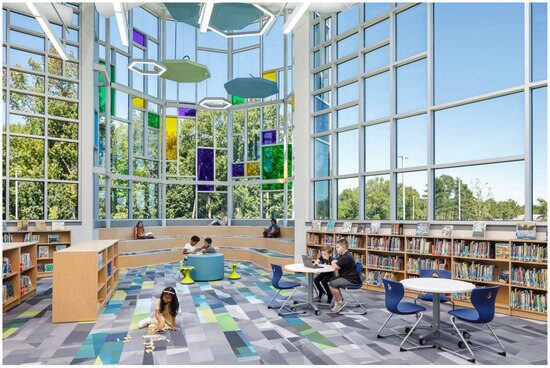
Test scores and metrics on behaviour were analysed for students aged 7 – 9. Two consecutive school years were considered, one before and one after the renovation. Surveys and interviews of the students, parents, teachers and administrative staff were conducted.
At the end of the school year, after renovation, gains in literacy and numeracy exceeded the projections that, up until that point, were based on their development from before the renovation. Chronic absenteeism declined, disciplinary problems followed the same trend, while teacher retention and satisfaction improved. Survey and interview responses showed that the perception of the new facilities was overwhelmingly positive. Overall renovation of the school was considered a good investment in student development.
With each passing decade, students are spending more time learning and playing indoors. This trend is coupled with growing concerns in the education sector for students’ mental and physical health, and their social development. Student surveys report increasing anxiety over global issues such as the climate crisis, along with a need for greater mental health support (Gray and Downie, 2024).
Success stories like Bethel-Hanberry Elementary show there is much potential in adopting a holistic, transdisciplinary approach to the indoor learning experience.
Designing Environments for Human Flourishing
We can enhance our experiences by making conscious design choices that centre the overall health and well-being of individuals, our communities and society at large, and the sustained health of our ecosystems.
Medellín’s Green Corridors reveal something important about conscious design: tackling modern challenges often requires thinking across systems. An eco-conscious strategy aimed at reducing urban heat went on to improve public health, support urban biodiversity, create jobs, and transform how residents experienced their city –– all by reintroducing nature into urban spaces.
Too often, the spaces we inhabit are designed to prioritise convenience and efficiency over social connection and environmental sustainability. Yet, our surroundings influence how we feel, how we interact, how we learn and how we imagine the future. Through conscious design tools, thoughtful environmental interventions can lead to positive effects across social and environmental systems, with profound psychological effects.
Source materials
All sources accessed in May 2026.
- Ashden Climate Solutions in Action (2023), Urban Think Tank Next: growing green corridors to tackle urban heat.
- Global Center on Adaptation (2019), Medellín shows how nature-based solutions can keep people and planet cool.
- Sam Bentley – Good News That You Might Have Missed (2024), These green corridors are helping to cool down cities! #shorts.
- Colin Ellard (2015), Streets with no game – Boring cityscapes increase sadness, addiction and disease-related stress. Is urban design a matter of public health?.
- VML (2024), Joyful architecture – The idea of architecture that uplifts and creates a sense of community is taking hold.
- Untapped (2025), Neuroaesthetics Has Been Around for 25 Years. Are Architects Paying Attention Yet?.
- Journal of Biophilic Design, blog post (2025), What is Biophilic Design?.
- Children & Nature Network (2024), summary of Outcomes of Biophilic Design for Schools.
- Browning and Determan (2024), Outcomes of Biophilic Design for Schools.
- Gray and Downie (2024), Designing Thriving School Ecosystems: The Synergy of Biophilic Design, Wellbeing Science, and Systems Science.