The integration of visual arts courses into medical school curricula is a relatively recent development. Over the past three decades, the number of medical schools that include elective visual arts courses has increased across the United States, Canada, Europe, and Australia. This trend is accompanied by a growing body of scientific literature and ongoing discourse on how to best measure the educational impact of visual arts courses in medical education. Much of the discussion centers on robust study design and methodology. There is a need to define, validate, and standardize objective metrics that reliably quantify the benefits of visual arts courses for medical students.
The Role of Art in Medical Education and Professional Skills
A recent systematic review, published in 2019, critiqued the proliferation of anecdotal studies. In other words, the majority of studies report one institution’s effort to design and implement one visual arts course in their medical school curriculum. Studies heavily rely on the subjective, descriptive feedback of small student cohorts over several semesters, and far too few studies are designed to investigate how well course design and course content could be transferable to healthcare professionals in general. Thus, a lot of scope remains to investigate big-picture questions such as, How many visual arts courses should be taken to produce a specific learning effect in students? What is the longevity of that effect over the duration of a medical school education? These beg the question, Can we make recommendations on continuous skills development in the visual arts throughout medical school education?
There is general consensus in the scientific literature that visual arts courses can address some of the shortcomings of standard medical school training. Standard curricula tend to focus on acquiring scientific and biomedical textbook knowledge, and on acquiring the technical skills of clinical and surgical practice. Little emphasis is placed on acquiring the relational skills needed for patient care.
Visual arts courses have been introduced to develop clinical observational skills, encourage reflective and introspective thinking, enhance cognitive flexibility, promote empathetic communication skills, facilitate team building, and foster trust amongst members of clinical teams in a hospital setting. Visual arts courses heighten cultural sensitivity and awareness of social context, and even increase medical students’ tolerance for diagnostic ambiguity. Engaging in the visual arts is known to improve mindfulness and mental well-being amongst students as they progress through the demands of their rigorous medical training.
Arts-Based Training: Essential Skill Building and Measurable Benefits
Surgical practice is highly dependent on interpreting diagnostic images and visually identifying anatomical structures during surgical procedure. Clinicians require observational skills, along with relational competencies that are associated with compassionate patient care and better patient outcomes.
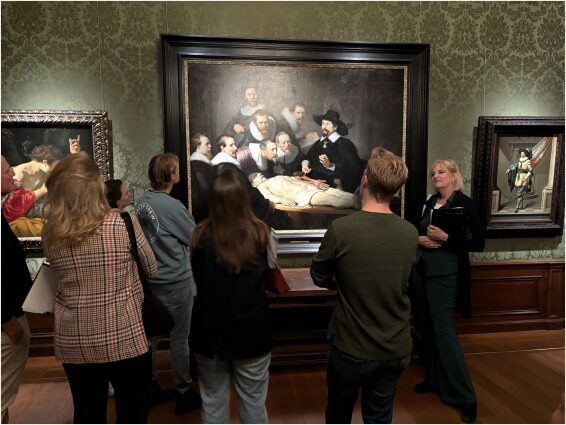
Designing visual arts courses for medical students is a collaborative effort between medical schools and local art museums. Courses are jointly taught by an art historian (or art educator) affiliated with the museum and an experienced staff member of the medical school. Guided museum visits to view paintings and other artworks are central to the course curriculum. Other course components include drawing and/or writing exercises in the museum, for which students are given time to sketch or describe in writing what they see and how they feel about the artwork.
There are standardized and validated pedagogical methods for teaching visual literacy and observational skills. The Visual Thinking Strategies and Artful Thinking methods are most frequently reported in the literature on visual arts training for medical students.
Visual Thinking Strategies was designed by psychologist Abigail Housen and art educator Philip Yenawine. The method builds observational and critical thinking skills by posing three questions: “What is going on in this picture? What do you see that makes you say that? What more can you find?” When asked in this order, these questions encourage students to look closely at the artwork, make observations based on what they see, and engage in collaborative meaning-making.
Artful Thinking has a similar framework. It was designed to help educators build conceptual bridges between academic course content and visual artworks. The approach includes routines that train a number of “thinking modes” over several weeks: reasoning, questioning and investigating, observing and describing, comparing and connecting, identifying complexity, and exploring different viewpoints.
Artful Thinking sets itself apart from Visual Thinking Strategies in two ways. Contextual information is provided to facilitate students’ thought processes. It has been shown that the method is adaptable and easily generalizable to other art forms. Since its inception, Artful Thinking has been used to integrate both the visual arts and music into academic curricula, making it well-suited for medical schools and their collaborations with art museums.
Notably, a Dutch initiative was published in the scientific literature in January 2026. The authors designed a new pedagogical approach for curating an observational art course for surgical residents. The students were residents at surgical centers in Amsterdam, Rotterdam, and The Hague, and each surgical center partnered with a renowned museum in the city.
This method is called the ABCD method. It is largely based on Visual Thinking Strategies and employs some elements of Artful Thinking. A structured framework for viewing artwork was designed, namely, A for Attention (observe in silence, pay attention to detail), B for Behold (name the features observed, describe perceived relationships between features, consider an interpretation), C for Communication (present observations and consider all reflections gathered from the group, summarize interpretations), D for Diagnosis (identify a medical condition or an artistic representation of a medical condition that the painter conveyed).
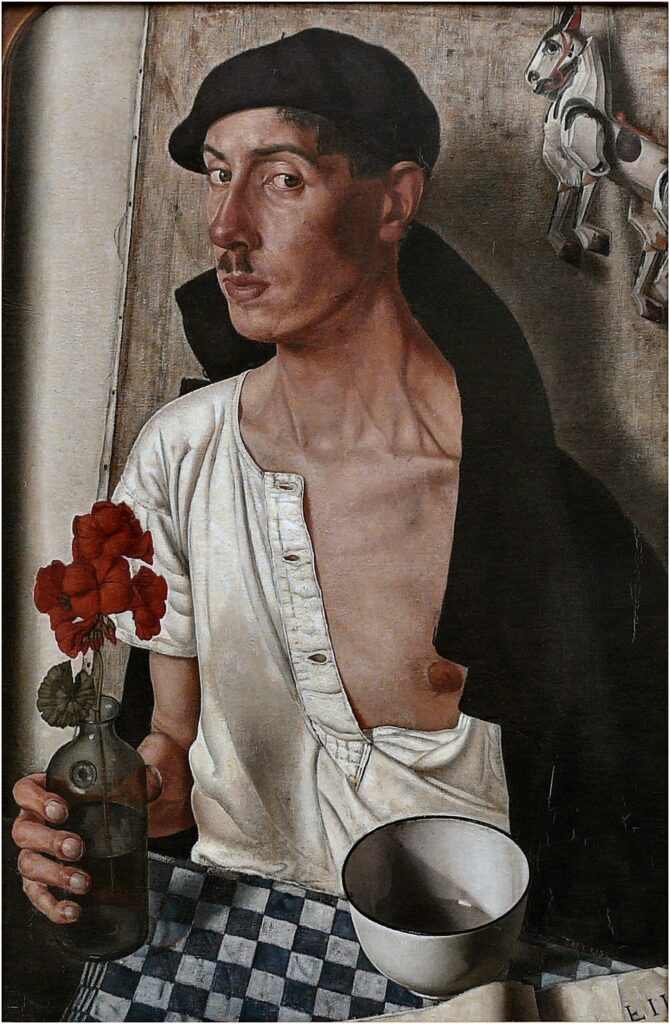
Art historians guided students through the ABCD procedure of viewing a small collection of pieces by Rembrandt, Vermeer, Rubens, Steen, and Rosselli. Paintings were selected for depicting the physical traits that were confirmed to be or suggestive of a medical condition. Other pieces depict scenes of surgical procedures or a medical professional tending to a patient. The art historian provided the art-historical interpretation of the painting, along with the social, cultural, and historical context of its time. Students were given time for focused, silent viewing followed by a group discussion led by an experienced surgeon.
Interestingly, the ABCD method of receiving contextual information, silent viewing, deliberate withholding of judgement and diagnosis until all perspectives were gathered, along with summarizing conclusions to group discussions resulted in medical diagnoses of conditions in the paintings that were entirely new and never before documented by the museum.
In light of the weaknesses in study design known in the scientific community, the authors used a number of standardized and validated tools to assess student feedback. The Jefferson Scale of Empathy and the Tolerance of Ambiguity in Medical Students and Doctors scales were used to demonstrate that surgical residents produced higher scores for empathy and tolerance of ambiguity after they had completed the course.
This first-of-its-kind initiative aimed at surgical residents in the Netherlands is under further development and will be offered on a regular basis at surgical centers across the country. The authors concluded their report by recommending that the ABCD method be used in the visual arts training of other healthcare professionals.
The Development of the Art-Scientist through Reimagining Higher Education
The Artful Thinking method is an example of how artistic inquiry can function as a tool for practical training in a technical discipline. The weekly routines guide students to observe carefully, notice relationships, interpret possible meanings, and set aside premature judgement while gathering evidence. As students gradually moved from close observation toward interpretation and questioning, they were encouraged to step back from prior assumptions and allow new ideas to reshape their understanding.
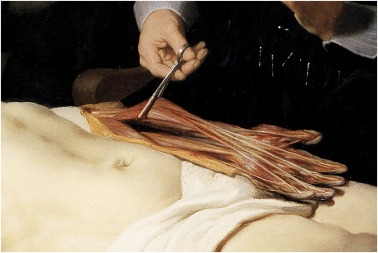
The Dutch ABCD method mirrors the early stages of clinical reasoning and parallels the observational discipline required in diagnostic practice. The method uses an art museum to become a structured environment for cultivating habits of attention: students were given the opportunity to notice subtle details, pause before judgement, and situate observations within a broader context, skills that directly translate to clinical practice. The skills developed by these “artful thinking practices” can thus be extrapolated to broader intellectual dispositions, easily transferable across various disciplines.
Students in the ABCD study were able to identify medical features in historical artworks that were previously undocumented. These discoveries were not necessarily the result of medical expertise alone, but of the intersection of specialized medical knowledge with visual-artistic analysis. When disciplines intersect, new meanings can emerge from details that were already present. An openness to new methods and new knowledge allows seemingly familiar truths to reveal new layers of meaning. This element of meaning-making that goes beyond disciplinary boundaries is central to the development of the art-scientist.
Considering a definition of the art-scientist brings valuable insight: artistic and scientific thinking are not separate domains but complementary ways of interpreting the same world. In the ABCD study, the symptoms of medical conditions, postures, and suggested gestures and actions of the people on the canvas resembled the clinical or surgical setting, demonstrating how artistic and scientific practices emerge from the same act, the act of close observation.
An art-scientist, in our view of the term, is one who pursues both the arts and the sciences from an experience-based and integrated perspective. The art-scientist applies artistic and scientific methodologies, principles, and concepts to investigate the world, generate integrated knowledge, and reveal connections that might otherwise remain unseen. Artistic representation, artistic interpretation, scientific reasoning, and scientific inquiry inform one another, enabling deeper observation, creative problem-solving, and interdisciplinary discovery. When perception is narrowed by a rigid paradigm, however, elements of inherent complexity go unnoticed. By introducing artful thinking practices in higher education curricula, the art-scientist can be trained to be an active, critical, thoughtful observer who is capable of interdisciplinary thinking.
There is value in contemplating the use or adaptation of the ABCD method in the training of engineers, physicists, mathematicians, biologists, and beyond. Each of these disciplines relies on observation: engineers recognise patterns in complex systems, physicists study the dynamics of physical systems by designing experiments and by observing natural phenomena, and mathematicians often begin with patterns or relationships that must first be noticed before they can be formalized into theory. Field work and the laboratory practices of biologists depend on observation. Needless to say, across the sciences, observation is the starting point of inquiry and the foundation upon which hypotheses and explanations are built.
Yet the act of observing is rarely taught as a reflective practice in itself. Arts-based methods such as the ABCD procedure suggest how artistic training could support technical disciplines, not solely as a tool for improving technical observation, but as a way of shaping a broader perceptual mindset. By engaging with art (visual or otherwise), students practice noticing subtle details and relationships, holding multiple interpretations at once, and situating details within broader contexts. In this sense, arts-based methods can cultivate a more holistic mode of perception.
The skills development that students gained by doing the observation exercises in the museum setting are crucial for their individual professional trajectories, but the process of developing those skills depended on collaborative effort. Through the ABCD procedure, surgical residents, experienced surgeons who hold teaching chairs at the surgical centres, and art historians, art educators, and museum facilitators participated in shared investigation, contributing insights from different schools of thought. The educational environment of the museum thus curated the ability to appreciate, empathize with, and reason across varied perspectives. Integrated art-science thinking, and the development of the art-scientist, thus become the foundations for collaboration in new professional settings.
When incorporated into higher education curricula, arts-based methods nurture a mindset that values interdisciplinary exchange, attentive perception, and interpretive openness. They contribute to the development of professionals who are capable of moving between analytical and interpretive modes of inquiry, grounding practitioners in the practices of noticing, openness, fluidity, empathy, and integration.
References
All references accessed March 2026.
- Van Gulik et al. (2026), Training the eye and diagnosing the canvas in the Museum ‘A perspective on art-based medical education’.
- Mukunda et al. (2019), Visual art instruction in medical education: a narrative review.
- Rezaei et al. (2023), Using Visual Arts Education and Reflective Practice to Increase Empathy and Perspective Taking in Medical Students.
- Chan, A call to include art in pre-med education, Insights, Stanford Medicine News Center, https://med.stanford.edu/news/insights/2018/10/a-call-to-include-art-in-pre-med-education.html.
- University of Toledo, College of Medicine MD Curriculum, Art & Medicine: Using Visual Literacy to Improve Diagnostic Skills, https://www.utoledo.edu/med/md/curriculum/preclinical/artandmed-preclerkship.html.