Ant Nevin
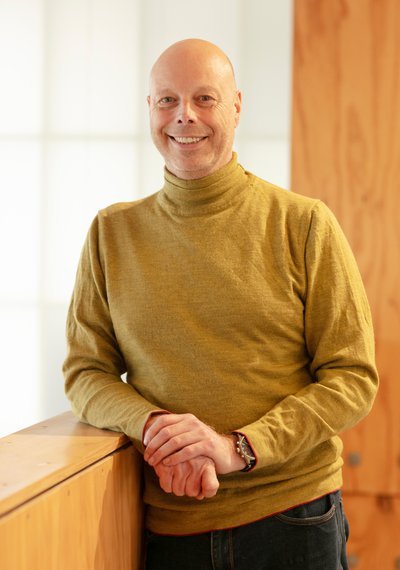
Antony (Ant) Nevin is an interdisciplinary researcher and educator working at the intersection of design and living systems. He holds an M.A. in Animation and Interactive Media from RMIT University and serves as co-lead of the Visual Communication Design programme as well as a senior lecturer at Massey University in Wellington, New Zealand. Alongside his academic career, Ant collaborates with scientists, technologists, and artists worldwide to create experiences that make complex scientific concepts accessible and engaging. His work explores themes such as microorganisms, biological systems, synthetic biology, and generative AI. Ant has exhibited installations and led workshops across Europe, the USA, Australia, and New Zealand. In 2019, he was Artist in Residence at the Institute for Research in Biomedicine in Barcelona, where he investigated what it means to be a human in the 21st century. In 2020, he received the New Zealand Government’s Curious Minds grant to develop The BiolumenLab, an immersive environment enabling people to explore DNA sequencing. Through his creative works, Ant bridges the gap between science and design, fostering interdisciplinary dialogue that inspires fresh perspectives.
Eka Zharinova
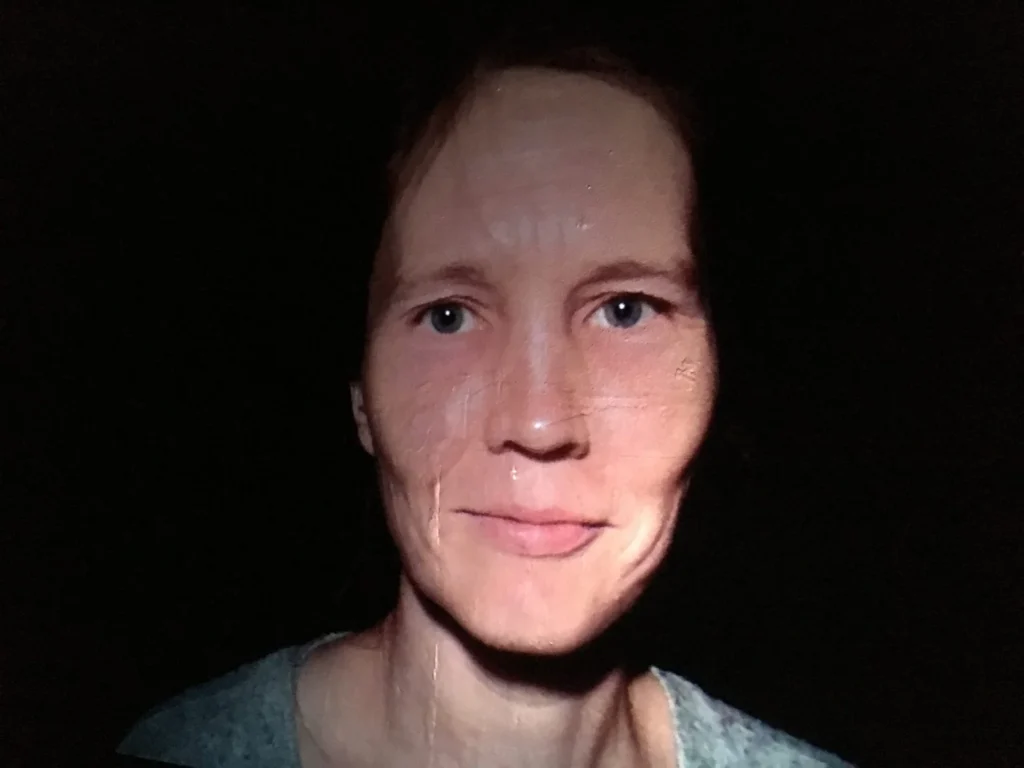
Ekaterina (Eka) Zharinova is a dancer, performance artist, and researcher from Ural, Russia, currently based in London. With an M.S. in Mathematics from the Ural State University and a Ph.D. in Performance Studies from the University of California in Davis, her work explores the relationship between the human body and digital media by incorporating everyday technologies like mobile devices, projectors, and TV screens into dance performance. She has performed in over ten countries, produced programs for theatres, museums, galleries, and libraries, and danced with choreographers including Tatiana Baganova, Maida Withers, Anouk van Dijk, and Kota Yamazaki. From 2013 to 2017, she collaborated with software artist Denis Perevalov, co-creating dance performances with interactive digital technology. Currently, Eka’s research investigates the interactions between dance, digital imagery, and machine-human relationships. She invites audiences to experience alternative realities, using dance as a means to explore freedom and diverse ways of living.
Matías Gárate, PhD
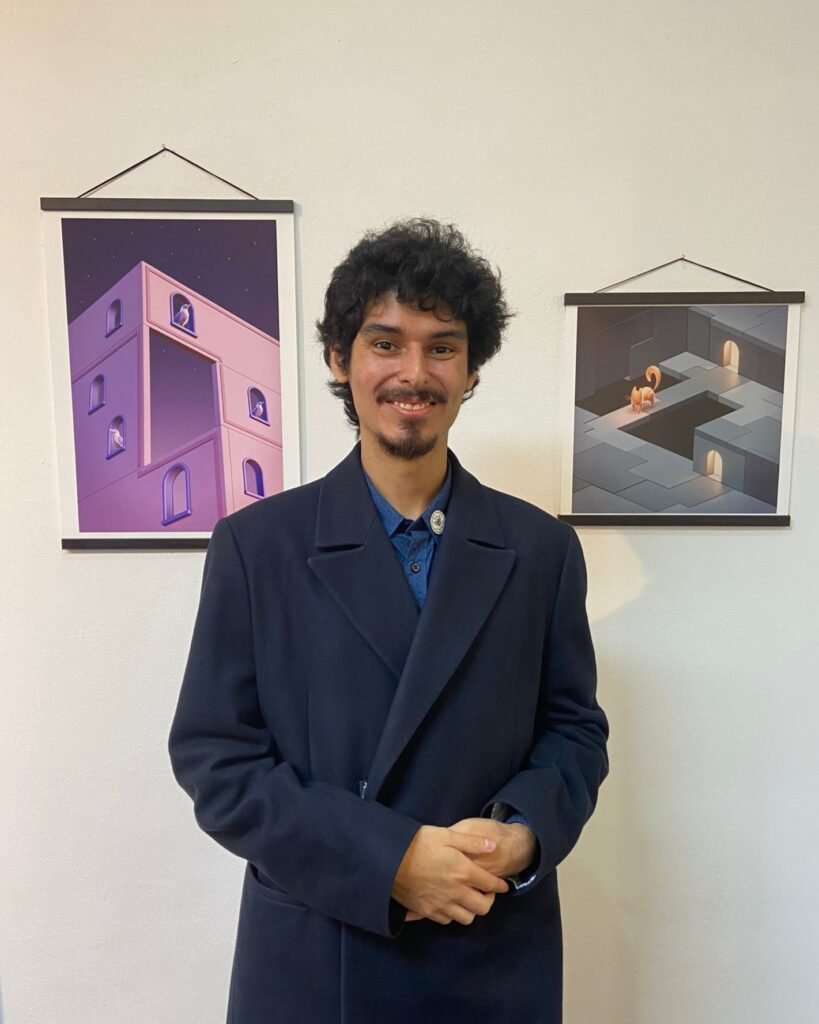
Matías Gárate is a digital artist and former astrophysicist based in Luxembourg, originally from Chile. With a PhD from Ludwig-Maximilians-Universität München and research experience at the Max Planck Institute of Astronomy, his scientific work focused on the formation of young solar systems. Alongside this, he nurtured a parallel passion for digital 3D art. During the final year of his PhD, he discovered the world of impossible figures – geometric paradoxes that challenge perception – through the works of Escher, Reutersvärd and the game Monument Valley. This fusion of mathematics and visual art became his creative focus, and today, he creates fine-art prints of paradoxical structures using Blender and print on Hahnemühle FineArt paper. His work invites curiosity, encouraging viewers to imagine alternative realities. After exhibiting in Germany and being featured in digital art magazines with his creations, he transitioned from a focus in science to an artistic methodology informed by his scientific background, bringing a unique perspective shaped by both worlds.
Adam Rowe
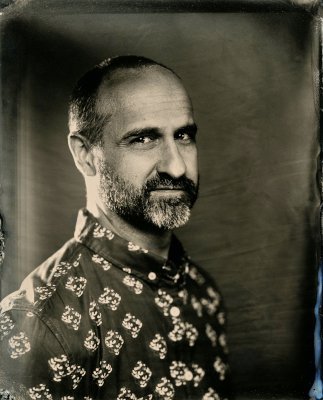
Adam Rowe is an interdisciplinary artist working in sculpture, print, video, and many other techniques / media. His work is informed by math and biology, shaped by graphic design principles, and ultimately realized by traditional art-making techniques. He seeks a meaningful contribution to the sciences, since in the end everything has to look like something. He also composes music as urtsurtu.
Emma Jane Lowry

Hi, I’m Emma! I am a 4th-year student at McGill University working on a bachelor’s degree in Gender and Feminist Studies and a medical assistant in pediatrics at the University of Vermont Medical Center. I use colorful, whimsical art to illustrate the functions of the body as their own little worlds. I am interested in the overlap between gender and medicine and how interdisciplinary knowledge is central to the understanding of women’s health, LGBTQ+ health, and the health of infants and children.
Roberto Daoud

Roberto Daoud began his dance journey in high school with the Nord Anglia Dance Troupe, and later, The Dance Academy Dubai. Of Lebanese background and having lived in Dubai, Roberto’s commitment to the art form stood out in a culture where men’s participation in dance is not widely accepted. Now a BSc student in Computer Science with a concentration in Artificial Intelligence at McGill University, Roberto is deeply committed to advancing his ballet and contemporary dance training, balancing the pre-professional programat Ballet Divertimento in Montréal and attending extended training at the Nada Kano Dance School in Beirut, Lebanon, during family visits – all alongside his academic pursuit. At Ballet Divertimento, Roberto’s rigorous training under acclaimed artists such as Owen Montague (National Ballet of Canada – NBC), Christine Cyr (NBC), Kristen Céré (International Choreographer) and Irina Chorna (National Ballet of Austria) – and later John Alleyne (Ballet BC & NBC) and Alexis Fletcher (Ballet BC) for the restaging of Alleyne’s Four Seasons, where Roberto played the lead male role – has led to his acceptance to prestigious programs such as the Joffrey Ballet Summer Intensive in New York and the International Ballet Masterclass in Prague, of which involved training under Jahn Magnus Johansen (Assistant Director of Norwegian National Ballet) and Christopher Hampson (Artistic Director of Scottish Ballet), among other leading professionals. For Roberto, dance cleanses his soul in a way that no other activity can. With a passion for the performing arts, he uses his free time to compete in professional jazz and lyrical competitions (Akademie de Danse Makam) and enjoys sharing his acquired knowledge through teaching at dance schools around Montréal (Ballet Montreal – Pas de deux assistant; Nanci Moretti Dance School – Instructor). At the heart of his pursuits, Roberto envisions utilizing artificial intelligence technologies to optimize dance training methodologies that prioritize injury prevention strategies. He remains passionate about performing and continues to seek opportunities that will deepen his knowledge and refine his skills, ensuring continued growth in both his technical expertise and artistic expression.
MEDIAH
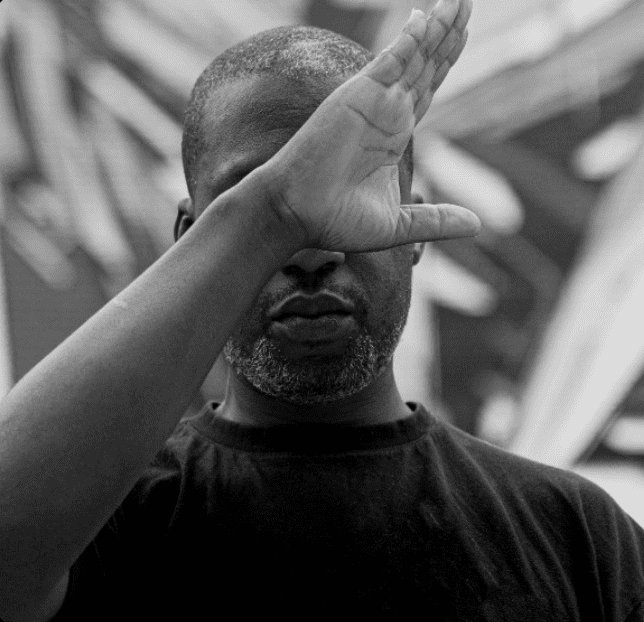
Evond Blake is a Canadian multidisciplinary visual artist who has worked under the pseudonym MEDIAH for over 27 years. An Internationally renowned visual artist, MEDIAH is a trendsetter sparking new ideas and originality by blurring the lines between post-graffiti and dynamic abstraction. Blake’s work consists of weaving traditional street art forms with traditional painterly techniques and mixed media printmaking using many forms and approaches found in digital art and design. Heavily inspired by avionics, mechanical engineering and schematics, the artwork glorifies and captures the essence of speed, motion, dynamism and force to create movement on the image surface. Blake’s work provides the viewer with not only this glorification of speed relating to the thirst for a faster and more streamline world but also its unavoidable repercussions of collision, disaster and chaos. As an artist, I strive to create visual content that inspires, intrigues and uplifts my audience. I feel it is imperative to create positive imagery that can give to the viewer in a time of violence and uncertainty. My artistic heritage lies in graffiti art; which is the means by which I established myself as an artist at 15 years of age. My urban artwork in public spaces has given me an outlet and created opportunities for me to explore new avenues of artistic expression without straying too far away from my graffiti roots. Although my paintings, mural artwork and fine art prints evolved from my traditional graffiti work they are now heavily inspired by my fascination with speed, motion, force and the resulting chaos and subsequent order. My followers and fans label my work as ‘Dynamism’.
Nicia John
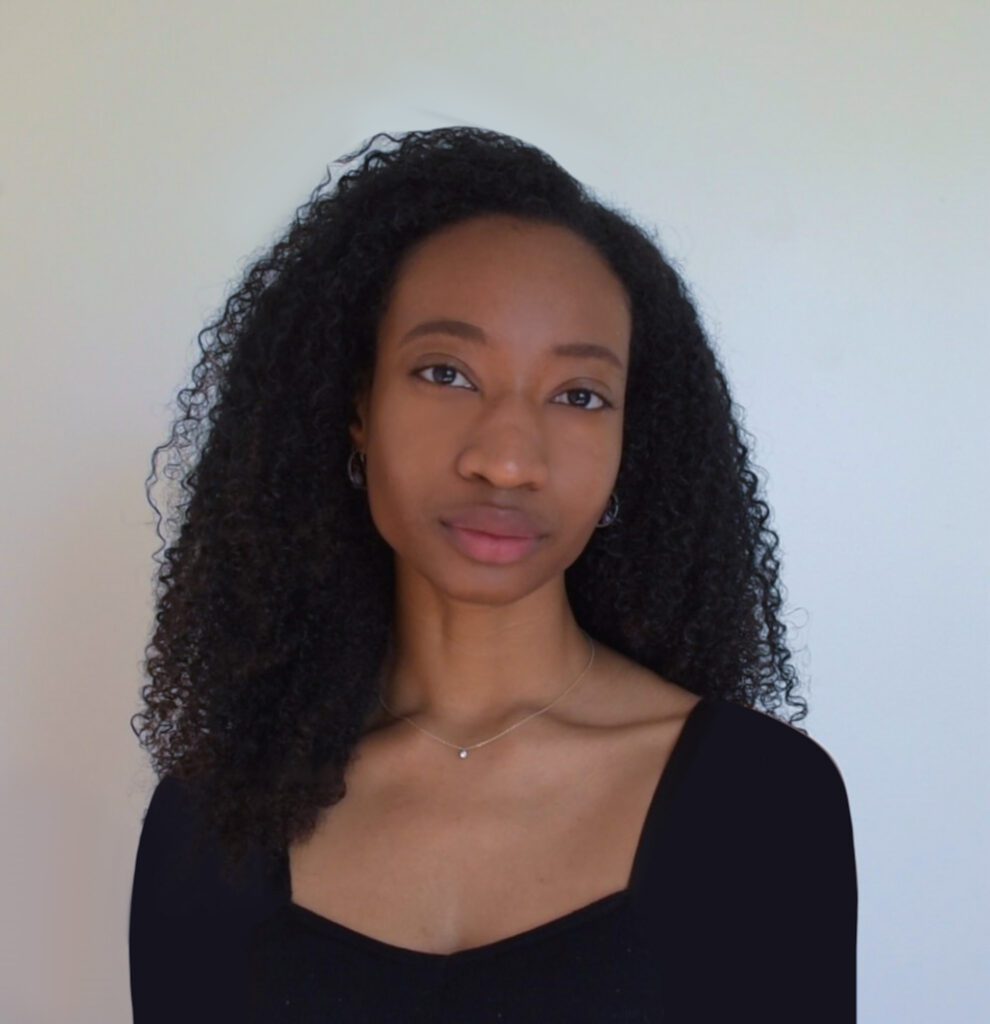
Both a researcher and a classically trained ballet dancer, Nicia John seeks potential at the heart of a void. The undefined, the unexplored, the unknown — she is tied to these positions by ropes of curiosity and reels herself in to unearth that which is hidden. This philosophy carried Nicia through an Hons BFA in Dance and Psychology (magna cum laude) at York University, where movement became a tool for contorting physical and abstract space. In creating choreography and exploring dynamism, she found herself enraptured by the complexity of human motor systems. Her curiosity drove her to pursue an MSc in Psychology, with a focus in motor neuroscience, at McGill University (funded by Canada’s Graduate Master’s Scholarship, Fonds de Recherche du Québec – Maitrise and Healthy Brains – Healthy Lives). There, she studied principles of sensorimotor learning and memory with techniques such as transcranial magnetic stimulation (TMS) and electroencephalography (EEG), all while simultaneously honing in on her classical technique through Ballet Divertimento’s pre-professional college ballet program. With a deep passion for travel, she has pursued dance and research training around the globe. She attended the Art of Marseille Ballet Intensive, funded by Canada Arts Council’s Professional Development grant, and conducted a research stay at Université Aix-Marseille, France under the Laboratory of Cognitive Neurosciences. Her journey includes functional magnetic resonance imaging (fMRI) training at Oxford University, ballet classes in Washington D.C., Paris, Rennes, and Vienna, as well as attendance to conferences such as the Organization for Human Brain Mapping (Montréal), Society for Neuroscience (USA), and Progress in Motor Control (Italy). Presently a PhD student in Biomedical Sciences with funding from the prestigious Canada’s Graduate Doctoral award, Nicia continues to merge her interdisciplinary pursuits through researching multisensory integration and rhythm processing in expert dancers. She is passionate about using choreography and performance art to bridge the knowledge gap between science and society, channeling these efforts into her role as founding director of The CreARTe Foundation, a non-profit organization dedicated to advancing art-science integration. In constant search for knowledge and growth, she actively seeks to refine her craft and inspire others with interdisciplinary thinking.
Vena Joseph
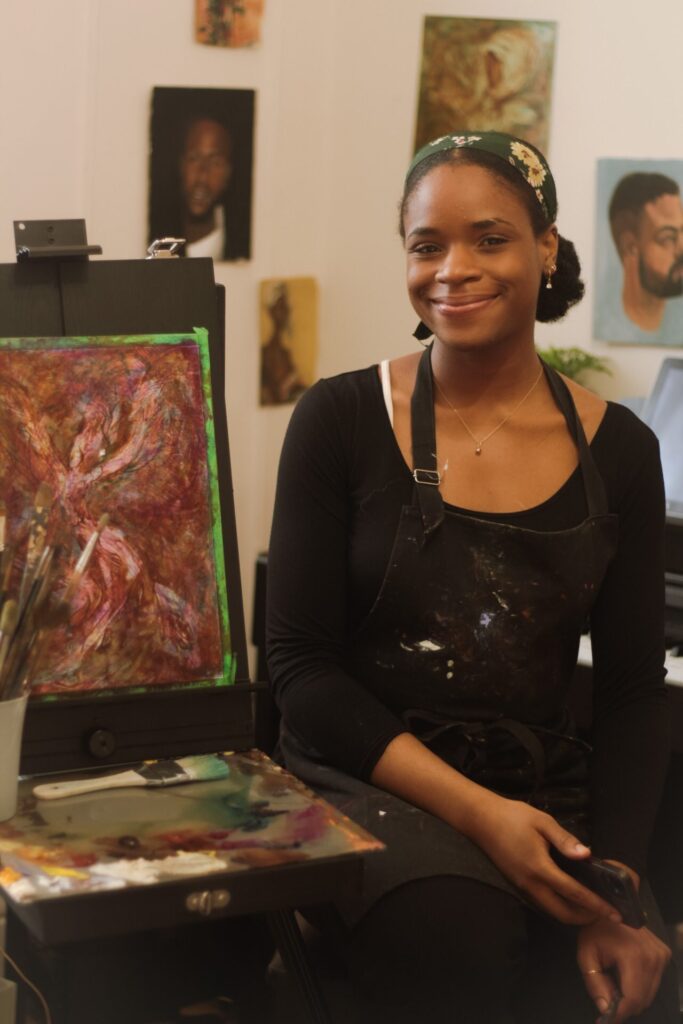
Vena Joseph is a multidisciplinary artist and researcher. Originally from Port-au-Prince, Haiti, she is currently based in Canada, where she divides her time between scientific research and visual arts. Her artistic approach combines traditional and digital practices to create figurative and semi-abstract works. Vena had been a global health researcher since 2015, working on malaria prevention and control, medical entomology, and epidemiology. She is interested in the “causative web of epidemiology”, studying how social and biological factors are woven together across local and global geographies to produce disease and well-being for different communities. Her artistic practice is an important tool to both understand and communicate the complexity in her area of scientific research.
Dr. Isabelle Peretz, Professor

Dr. Isabelle Peretz is a Psychology professor at the University of Montreal and co-holder of the Casavant Research chair in neurocognition of music. Her research emphasizes the musical potential of everyday people, exploring its neural basis, heritability, and relationship to language. She is a leading expert on congenital and acquired musical disorders, particularly amusia, and has published over 470 scientific papers on music perception, memory, emotions, and related fields. Since 1986, Dr. Peretz’s work has been funded by the Canadian Natural Science and Engineering Council and the Canadian Institutes of Health Research. In 2005, she co-founded the International Laboratory for Brain Music and Sound Research (BRAMS), which has become a prominent center for studying the biological foundations of music. She has received numerous awards, including the Lifetime Achievement Award from the Society for Music Perception and Cognition, and is a member of various prestigious organizations, including the Order of Canada, the Royal Society of Canada and now international member of the U.S. National Academy of Science. Dr. Peretz’s pioneering work has transformed the perception of music in the neurosciences, arguing that musicality is innate and distinct from language, mobilizing specialized brain networks. Her methodologies include behavioral measures, psychophysics, neuroimaging, and genetics.