Jody “J.D.” Rasch
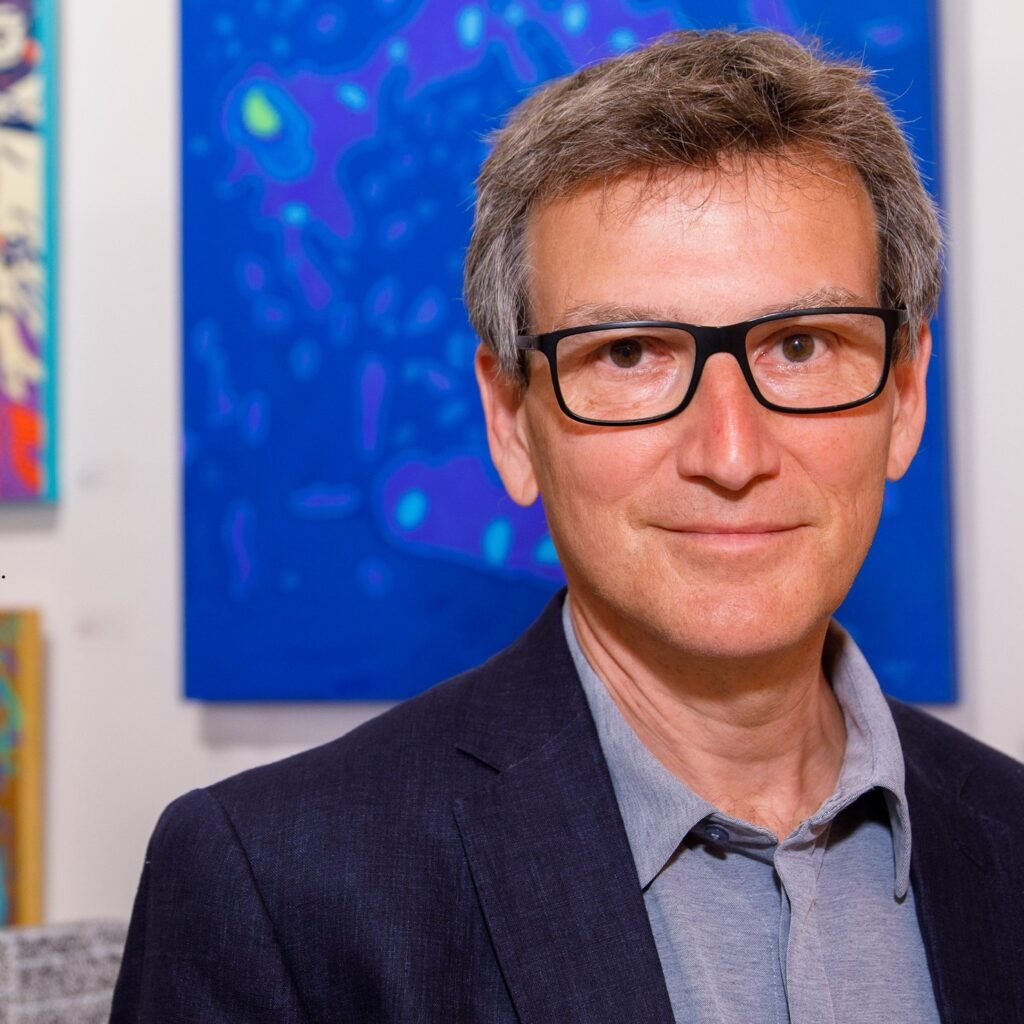
Jody “J.D.” Rasch is a writer, artist, social activist, and author whose work is fueled by a profound sense of awe at the hidden structures of the universe. He draws inspiration from quantum physics, relativity, biology and astronomy, which offer him a deeper framework for understanding existence. Rasch merges painting with scientific principles, working in three dimensions with aluminum mesh, armature wire, poured acrylic, and photographic techniques to evoke uncertainty, entanglement, and the dynamic randomness embedded in nature. His book The Silver Forestextends these interests into fiction, weaving scientific metaphors with mythic and psychological themes. Through this narrative work, he explores the same questions of interconnectedness and unseen forces that shape his visual art.
Dr. Barbara Mydlak
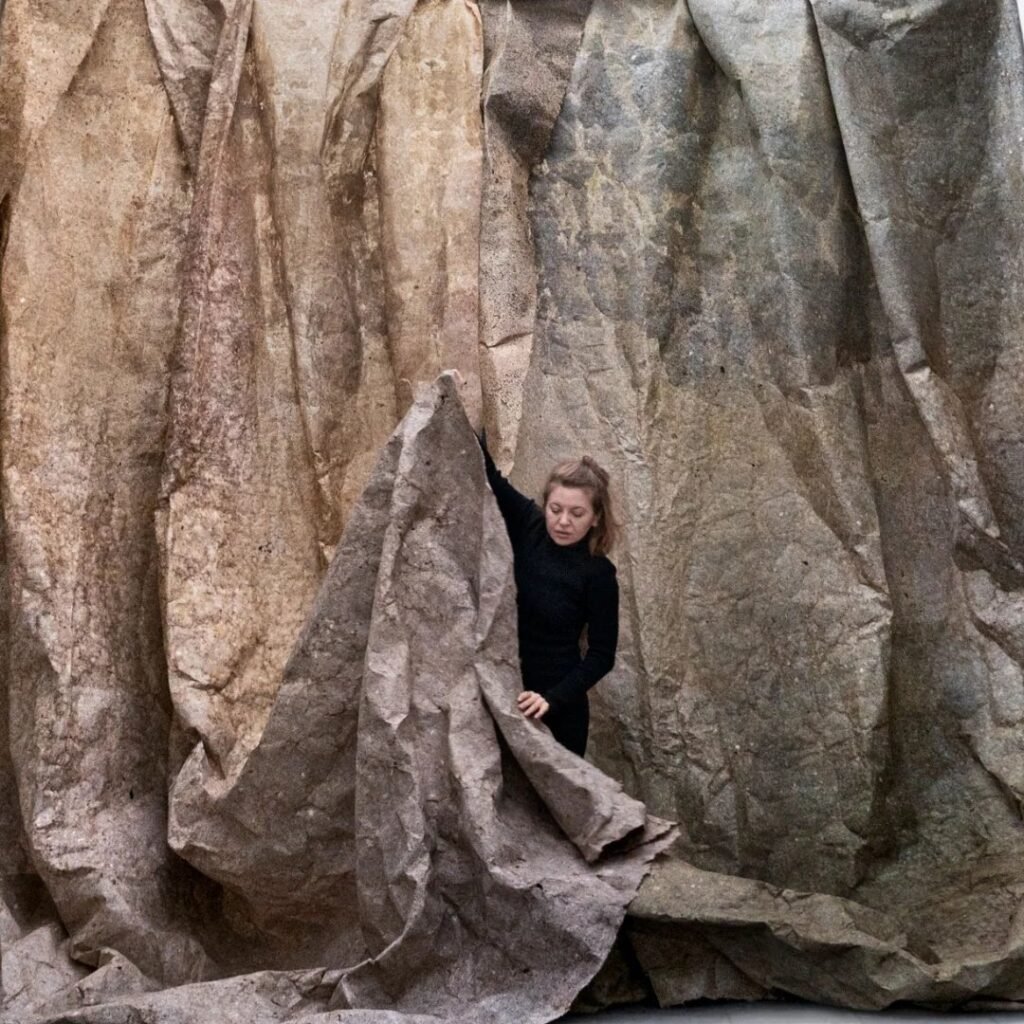
Barbara Mydlak is an artist-researcher based in Ghent, Belgium. She holds a PhD in the Arts from Magdalena Abakanowicz University of Fine Arts in Poznań, and a B.A. and M.A. in Visual Arts from the Strzemiński Academy of Fine Arts in Łódź, after earlier studies in archaeology at the University of Warsaw. Her work combines traditional crafts, new technologies, and scientific research. Using cellulose from discarded plants, organic remnants, and paper or textile residue, she creates handmade paper installations exploring scent, pigment, healing, defense mechanisms, and decomposition, often incorporating film, photography, and interactive elements. Informed by autobiographical memories, rituals, and experiences of loss, she uses fragile, perishable materials to reflect on transformation and cultural perceptions of death. Drawing on her archaeology background, she studies the conservation and breakdown of these materials as installations evolve. She teaches workshops internationally, including at Tsinghua University, TNNUA, and IHECS Brussels. Since 2022, she has operated a studio in Ghent through Nucleo Kunstenaars Ateliers and is developing CHRONICA, an interactive project with Yann Deval connecting traditional papermaking and augmented reality. She has exhibited in Belgium, Poland, China, Taiwan, and Italy, receiving awards including a Flanders’ Department of Culture, Youth & Media research grant (2024) and was a finalist in the COAL Prize (2023).
Jonathon Rosen
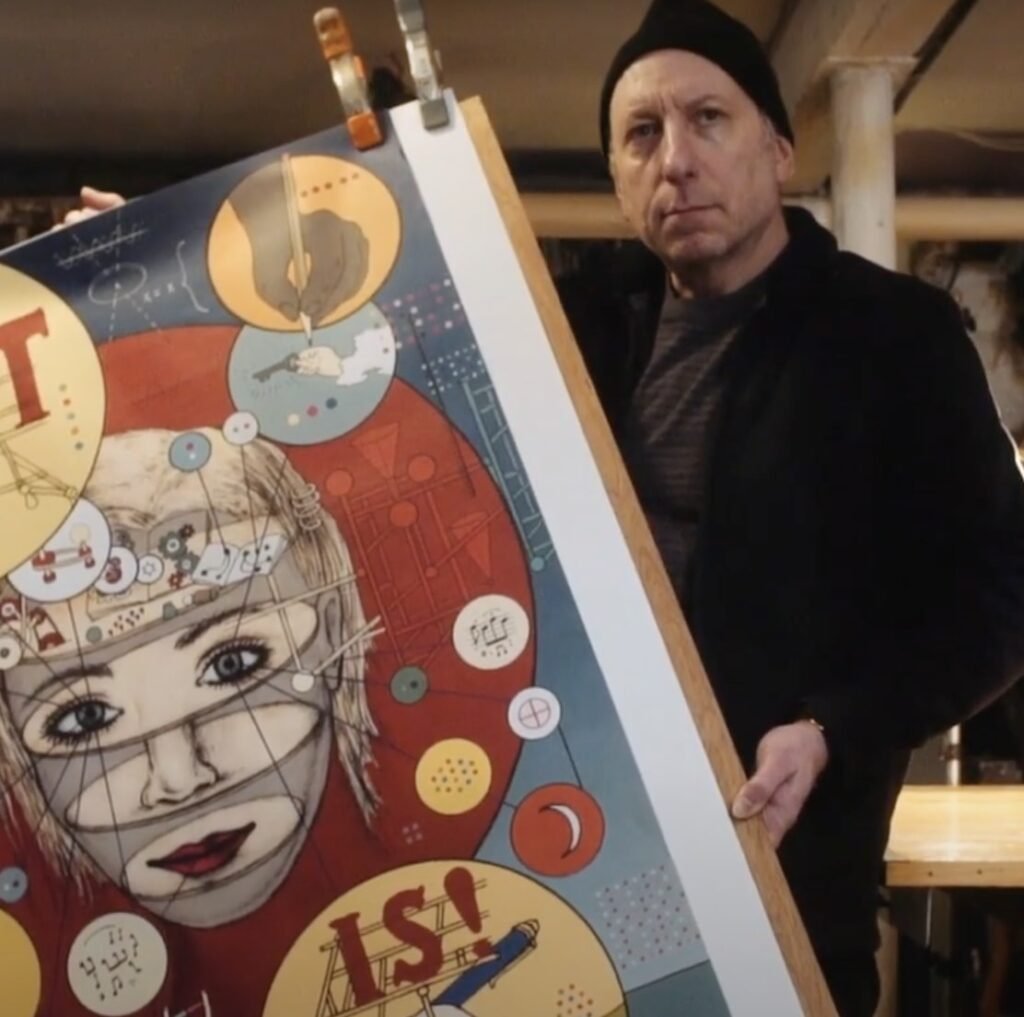
Jonathon Rosen is an animator, painter, and educator whose multimedia practice explores the shifting boundaries between humans and machines, the metaphysical, and the unconscious. His studio brings together analogue and digital processes to create imagery that echoes ancient symbolism, carnivalesque spectacle, and obsolete technologies while reimagining them through contemporary motion and illustration. Based just outside New York City, Rosen collaborates across animation, projection performance, and installation. He teaches animation, narrative color and history of anatomy and medical illustration at the School of Visual Arts and is a Part-Time Associate Teaching Professor at Parsons. Select clients include Sotheby’s Hong Kong, Tim Burton, MTV, and Scientific American. His work resides in the collections of The Metropolitan Museum of Art, MoMA, and the Getty Research Institute.
Christiana Rose
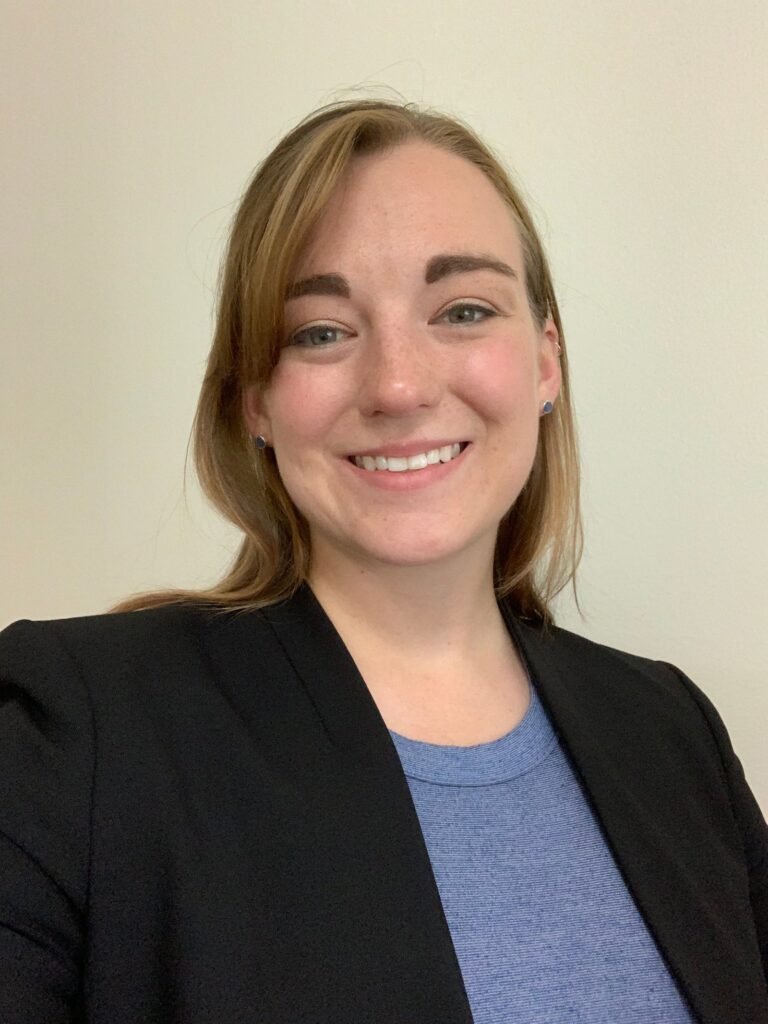
Christiana Rose is an interdisciplinary new media artist, circus technologist, and live-sound engineer based in Longmont, CO. Her creative work fuses sound, interactivity, improvisation, and video with acrobatic movements, creating dynamic, multilayered performances. She designs and builds innovative musical interfaces for contemporary circus artists, exemplified by her collaborative projects, append, Le corps électrique, and Hollow, which blend electroacoustic composition with contemporary circus arts and improvisation. Her research explores kinesonic composition, viewer perception, and experimental cinema. She holds a BA in Cinema Studies and a BMus in Technology in Music and Related Arts from Oberlin College and Conservatory of Music (2017), and an MA in Digital Musics from Dartmouth College (2020). She also graduated from MOTH Contemporary Circus Center’s Professional Training Program with a major in cloud-swing (2018). Currently, she serves as a Senior Electrical Engineering Technician in the Q-SYS Research and Development Department at QSC.
Langley Anderson
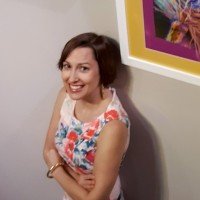
Langley Anderson is a multidisciplinary artist from New Orleans, Louisiana, whose work bridges biological science and visual art. She holds an M.F.A. in Photography from Radford University and a B.A. in Studio Art from Trinity University. Focusing on the structures and patterns of the natural world, Langley often works with microscopic and overlooked forms. Her series Mutualism uses high-resolution microscopy and digital editing to create archival pigment prints that highlight anatomical detail while reinterpreting scale and color. Working across photography, printmaking, and mixed media, Langley aims to make the complexity and beauty of natural systems accessible and engaging. Her artworks have been exhibited internationally, including at the Forum de l’Hôtel de Ville in Lausanne, Decagon Gallery in Brooklyn, and the North Carolina Museum of Natural Sciences. She has received awards from the Tokyo International Foto Awards and France Bioimaging. Alongside her freelance photography, Langley runs Wild ArtRidge Academy and teaches in the Department of Visual Art & Design at Southeastern Louisiana University. Through her work, she explores how art and science inform one another, offering new ways to understand and appreciate natural processes.
Bonnie Ralston
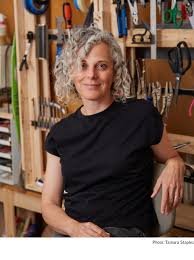
Bonnie Ralston is a New York–based sculptor and experimental printmaker whose work combines visual art and natural sciences. She holds a BFA from Hartford Art School in Connecticut and an MS in Ecological Teaching & Learning from Lesley University in Massachusetts. Her work draws on natural systems, environmental processes, and astronomical phenomena, including invertebrates, geological change, and corrosion. Informed by her background in graphic design and environmental education, Bonnie follows a methodical, process-driven approach that emphasizes material transformation and observation. She works in mixed media, often using ceramics, paper, wire, and found materials, to explore overlooked aspects of the natural world and reveal patterns, processes, and structures in ordinary or discarded objects. Bonnie’s work has been exhibited nationally in solo and group shows, including Manifest Gallery, Woman Made Gallery in Chicago, and Silvermine Galleries in New Canaan. She has received the Juror’s Award First Place from the Brooklyn Waterfront Artists Coalition and was a nominee for the 2025 Human Impacts Institute Creative Climate Awards: Inspiring Futures. In 2020, she co-founded Gowanus Night Heron, a Brooklyn-based artist-run collective that presents site-specific events, giving local artists opportunities to share work and engage the community.
Yas Crawford HonFRPS, FRSA

Yas Crawford is a visual artist and multidisciplinary collaborator from Pembrokeshire, Wales. She is an Honorary Fellow of the Royal Photographic Society and an RSA Fellow in support of the Arts, Engineering and Commerce. Yas holds a B.Sc. in Geology from the University of Cardiff and an MA in Photography from Falmouth University. Her work operates in what she calls the “Grey Space”, between disciplines where art and science intersect, where conventional understandings of the environment, time, and human experience overlap. Yas’ artworks investigate and inform ideas, exploring evolutionary change, biological systems, neuroscience and human impact on the environment. Her background in Geology provides a visual 3D framework that supports the structure of her art. Yas works across a wide range of media; film, digital and analogue photography, illustration, X-ray, MRI, microscopy, and camera-less methods. Her work has been recognised internationally with numerous awards, including the 2021 Art of Neuroscience Award for Cognition IX, now on permanent display at the Netherlands Institute of Neurosciences, and the Quasi Quadro Land Air 4.0 Award in Italy. Yas has exhibited globally, collaborated with institutions like Tehran University of Art, Nottingham University, and the Australian National University, led workshops and lectures, and published several handmade books.
Kindra Crick
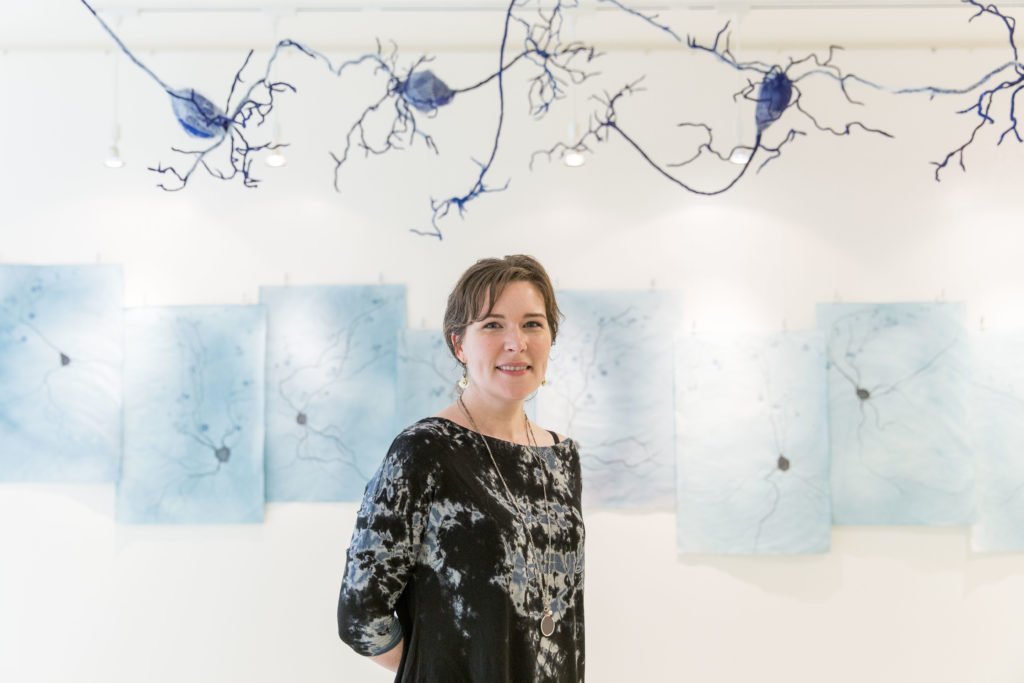
Kindra Crick is a multimedia artist based in Portland, Oregon, who bridges artistic expression with the wonder and process of scientific inquiry. She holds a B.Sc. in Molecular Biology from Princeton University and a Certificate in Painting from the School of the Art Institute of Chicago. Fascinated by the human brain, Kindra translates complex scientific ideas into immersive installations and layered mixed-media works that combine drawings, diagrams, maps, and microscopic imagery. Her artworks are held in collections including the Laboratory of Molecular Biology in Cambridge and the Portland Art Museum, and have been exhibited internationally at venues such as Christie’s, the New York Hall of Science, and the MDI Biological Laboratory. They have also been featured in Science Magazine, HuffPost, and PBS NewsHour CANVAS. As a board member and volunteer with NW Noggin, an art-neuroscience outreach group, Kindra engages diverse audiences and has led talks and workshops at Princeton University and the Portland Art Museum. Collaborating with scientists, educators, and artists, she helps audiences explore science visually, with a focus on memory, emotion, and human cognition.
Juan Gabriel Sutachán Rojas
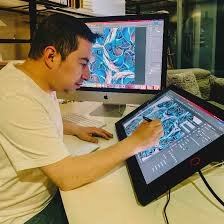
Juan Gabriel Sutachán Rojas is a Colombian visual artist exploring the intersection of art and geometry through a digital lense. He holds a degree in Design from Universidad de los Andes in Bogotá and served for over a decade as the international curator of Escher, Geometry and Art, a traveling exhibition presented in Argentina, Brazil, Colombia, the United States, and South Korea. Working primarily with digital tools, Juan translates mathematical structures into accessible visual forms. Inspired by M.C. Escher, his work investigates mathematical patterns, repetition, and the metamorphosis of shapes. He uses light and shadow to create depth in two-dimensional spaces and develops paper illustrations and digital designs to make geometry intuitive and engaging. His medium also extends beyond fine art to textiles, fashion, and design, reflecting a commitment to bringing mathematical concepts into everyday objects. Through intertwined figures and forms, Juan’s work challenges perception and plays with the boundaries of reality, demonstrating how design can reveal the underlying order of the world around us.
Emily Garfield
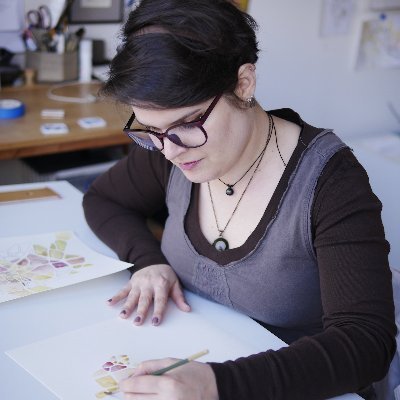
Emily Garfield is an interdisciplinary artist from New York City who creates intricate maps of imaginary places, exploring how cities form and how we perceive them. She holds a B.A. in Visual Arts from Brown University, where she also studied cognitive science, including the brain’s response to art and aesthetic experience. Working primarily with pen-and-watercolour drawings and papermade pop-up cities, Emily translates complex patterns in urban, ecological, and neural networks into accessible visual forms. Inspired by maps and the fractal similarities between cities and biological structures such as cells and neurons, her work explores the interplay between imagination and the physicality of paper. Her practice balances collaborative discovery and independent research, reflected in monthly science-art meetups and workshops at Genspace in New York and the DeCordova Museum in Boston. She was director of the 2014 Somerville Open Studios city-wide arts event and has helped produce the Tribeca Art+Culture Night festival. Emily’s artworks have been exhibited across the United States and are held in private collections and the Kamm Teapot Foundation. Through her research-driven practice, she bridges scientific inquiry and visual exploration, making abstract systems tangible and inviting audiences to reflect on the connections between natural, urban, and cognitive networks.