Dr. Adriana G. Prat
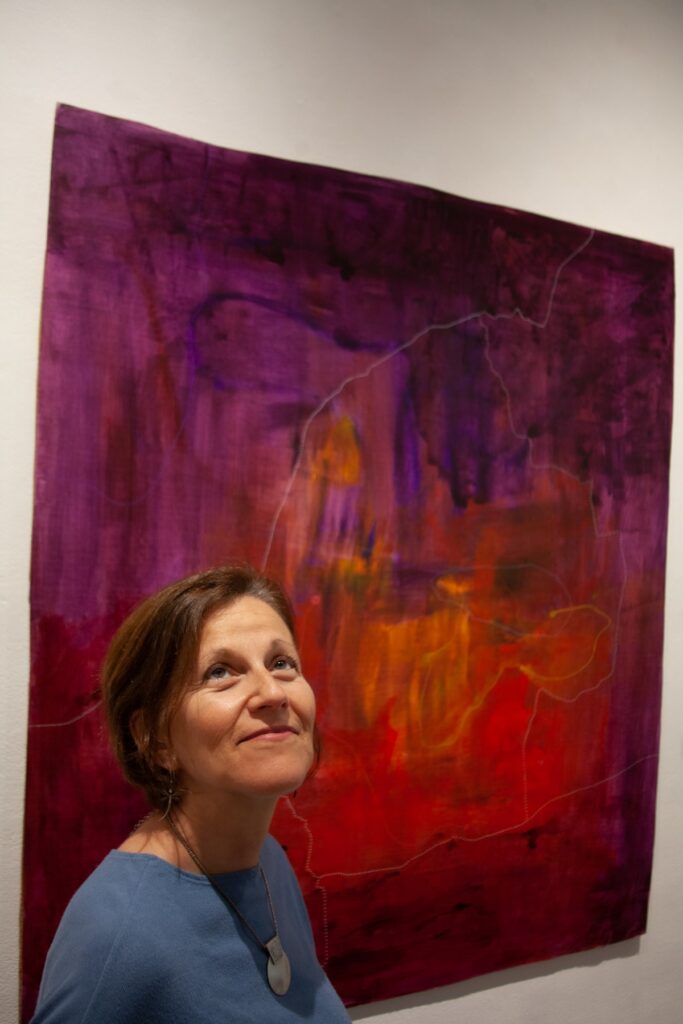
Adriana G. Prat is an artist, curator, and scientist with a PhD in Biophysics from the University of Buenos Aires. Originally from Argentina, she developed an early interest in the environment, which influenced her scientific and later artistic pursuits. After moving to the U.S., Adriana transitioned to art, eventually using it as a way to inspire action for the environmental crisis. In her art practice, Adriana is influenced by her scientific experience and environmental facts in her creative experimentation. She works on alternative painting supports such as corrugated cardboard and repurposed canvases, and explores textiles, assemblage, and mixed media using discarded materials. Adriana often creates abstract topographies that can be imagined on both microscopic and macroscopic scales. At the microscopic level, her work evokes cellular structures, while at the macroscopic level, it resembles geographies of land and ocean, reflecting the pressures of human exploitation and environmental change. Adriana’s work has been exhibited internationally, including galleries in Reykjavík, London, and Melbourne. She is a juried member of the National Association of Women Artists (NAWA), among others. In addition to her studio work in Cambridge, Massachusetts, she curates exhibitions that connect art and science to raise awareness of climate change and sustainability.
Lindsay Olson
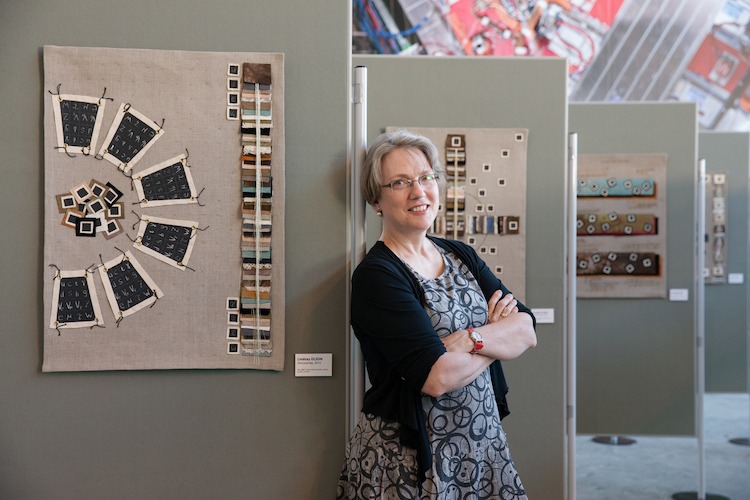
Lindsay Olson is an interdisciplinary artist interested in how science and technology support modern culture. She uses textiles, drawing, and mixed media to translate complex scientific ideas into accessible visual works that help audiences engage with fields ranging from particle physics to ecology and infrastructure. Lindsay holds a BA in Fine Arts from Columbia College Chicago, where she later taught in the Fashion Studies Department for more than twenty years. Her projects begin with direct engagement inside labs and research centres, where she studies the tools, data, and problem-solving methods that shape scientific work. Lindsay served as Fermi National Accelerator Laboratory’s first artist in residence and has collaborated with scientists at the Field Museum, the Chicago Botanic Garden, the Metropolitan Water Reclamation District of Greater Chicago, and the University of Indiana Northwest. These partnerships inform her material choices and design strategies, grounding her artwork in real scientific practice. Her work has been featured in science and art publications and exhibited in museums, galleries, and academic venues. She is currently the first artist in residence with the Pacific Northwest National Lab and The Wetlands Initiative. Ongoing and upcoming projects explore ocean acoustics, water infrastructure, and other systems that shape human and environmental health.
Richard Devonshire
As an artist, I investigate the intersection of culture, technology, and the natural world, reflecting on how digital tools shape contemporary creative practice. Since the 1990s, I have embraced the evolution of digital media—from early computational experiments to today’s AI-driven and algorithmic landscape—using these advances to reinterpret traditional disciplines such as painting, sculpture, photography, and drawing. My work explores abstraction, science, and the hidden structures of nature, revealing the mathematical patterns underlying organic forms. I construct intricate 3D models and environments, employing virtual cameras and lighting systems that simulate physical behavior with photorealistic precision. The resulting images and animations transcend photography, offering immersive visual experiences that invite viewers to engage with underlying geometries and patterns often invisible to the eye. Through this practice, I aim to merge technical rigor with artistic intuition, creating works that open new avenues for understanding the world and the subtle interconnections between nature, mathematics, and digital representation.
Sabrina Merayo Nuñez
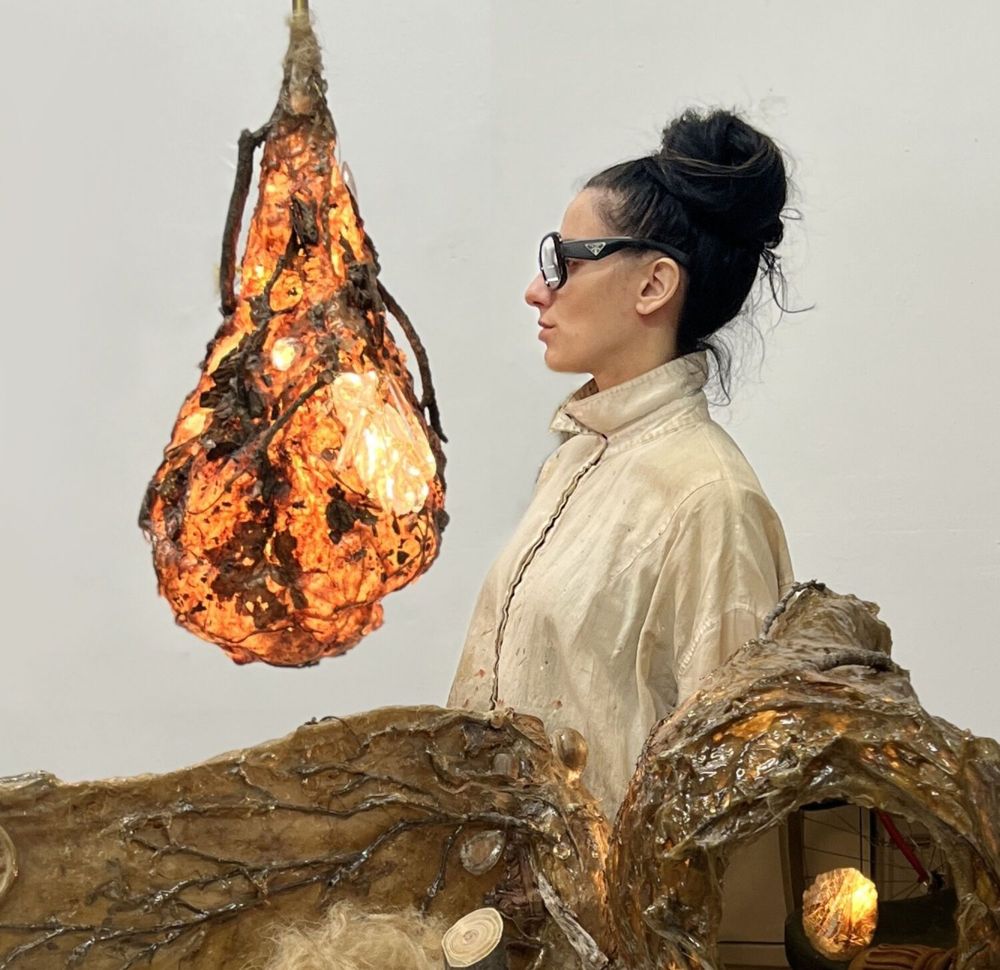
Sabrina Merayo Nuñez is an Argentine interdisciplinary artist based in New York whose work explores the shifting boundaries between organic systems and human-made technologies. Guided by the idea that tools extend human perception, she investigates nature not as a passive subject but as an active collaborator. Her practice blends sculpture, biological processes, and experimental materials, bringing together bio-art, craft traditions, and design methodologies. Drawing on her diverse background—ranging from fine arts and applied arts to furniture making—Sabrina merges ancient techniques with cutting-edge experimentation. At the Coalesce Center for Biological Art, her project Humans as Treestraced the transformation of tree material into genetic code, revealing unexpected correspondences between biological and digital forms. Continuing that research, she creates sculptural lighting pieces using biodegradable bioplastic derived from algae and collagen. These works cultivate living microbiomes, embracing both unpredictability and growth. Through this evolving body of work, Sabrina invites viewers to reconsider agency, materiality, and our interdependence with the natural world.
Giovanni Randazzo Mora
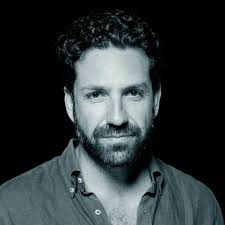
Giovanni Randazzo is a Colombian visual and multimedia artist whose work bridges contemporary art, cinematic language, and emerging technologies. Educated in Paris, Milan, and Bogotá, he holds advanced degrees in contemporary art and new media, and has built a practice that moves fluidly between analogue and digital forms. Since 2016, he has taught audiovisual installation at the University of Los Andes, where he also leads Imágenes de segunda mano, a research collective exploring new modes of image-making and narrative construction. Randazzo’s creative process investigates how moving images can be deconstructed, recontextualized, and transformed through digital tools. His projects span video, photography, installation, and hybrid media, drawing on archival footage, scientific concepts, and technological experimentation. Exhibited across Europe and Latin America, his work invites viewers to question how images shape our perception of time, memory, and reality.
Ashwini Bhasi
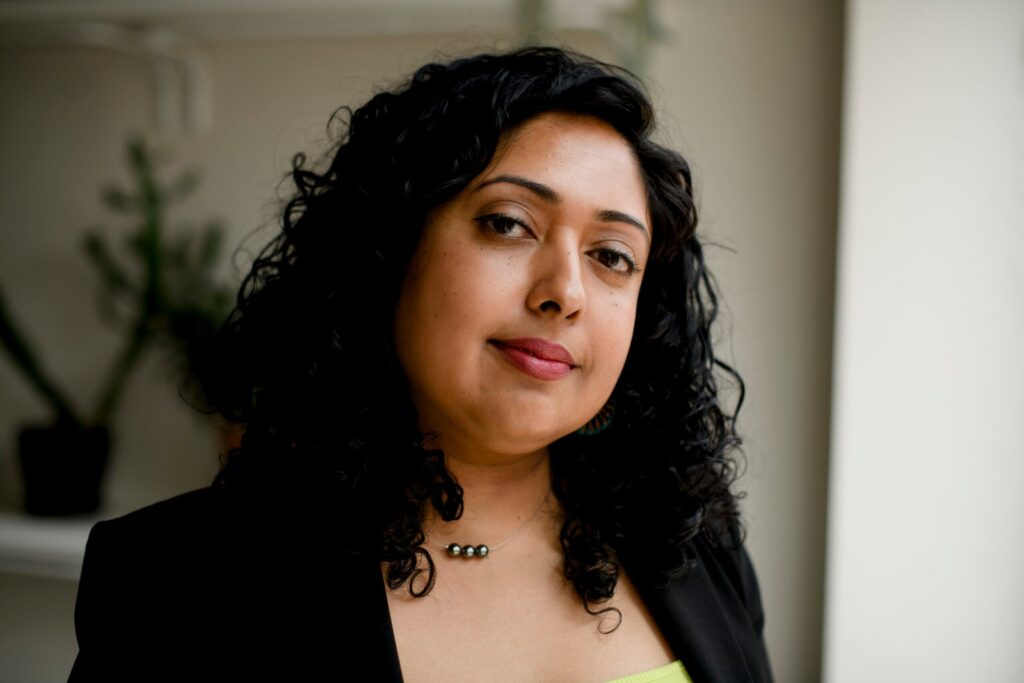
Ashwini Bhasi is a bioinformatician and interdisciplinary artist from Kerala, India. Her hybrid work merges scientific data, poetry and visual art to explore the lived experiences of chronic illness and disability. Shapes, lines, textures and stream of consciousness writing in her work are created through somatic practices. Ashwini has over 18 years of professional experience analyzing large-scale human genome datasets to identify genetic markers and mutations in hereditary disorders and cancers. She is the first-author of multiple peer-reviewed research articles on bioinformatics workflows and software design for scientific discovery. A 2025 Tin House Summer Workshop Scholar, Ashwini is the recipient of the Shaw Memorial Poetry Prize from Dunes Review, a Good Hart Artist Residency, a Voices of Color Fellowship from Martha’s Vineyard Institute of Creative Writing and a Room Project Fellowship. Her poems and art have been published in The Iowa Review, Black Warrior Review, Michigan Quarterly Review, DIAGRAM, Redivider, RHINO, Honey Literary and elsewhere. “MUSTH”, the winner of the 2020 CutBank chapbook contest, is her first poetry collection. Her visual poem “Because of my Endometriosis” was selected the ‘Disabled Women make History (and Art)’ virtual exhibit at the Toledo Museum of Art. Ashwini currently lives in Ann Arbor, MI.
Anabella Aguilera
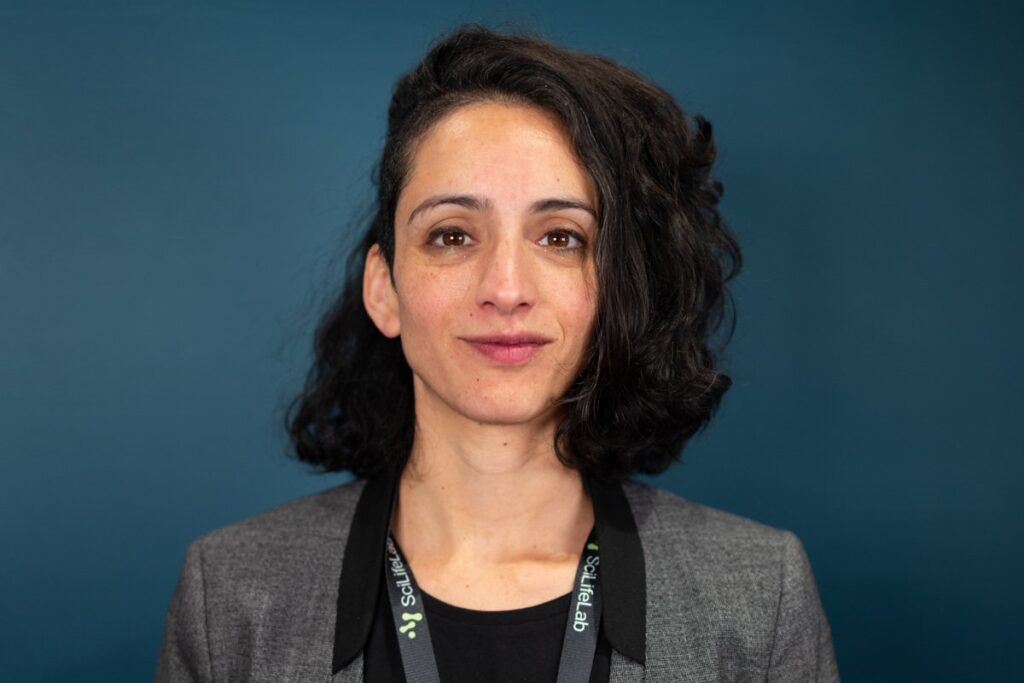
Former microbiologist turned collage artist. I write about visual arts & Nordic adventures. Also, about the intersection between science & art.
Miye Cho
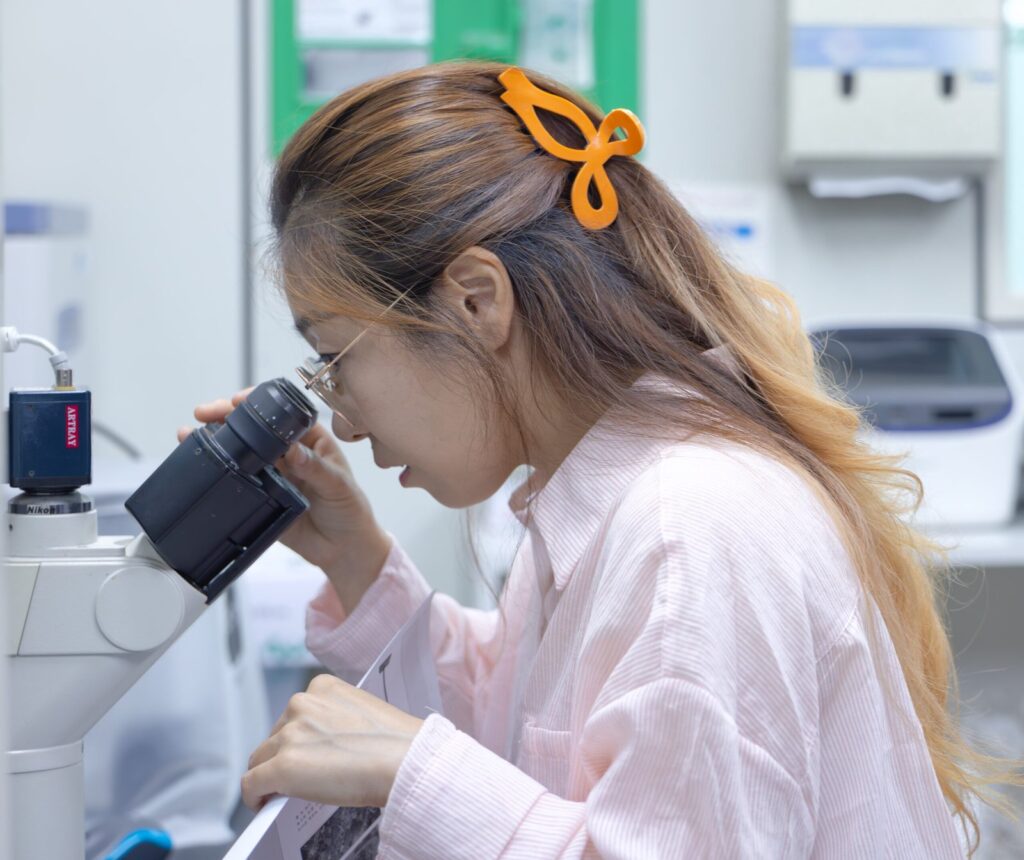
Cho Miye explores the primal human desire for immortality at the intersection of myth and science. She replaces the chromosome’s terminal structure, the telomere, with the mythological elixir of life, constructing a new narrative that merges ancient symbols with the language of life sciences. Telomeres shorten with each cell division, and once they reach a critical length, cells can no longer divide and eventually die. This biological mechanism determines human aging and lifespan. The enzyme telomerase restores telomeres, suggesting the possibility of biological immortality, yet excessive activation also enables the uncontrolled proliferation of cancer cells. In this sense, the technology of eternal life inherently carries the danger of death. Cho connects this paradox with mythological narratives of figures such as Qin Shi Huang and Gilgamesh, who pursued immortality only to fail. Through these stories, she highlights the inescapable boundary of time. By juxtaposing biological structures with the legendary elixir of life, her work reflects on humanity’s recurring desire to control life, time, and existence, while revealing the paradox of immortality.
Ann Piché
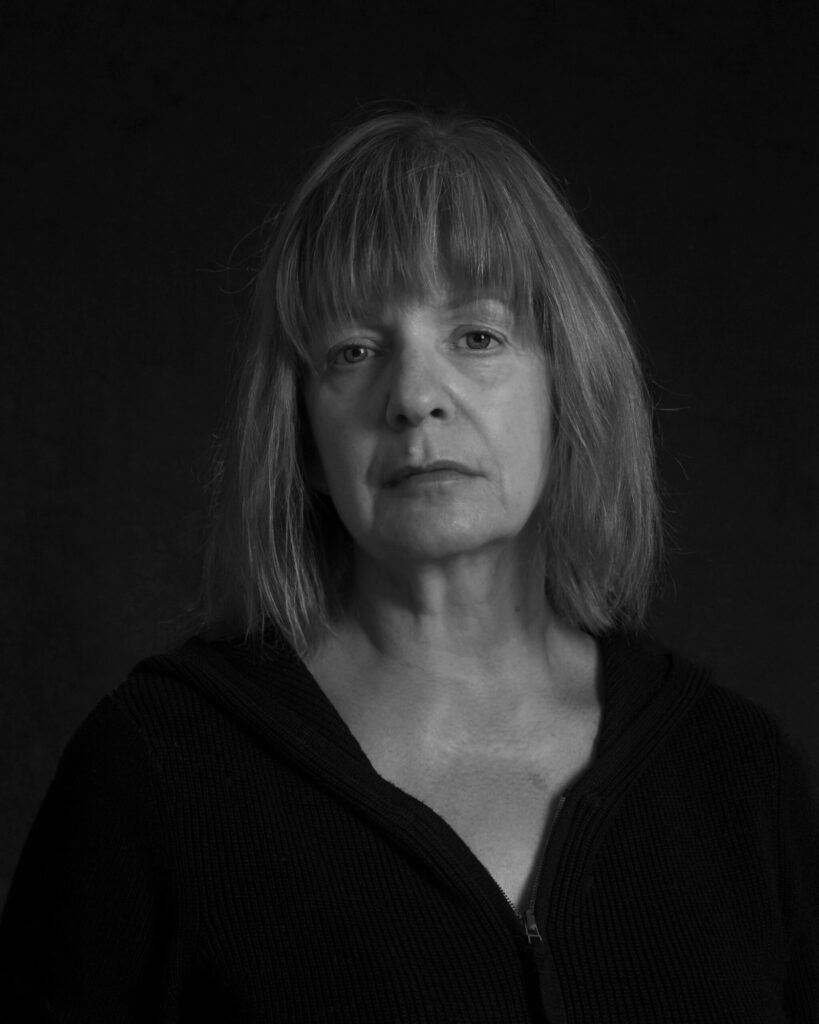
Working in technology since the early 1990’s, Ann was the first female electronic technician hired by the Royal Canadian Mounted Police (RCMP). Experiencing the disconnect that can exist between science and the arts she constructs visual links to build those connections, creating accessible entry points for conversations about the less familiar. A graduate of the School of the Photographic Arts: Ottawa (SPAO), Ann’s work has been presented in solo exhibitions in Canada and in group exhibitions internationally. Her collaborations include the Department of Mathematics at the University of Toronto. Ann’s work has been supported by the Jackman Humanities Institute | University of Toronto, the City of Ottawa and the Ontario Arts Council, She has been published in North American magazines such as SHOTS and PhotoED. Ann’s images are not software generated. Working primarily in digital photography, she stages her images using real and constructed landscapes with custom-built sets. Her work explores photographic abstraction and experimental camera techniques, a visual acknowledgement of the anxiety we can feel when facing the unfamiliar.
Ada Zejun Shen
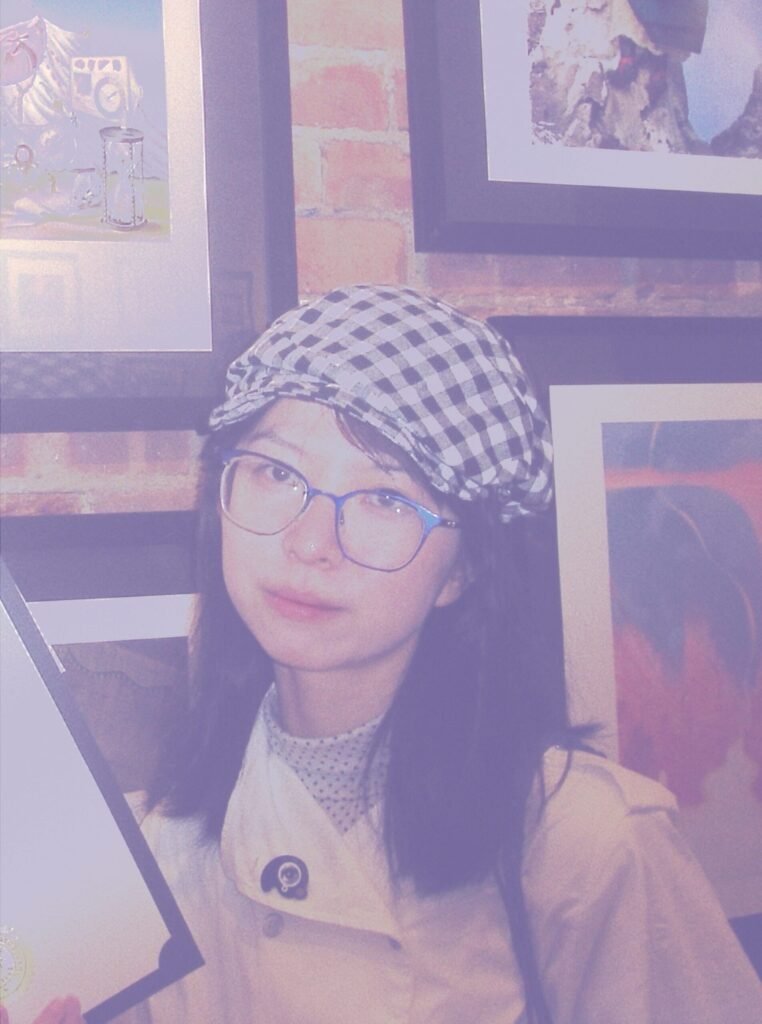
Ada Zejun Shen is an award-winning illustrator and interdisciplinary artist based in New York whose work bridges scientific inquiry and visual storytelling. Drawing on imagery from biology, natural history, and mythology, she transforms research and her curiosities into layered, symbolic illustrations that clarify complex ideas while sparking curiosity. Her practice blends traditional and digital techniques, weaving intricate, organic forms into compositions guided by precision, balance and clear intent. Ada’s illustrations have been recognized by the Society of Illustrators, Communication Arts, ADC Young Ones, 3×3, Graphis, and the World Illustration Awards. Her work has appeared in art book fairs and exhibitions internationally, including presentations at the Cairo Art Book Fair, Booksmart at Art on Paper, and Yeh Art Gallery at St. John’s University.