Gaia Giovagnoni

I am a recently graduated materials engineer and a professional contemporary dancer. After earning my BA in Contemporary Dance from London Contemporary Dance School and BSc in Materials Engineering and Nanotechnology from Politecnico di Milano, my aim is to conduct research at the intersection between materials science and art, in the forms of dance, performance and writing. Looking forward to collaborations!
Roberto Daoud

Roberto Daoud began his dance journey in high school with the Nord Anglia Dance Troupe, and later, The Dance Academy Dubai. Of Lebanese background and having lived in Dubai, Roberto’s commitment to the art form stood out in a culture where men’s participation in dance is not widely accepted. Now a BSc student in Computer Science with a concentration in Artificial Intelligence at McGill University, Roberto is deeply committed to advancing his ballet and contemporary dance training, balancing the pre-professional programat Ballet Divertimento in Montréal and attending extended training at the Nada Kano Dance School in Beirut, Lebanon, during family visits – all alongside his academic pursuit. At Ballet Divertimento, Roberto’s rigorous training under acclaimed artists such as Owen Montague (National Ballet of Canada – NBC), Christine Cyr (NBC), Kristen Céré (International Choreographer) and Irina Chorna (National Ballet of Austria) – and later John Alleyne (Ballet BC & NBC) and Alexis Fletcher (Ballet BC) for the restaging of Alleyne’s Four Seasons, where Roberto played the lead male role – has led to his acceptance to prestigious programs such as the Joffrey Ballet Summer Intensive in New York and the International Ballet Masterclass in Prague, of which involved training under Jahn Magnus Johansen (Assistant Director of Norwegian National Ballet) and Christopher Hampson (Artistic Director of Scottish Ballet), among other leading professionals. For Roberto, dance cleanses his soul in a way that no other activity can. With a passion for the performing arts, he uses his free time to compete in professional jazz and lyrical competitions (Akademie de Danse Makam) and enjoys sharing his acquired knowledge through teaching at dance schools around Montréal (Ballet Montreal – Pas de deux assistant; Nanci Moretti Dance School – Instructor). At the heart of his pursuits, Roberto envisions utilizing artificial intelligence technologies to optimize dance training methodologies that prioritize injury prevention strategies. He remains passionate about performing and continues to seek opportunities that will deepen his knowledge and refine his skills, ensuring continued growth in both his technical expertise and artistic expression.
MEDIAH
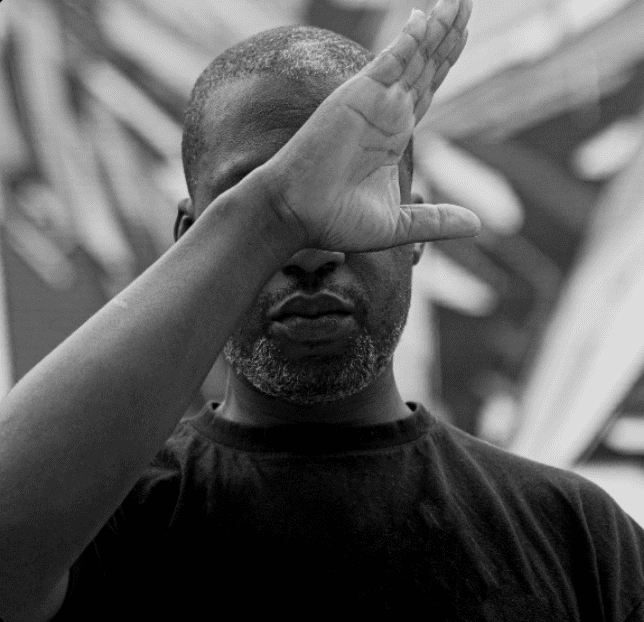
Evond Blake is a Canadian multidisciplinary visual artist who has worked under the pseudonym MEDIAH for over 27 years. An Internationally renowned visual artist, MEDIAH is a trendsetter sparking new ideas and originality by blurring the lines between post-graffiti and dynamic abstraction. Blake’s work consists of weaving traditional street art forms with traditional painterly techniques and mixed media printmaking using many forms and approaches found in digital art and design. Heavily inspired by avionics, mechanical engineering and schematics, the artwork glorifies and captures the essence of speed, motion, dynamism and force to create movement on the image surface. Blake’s work provides the viewer with not only this glorification of speed relating to the thirst for a faster and more streamline world but also its unavoidable repercussions of collision, disaster and chaos. As an artist, I strive to create visual content that inspires, intrigues and uplifts my audience. I feel it is imperative to create positive imagery that can give to the viewer in a time of violence and uncertainty. My artistic heritage lies in graffiti art; which is the means by which I established myself as an artist at 15 years of age. My urban artwork in public spaces has given me an outlet and created opportunities for me to explore new avenues of artistic expression without straying too far away from my graffiti roots. Although my paintings, mural artwork and fine art prints evolved from my traditional graffiti work they are now heavily inspired by my fascination with speed, motion, force and the resulting chaos and subsequent order. My followers and fans label my work as ‘Dynamism’.
Nicia John
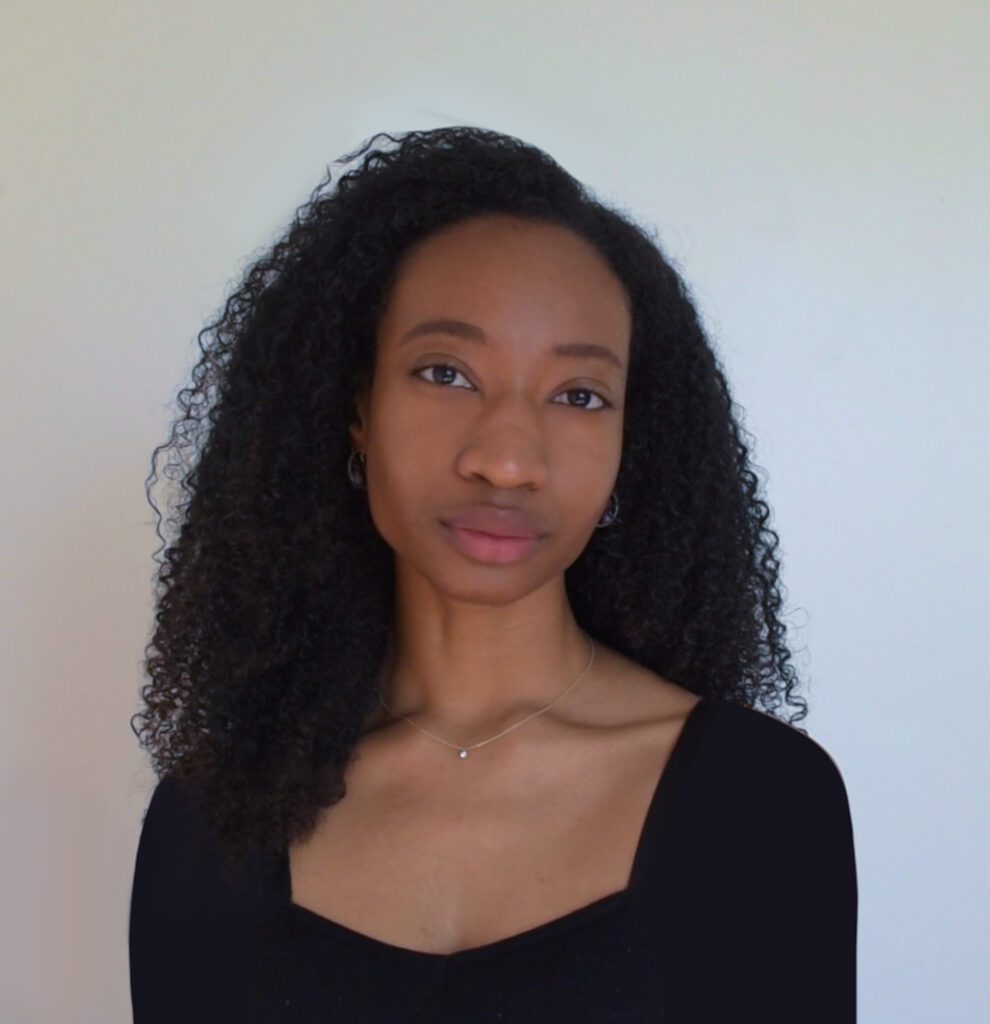
Both a researcher and a classically trained ballet dancer, Nicia John seeks potential at the heart of a void. The undefined, the unexplored, the unknown — she is tied to these positions by ropes of curiosity and reels herself in to unearth that which is hidden. This philosophy carried Nicia through an Hons BFA in Dance and Psychology (magna cum laude) at York University, where movement became a tool for contorting physical and abstract space. In creating choreography and exploring dynamism, she found herself enraptured by the complexity of human motor systems. Her curiosity drove her to pursue an MSc in Psychology, with a focus in motor neuroscience, at McGill University (funded by Canada’s Graduate Master’s Scholarship, Fonds de Recherche du Québec – Maitrise and Healthy Brains – Healthy Lives). There, she studied principles of sensorimotor learning and memory with techniques such as transcranial magnetic stimulation (TMS) and electroencephalography (EEG), all while simultaneously honing in on her classical technique through Ballet Divertimento’s pre-professional college ballet program. With a deep passion for travel, she has pursued dance and research training around the globe. She attended the Art of Marseille Ballet Intensive, funded by Canada Arts Council’s Professional Development grant, and conducted a research stay at Université Aix-Marseille, France under the Laboratory of Cognitive Neurosciences. Her journey includes functional magnetic resonance imaging (fMRI) training at Oxford University, ballet classes in Washington D.C., Paris, Rennes, and Vienna, as well as attendance to conferences such as the Organization for Human Brain Mapping (Montréal), Society for Neuroscience (USA), and Progress in Motor Control (Italy). Presently a PhD student in Biomedical Sciences with funding from the prestigious Canada’s Graduate Doctoral award, Nicia continues to merge her interdisciplinary pursuits through researching multisensory integration and rhythm processing in expert dancers. She is passionate about using choreography and performance art to bridge the knowledge gap between science and society, channeling these efforts into her role as founding director of The CreARTe Foundation, a non-profit organization dedicated to advancing art-science integration. In constant search for knowledge and growth, she actively seeks to refine her craft and inspire others with interdisciplinary thinking.
Vena Joseph
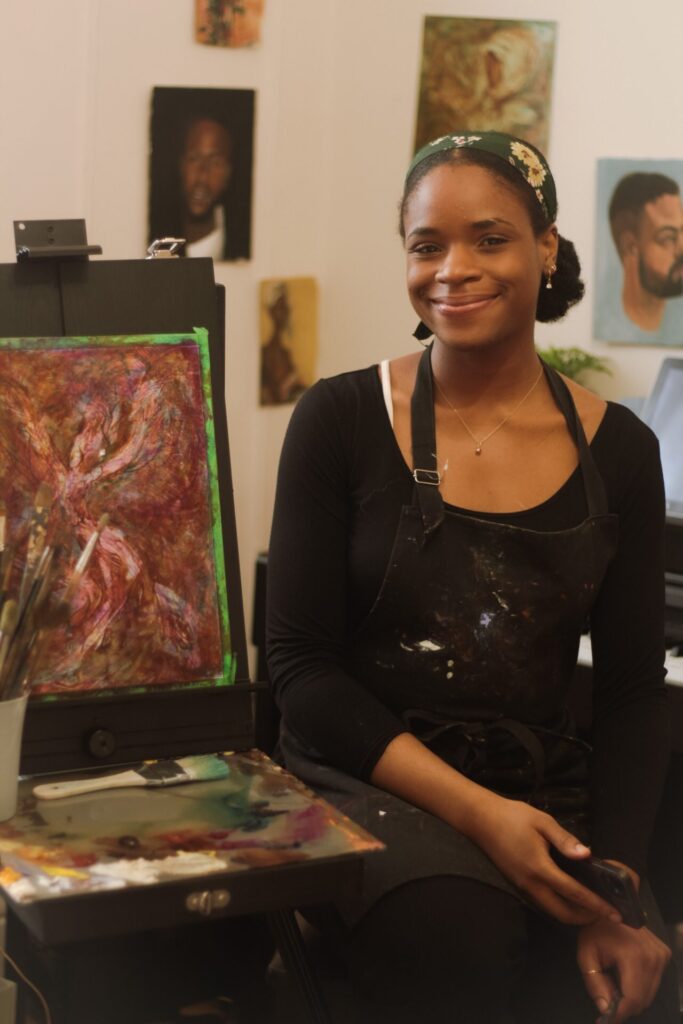
Vena Joseph is a multidisciplinary artist and researcher. Originally from Port-au-Prince, Haiti, she is currently based in Canada, where she divides her time between scientific research and visual arts. Her artistic approach combines traditional and digital practices to create figurative and semi-abstract works. Vena had been a global health researcher since 2015, working on malaria prevention and control, medical entomology, and epidemiology. She is interested in the “causative web of epidemiology”, studying how social and biological factors are woven together across local and global geographies to produce disease and well-being for different communities. Her artistic practice is an important tool to both understand and communicate the complexity in her area of scientific research.
Dr. Isabelle Peretz, Professor

Dr. Isabelle Peretz is a Psychology professor at the University of Montreal and co-holder of the Casavant Research chair in neurocognition of music. Her research emphasizes the musical potential of everyday people, exploring its neural basis, heritability, and relationship to language. She is a leading expert on congenital and acquired musical disorders, particularly amusia, and has published over 470 scientific papers on music perception, memory, emotions, and related fields. Since 1986, Dr. Peretz’s work has been funded by the Canadian Natural Science and Engineering Council and the Canadian Institutes of Health Research. In 2005, she co-founded the International Laboratory for Brain Music and Sound Research (BRAMS), which has become a prominent center for studying the biological foundations of music. She has received numerous awards, including the Lifetime Achievement Award from the Society for Music Perception and Cognition, and is a member of various prestigious organizations, including the Order of Canada, the Royal Society of Canada and now international member of the U.S. National Academy of Science. Dr. Peretz’s pioneering work has transformed the perception of music in the neurosciences, arguing that musicality is innate and distinct from language, mobilizing specialized brain networks. Her methodologies include behavioral measures, psychophysics, neuroimaging, and genetics.
Wang Yung An
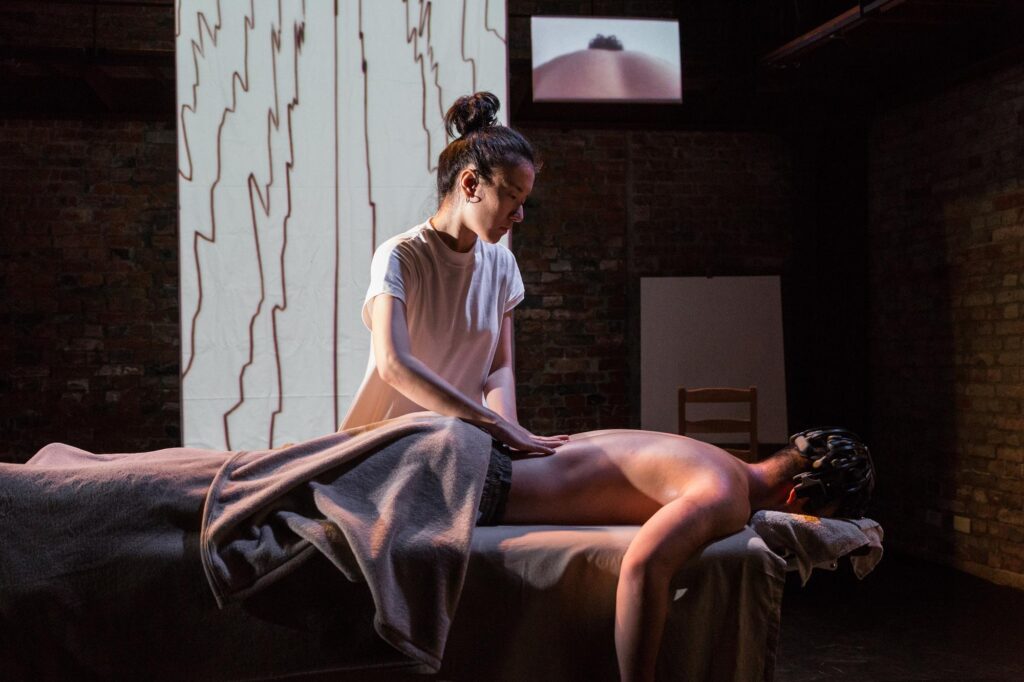
With an initial background in fine art, followed by research in cognitive neuroscience, Wang Yung-An explores the cognitive mechanisms of touch while expanding her artistic practice through performance and visual language. By integrating both affective experiences and empirical evidence related to the skin, Wang has been developing a touch score system called the “Mind-Skin Code.” This framework redefines bodily boundaries, reconfiguring the agencies between human and non-human, and critically engages with biopolitical constructs dominated by vision. Her work delves into the deep intra-actions between species, positioning the skin as a dynamic site of transformation rather than a static boundary.
Prof Beatriz Calvo-Merino

Cognitive neuroscientist Beatriz Calvo-Merino collaborates with dancers to gain a better understanding of the neural and cognitive mechanism participating in our perception of the performing arts. Prof Beatriz Calvo-Merino, focuses on the influence of observer expertise, particularly in the visual and sensorimotor domains, on social perception. Her work encompasses action observation, emotion recognition, and aesthetic experience. Central to her research are collaborations with expert dancers, past collaborations include the Royal Opera House Ballet, Laban Dance Centre, Mavin Khoo, Tom Sapsford, and the Random Dance Company. Prof Calvo-Merino uses diverse methodologies to explore the dancer’s brain, such as neuroimaging, neurostimulation, psychophysiology, and behavioral analysis. She has gained recognition for her research contributions in neuroaesthetics, including the Baumgarten Award from the International Association of Empirical Aesthetics in 2018, and also in neuroscience, with the Early Career Prize from the British Association of Cognitive Neuroscience in 2020. Her research has received funding from the Economic and Social Research Council (ESRC), Leverhulme Trust, Wellcome Trust Sci/Art projects, Ramon y Cajal programme and City University Fellowship Schemas. In addition to her research, Dr. Calvo-Merino directs the Clinical Social and Cognitive Neuroscience teaching program (MSc) at City St George’s, University of London.
Emma H Chen, MSc
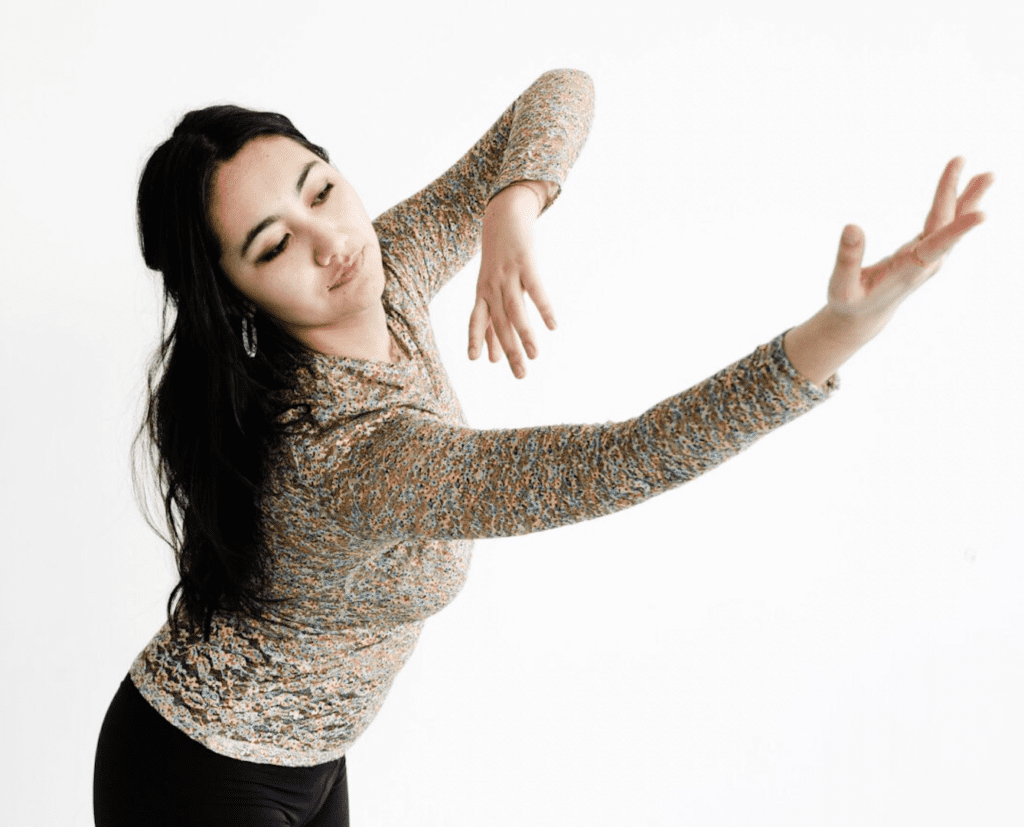
Emma-Hsiaowen (she/her) is a doctoral student in the Department of Health, Kinesiology and Applied Physiology at Concordia University. Having previously studied ballet and modern dance in New York City, she is interested in how dance can be used as a fun and engaging method to improve health and fitness. Since 2020, her research has primarily focused on how online dance classes can be used as accessible fall prevention programming for older women. Her research has received funding from both the Fonds de recherche du Québec – Santé (formation de maîtrise & doctorat) and the Canadian Institute for Health Research (CGS-M). She has also gained opportunities to present research at several international conferences in the United States, Taiwan, Japan, Glasgow, and Italy. Alongside her research, Emma is a passionate dance teacher having worked with several non-for-profit recreation centres in Ontario and Quebec. She believes in research extending beyond the lab and being implemented in communities. Emma obtained her bachelors in Exercise Science and Psychology at Concordia University (2021) and went on to complete her master’s degree in Health & Exercise Science at Concordia University (2023).
Prof Emily S. Cross

Emily is a cognitive neuroscientist and dancer based at ETH Zurich in Switzerland, where she leads the Professorship for Social Brain Sciences. Using interactive learning tasks, brain scanning, and dance, acrobatics and robots, she explores how experience shapes how we perceive and interact with others and is particularly interested in the social influences that shape human—robot interaction and the relationship between AI, artworks and artists. Emily received undergraduate and graduate degrees in the USA and New Zealand, completed postdoctoral training in the UK and Germany, and has held previous faculty positions in the Netherlands, Wales, Scotland and Australia. Her work has been funded by a number of national and international organisations, including the European Commission, Australian Research Council, National Institutes of Health, Ministry of Defence, Alexander von Humboldt Stiftung, Leverhulme Trust, Netherlands Organisation for Scientific Research and Fulbright Commission.