Juan Gabriel Sutachán Rojas
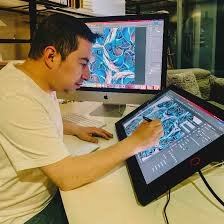
Juan Gabriel Sutachán Rojas is a Colombian visual artist exploring the intersection of art and geometry through a digital lense. He holds a degree in Design from Universidad de los Andes in Bogotá and served for over a decade as the international curator of Escher, Geometry and Art, a traveling exhibition presented in Argentina, Brazil, Colombia, the United States, and South Korea. Working primarily with digital tools, Juan translates mathematical structures into accessible visual forms. Inspired by M.C. Escher, his work investigates mathematical patterns, repetition, and the metamorphosis of shapes. He uses light and shadow to create depth in two-dimensional spaces and develops paper illustrations and digital designs to make geometry intuitive and engaging. His medium also extends beyond fine art to textiles, fashion, and design, reflecting a commitment to bringing mathematical concepts into everyday objects. Through intertwined figures and forms, Juan’s work challenges perception and plays with the boundaries of reality, demonstrating how design can reveal the underlying order of the world around us.
Emily Garfield
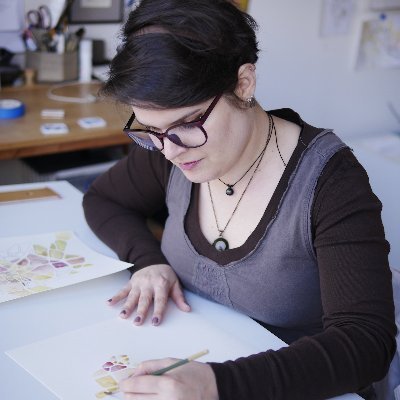
Emily Garfield is an interdisciplinary artist from New York City who creates intricate maps of imaginary places, exploring how cities form and how we perceive them. She holds a B.A. in Visual Arts from Brown University, where she also studied cognitive science, including the brain’s response to art and aesthetic experience. Working primarily with pen-and-watercolour drawings and papermade pop-up cities, Emily translates complex patterns in urban, ecological, and neural networks into accessible visual forms. Inspired by maps and the fractal similarities between cities and biological structures such as cells and neurons, her work explores the interplay between imagination and the physicality of paper. Her practice balances collaborative discovery and independent research, reflected in monthly science-art meetups and workshops at Genspace in New York and the DeCordova Museum in Boston. She was director of the 2014 Somerville Open Studios city-wide arts event and has helped produce the Tribeca Art+Culture Night festival. Emily’s artworks have been exhibited across the United States and are held in private collections and the Kamm Teapot Foundation. Through her research-driven practice, she bridges scientific inquiry and visual exploration, making abstract systems tangible and inviting audiences to reflect on the connections between natural, urban, and cognitive networks.
Di-Andre Caprice Davis
Di-Andre Caprice Davis is a Jamaican-born experimental artist whose research-based practice investigates form and develops non-standard visual languages through new media. Her fascination spans abstraction, computer graphics, GIF art, glitch art, mathematics, photography and surrealism. Her works engage the opportunities of digital technologies to reflect twenty-first-century conditions, exploring how the human brain perceives, processes and interprets visual imagery from both natural and synthetic sources. Davis has exhibited widely across the Caribbean and internationally, including significant participation in the Jamaica Biennial (2014 & 2017) and the Kingston Biennial (2024). She won the Best Experimental Film award at the 2017 Trinidad and Tobago Film Festival for her work Chaotic Beauty (2016). Davis continues to experiment with form and technology, merging glitch aesthetics with cultural, mathematical and surreal references. Her practice demonstrates a deep commitment to expanding the possibilities of visual expression—challenging conventions, and inviting viewers to question what is seen, how it’s seen, and why.
Ipsa Jain, PhD
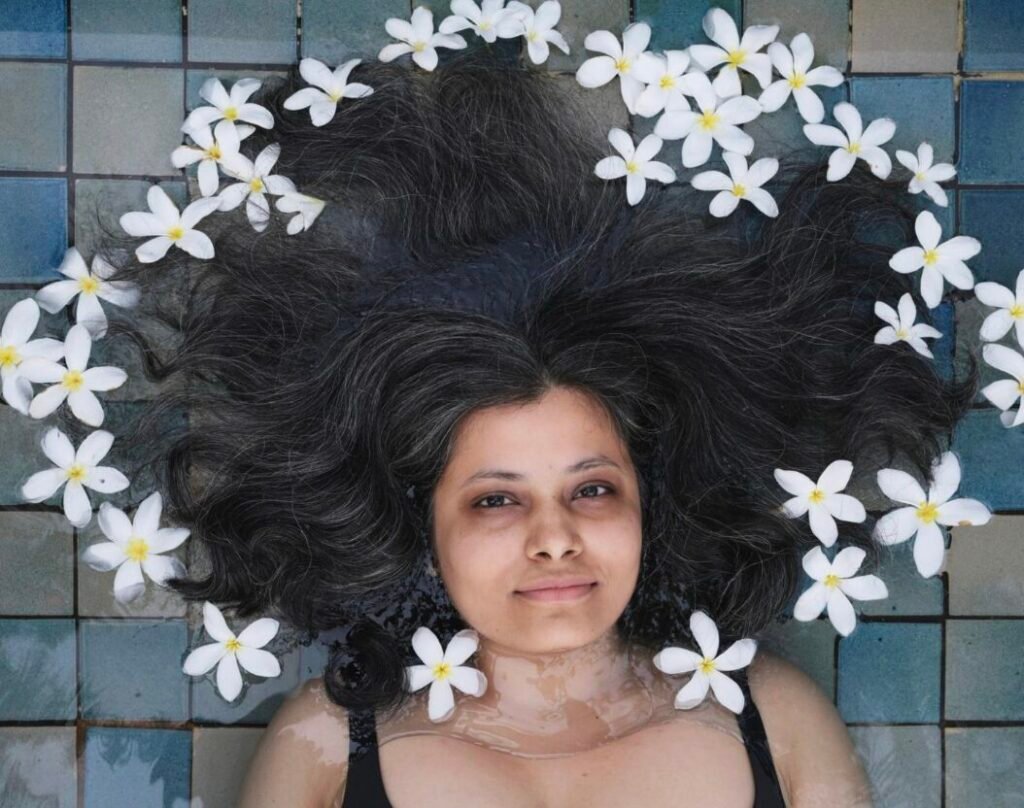
Dr. Ipsa Jain is a scientist-turned science communicator whose journey bridges molecular biology, visual media and public engagement. Trained originally as a biologist and cell/molecular researcher, she transitioned away from bench work into creative practice, driven by a passion for translating science into accessible, visual, compelling stories. In her independent and collaborative work she makes books, zines, visualisations, storyboards and exhibitions that engage diverse audiences through layered intersections of science, society and design. She has created biology diagrammatics, children’s book illustrations, outreach zines, and guided science-students and design-students in science communication courses. Her projects include “iThinkBiology” diagrams for biology e-textbooks, visual content for the Centre for Cellular & Molecular Biology, and the enquiry-driven project “be(living) Science” exploring scientists’ and society’s roles. As educator and mentor, she teaches scientists how to share their work, leads public participation initiatives, and works with design students to foster engagement across disciplines. Rooted in the conviction that science belongs in classrooms, museums, metro-stations and parks, Ipsa thrives in interdisciplinary teams that care about impact, and continually seeks creative collaborations that shape how science is learned, shared and lived.
Marta Kopyt
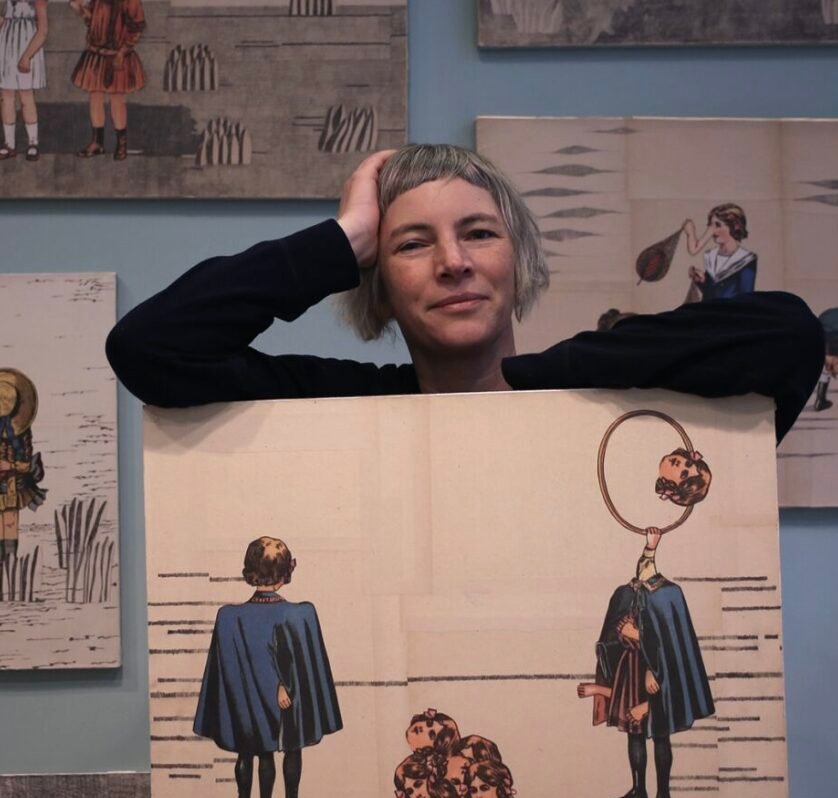
Marta Kopyt is an artist, inventor, social activist and populariser of mathematics whose interdisciplinary practice spans collage, photography, drawing, text and digital processing. She works with found materials and archives—vintage newspapers, discarded books, thrift-store cut-outs, children’s sticks from dog-walks—and transforms them through cutting, re-combining and reframing into new narratives. She invites communities and participants into her projects, democratizing the creative act and collapsing the divisions between professional artist and amateur collector. Her three published books — Punkt wyjścia. Wytwórnik geometryczny (2017), Legendy wiślane (2018) and Gdzie dzisiaj śpimy? (2021) — reflect her engagement with geometry, local mythologies and material culture. Her works propose parallel worlds where little girls may have three legs, giant hands wash in the river, and mathematical rules are playfully subverted. With wit and visual appeal she prompts us to question archives, norms of mathematics and the boundaries of everyday objects. Importantly, her social-educational programmes and community actions amplify participation and invite reflection on the interrelation of art, mathematics and society.
Diana Rojas
Originally from Mexico, Diana Roja is an interdisciplinary artist whose work explores how humans attempt to engage with the invisible through installation, video, sound, and sculpture. She holds an MFA from the University of North Texas and is currently an Assistant Professor of Sound Art at the University of Texas at Dallas. Informed by her interests in philosophy, history, physics, and material science, she investigates how technology shapes artistic inquiry and supports research into consciousness, existence, and perception. Her work has been exhibited and published internationally at venues including the Czong Institute for Contemporary Art, Dallas Contemporary, Fiesp Cultural Center, and the Chapel of Santa Maria dei Carcerati. Diana has received numerous awards and fellowships, among them the 2023 Arch and Anne Giles Kimbrough Fund Award, the 2022 Judson-Morrisey Excellence in New Media Award, the Arrowmont Windgate University Fellowship, and several Open Educational Resource grants from the Oklahoma State Regents for Higher Education. She often collaborates across disciplines, using technology and experimentation to create new ways of engaging audiences.
Clara Olivia Levesque
Clara Olivia Levesque (she/her) is an Indian-Québecois artist aiming to eventually pursue a career in art therapy. Along with the ethereal beauty discovered in nature, Clara is inspired by the authentic connection and storytelling established between people, their narrative, and their well-being. Clara is passionate about using her artmaking as a platform for healing, fostering discussions, empowerment, and reclaiming identity. Driven to address topics of intimate partner violence, she makes use of her artistic process and platform to bring attention and tangible change to social justice issues, especially the concerning rise in femicides, and create a community of change-makers. Utilizing various mediums, she finds hope through artmaking`s potential to heal whether it’s her own personal transformative journey, to assist other individuals, or aid on a communal level. Clara showcases human figure drawing and various elements of nature as harmonious in her artworks. Clara often spends many hours outside sketching the outdoors and attending life drawing sessions. Her belief is that we are nature and employs an ecofeminist perspective. Being interconnected organisms, she is enthusiastic about creating sci-art and conducting interdisciplinary research as each unique background helps to cultivate meaningful change and creations. Most recently, she has started making her own chai-infused paper on which she illustrates her original work and is learning how to make her own frames from salvaged materials. Clara teaches art and hosts workshops while employing wellness-oriented ways of engaging with the arts as well as creating sustainable practices.
Linnéa Kirby
Linnéa Kirby is a circus technologist and human–computer interaction researcher based in Montreal. She holds an M.Sc. in Electrical and Computer Engineering from McGill University and a B.A. in Psychology from Oberlin College. She graduated from the New England Center for Circus Arts (NECCA)’s PROTrack Program and has trained at the School for Acrobatics and New Circus Arts, Circus Warehouse, and Esh Circus Arts. Linnéa is a member of the Centre for Interdisciplinary Research in Music, Media, and Technology and a recent BLUE Resident Scholar at McGill University, where she investigated the meaningful integration of technology into circus and performing arts. Her research and creative work explore the theme of “making the hidden visible.” She transforms unseen aspects of performance (strain, fatigue, or pressure) into sensory outputs like light or sound, giving performers new tools for expression and helping audiences gain a deeper understanding of the rigor behind performance work. By revealing these hidden dimensions, Linnéa aims to bridge the gap between technologists and performers, fostering empathy, expanding artistry, and offering new ways of knowing. She has performed in productions across the United States and presented her research at international venues including the IEEE World Haptics Conference (Montreal, 2021) and the New Interfaces for Musical Expression Conference (Auckland, 2022; Mexico City, 2023; Canberra, 2025).
Ben Thomas
Ben Thomas is a PhD candidate in Clinical Psychology whose interests explore how art, philosophy and research can come together to deepen our understanding of mental health and human flourishing. He earned his B.A. (Honours) in Psychology from McGill University in 2022, completing two theses under Dr. Richard Koestner. His first, published in The Journal of Happiness Studies, examined the reliability of “good life coherence” — the extent to which people feel their lives align with their vision of a good life — and its connections to well-being. Beyond academia, Ben manages and co-creates the YouTube channel Sisyphus 55, which blends animation, film and existential reflection to make ideas from psychology and philosophy accessible to wider audiences. Animated by his brother, the channel has gained international attention for its creative approach to mental health. In recognition of this work, Ben was invited to speak at the Oxford Union on men’s well-being and the influence of digital media on modern identity.
John S. Mejia
Art/Science-chimerism