Helena Kauppila
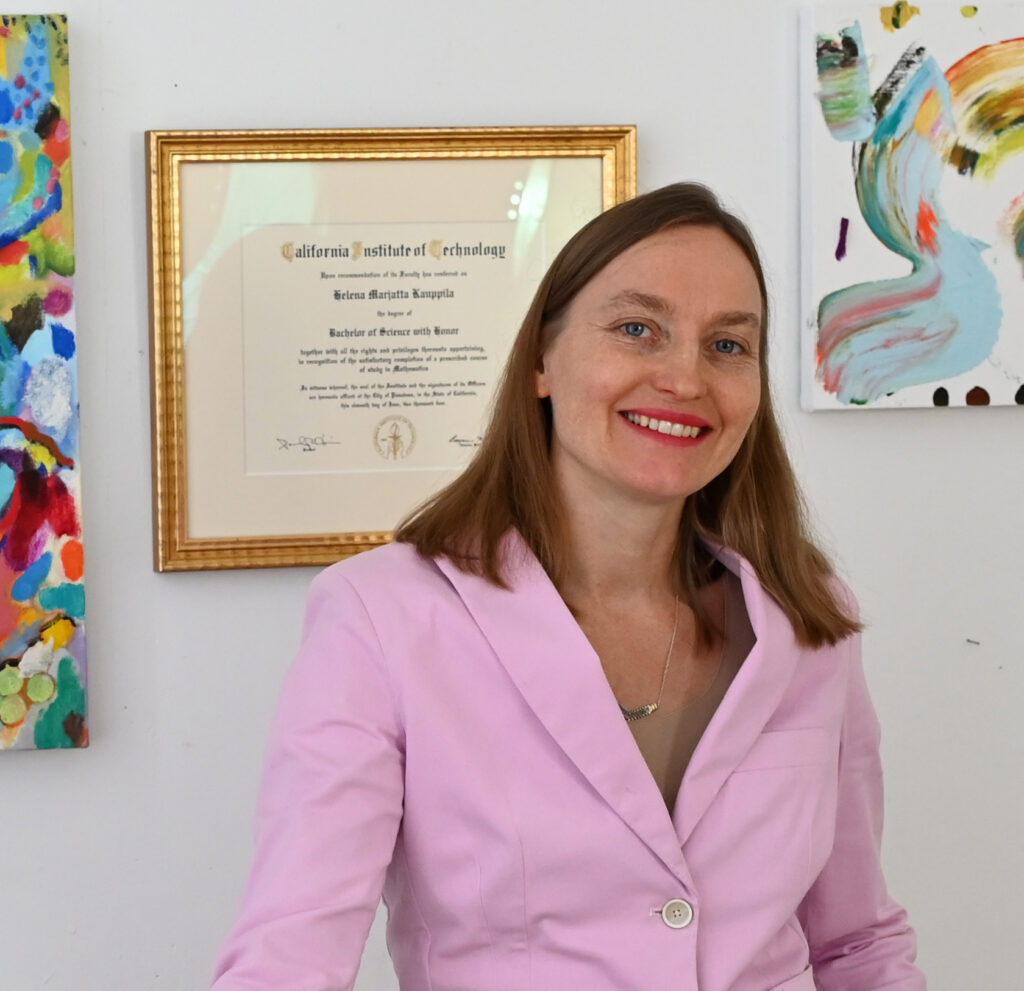
Helena Kauppila engages with scientific structures and vibrant, immersive color to celebrate the mathematical logic of ‘complex systems’—highlighting the interplay of parts and the beauty of the whole across nature and human experience. Her visual art is complemented by her background in mathematics, a foundation that deeply informs her work. Kauppila is interested in how the individual fits into the whole, and through her art she gives shape to moments of connection with large systems–natural, scientific, and philosophical. Her paintings emerge from direct experiences with nature, whether in parks, forests, or oceans. At the same time, they are shaped by intellectual explorations of scientific and mathematical structures. So, in her art, analytical thought and emotion intersect. Born in London and raised between the United States and Finland, she currently resides in Berlin, Germany. Kauppila earned a Bachelor of Science from the California Institute of Technology and a Ph.D. in Mathematics from Columbia University. She is a recipient of the Reginald Marsh and Meyers Marsh scholarship award at the Art Students League of New York and in 2019 she was awarded a grant to complete an artist residency in Istanbul, Turkey. Kauppila’s work has been exhibited in solo shows internationally and her work is included in several private collections.
Jubilee Connor
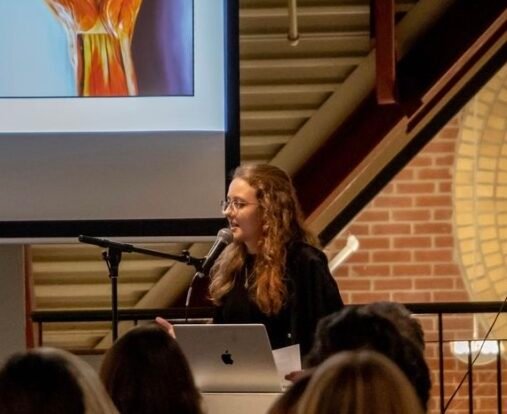
Jubilee Connor is a scientific illustrator based in Southern Ontario with a background in both art and biology. She holds a B.A. in Art with a minor in Biology from Redeemer University and an Associate of Arts Honors in Interdisciplinary Studies from Liberty University. She is passionate about connecting scientific concepts with creative expression to communicate ideas across disciplines. Her work covers anatomical, botanical, ecological, and environmental subjects, using both traditional and digital tools, including graphite, ink, acrylic, watercolor, and digital painting. Jubilee is the founder of the Scientific Illustration Network, a platform that connects illustrators and scientists while sharing resources for those interested in visual science communication. Alongside her freelance practice, she has worked with Environment and Climate Change Canada and held roles in science policy and communications. Her illustrations have been featured in exhibitions such as Beyond This Moment, Hip to Be Square, and Post-It Port Hope. She is a member of the Association of Medical Illustrators, the Guild of Natural Science Illustrators, and Illustrators for Hire. Through her illustrations, Jubilee supports public understanding of science through accurate visual storytelling and helps strengthen networks between researchers and illustrators.
Brigitte Kock
Brigitte Kock is a London-based fashion designer and educator with an M.A. in Material Futures from the University of the Arts London and a B.S. in Industrial Design from Eindhoven University of Technology. Through her platform Variable Seams, she specializes in modular, 3D-printed wearables and teaches people how to create flexible garments at home using accessible materials and techniques. Her work is focused on digital fabrication, parametric design, and sustainable product development. She is particularly interested in regenerative design and how products that integrate modern science and technology can have a positive environmental impact. A central part of her practice is modular fashion, which involves garments made from interlocking pieces that can be assembled, taken apart, and reconfigured. This approach encourages creativity while promoting sustainability by extending the life of clothing through repair and personalization. Brigitte is currently developing an interactive card game to help people explore modular fashion design hands-on. Her work has been exhibited at Dutch Design Week, the Design Museum London, and Formnext. She is a Red Dot Design Award winner and has presented at events including PI Apparel Milan and AM Summit Copenhagen. She shares her work on TikTok, Instagram, YouTube, and her website to support a global community of makers.
Sarah Bachinger

Sarah Bachinger is a New York-based artist whose work integrates art, science, and cultural knowledge systems. Her interdisciplinary practice includes installation, photography, film, community art, audio/visual media, painting and mixed media. She engages with frameworks such as New Materialism, Ecofeminism, and Indigenous/ancestral knowledges to examine human-environment relationships and promote dialogue across disciplines. Her work explores how cross-disciplinary methods can address ecological and social challenges and challenge anthropocentric perspectives. Sarah’s projects often involve collaboration with scientists, impacted communities, and more-than-human systems. Her work has been exhibited internationally through group exhibitions, screenings, and workshops, alongside solo shows and features on art-science platforms. In 2024, she was an artist-in-residence at Arts, Letters, Numbers in Averill Park, NY through the Writing the Land project. In 2025, she received an Individual Artist Grant from the National Endowment for the Arts, a Saratoga Arts Regrant and support from The Puffin Foundation for her project With the Meltwaters, So Too We Go. Her piece Elegy For A Glacier was selected for exhibition at UNESCO Headquarters in Paris in March 2025 for the first World Day for Glaciers and World Water Day and at the United Nations Ocean Conference in Nice, France in the Cryosphere Pavilion. Sarah’s work connects disciplines and communities through art-based approaches to environmental understanding.
Oriana Confente
Oriana Confente is an artist-researcher, writer, and maker-of-things currently based between Tiohtiá:ke / Montreal and Tkaronto / Toronto. They explore postnatural ecologies and sustainable practices, with particular interest in more-than-human encounters through alternative photography. When she’s not making a mess at her studio, Oriana is walking, talking, writing, or workshopping. Since completing their MA in Rhetoric and Communication Design at the University of Waterloo, Oriana’s projects have been exhibited in Canada, Portugal, and Brooklyn, and also published through peer-reviewed journals as well as creative platforms. She has attended residencies in New York and Spain, and she will be an artist-in-residence at the Art Gallery of Burlington between September 2025-26. In June 2025, Oriana performed in the inaugural season of Angles of Consequences. Between 2024-25, Oriana graciously received support from the Canada Council for the Arts and the CALQ.
Dr. Henry Segerman
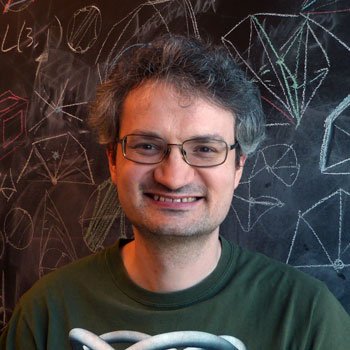
Dr. Henry Segerman is a mathematician and mathematical artist originally from the UK. He holds a Ph.D. in Mathematics from Stanford University and an M.S. in Mathematics from the University of Oxford. He is currently a Professor in the Department of Mathematics at Oklahoma State University and serves as the Associate Editor for the Journal of Mathematics and Art. His research focuses on 3-dimensional geometry, topology, and mathematical visualization. Henry is widely recognized for using 3D printing, virtual reality, and other emerging technologies to make complex mathematical ideas accessible and interactive. He is the author of Visualizing Mathematics with 3D Printing (2016), the first book dedicated to mathematical 3D printing, which explores how physical models can support mathematical understanding. His work has been exhibited internationally, including at the Bridges Conferences. Henry collaborates with both artists and mathematicians and regularly creates educational videos and public talks to engage broader audiences. Through his clear and creative communication of complex concepts, Henry has become a leading figure in mathematical art, outreach, and interdisciplinary collaboration.
Eden X. Redman
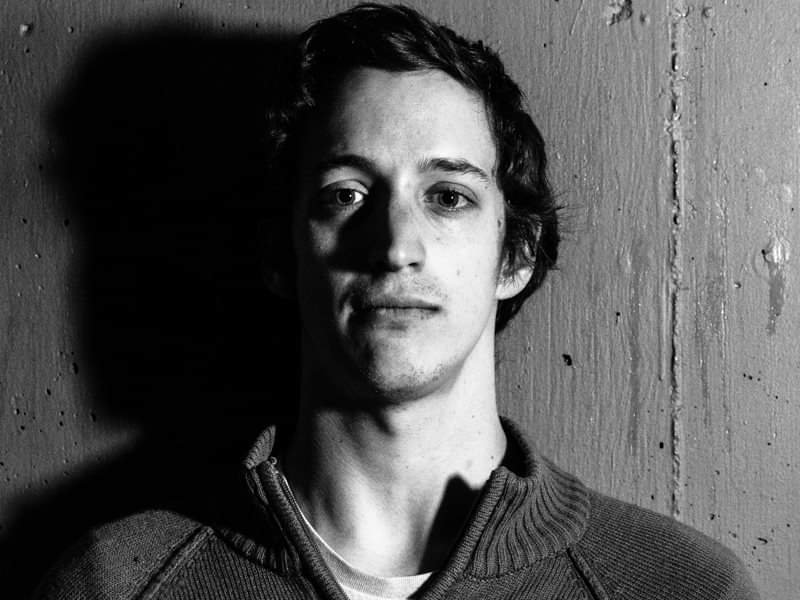
Eden Redman is the CEO and Executive Director of the Network for Applied Technology (NAT), Alberta’s grassroots emerging tech network. He holds a BSc and BA from the University of Alberta and is currently pursuing an MSc in the Integrated Program in Neuroscience at McGill University. His research spans neural interfaces, biosignal processing, neuromodulation, and translational neuroscience. Since 2017, Eden has been building communities at the intersections of emerging technologies and typically siloed disciplines, driven by special interests in computational neuroscience and innovation ecosystem design. He is committed to challenging entrenched assumptions — and to examining and changing the perverse incentive structures that shape our institutions. In his artistic work he attempts to translate complex neuroscience concepts, such as perception, consciousness, and the self, into accessible visual formats. Eden works across media, including painting, sculpture, and digital design, to support science communication and public engagement. NAT, which he founded in 2021, and continues to lead, is a builder-led organization that creates open-source tools, runs educational programming, and fosters interdisciplinary collaboration through community and competition. One of NAT’s flagship programs is a multi-day competition where students and recent graduates design, build, and pitch creative solutions to real-world problems, using emerging technologies. Find out more here. Through the fusion of art and science, he hopes to broaden public understanding of the brain and mind, how individual belief and culture interacts, and how the foundation of a free and open society is a willingness to maintain spaces for dialogue between disciplines and world-views.
Dr. Eva Sánchez Martz

Eva Sánchez Martz is a choreographer, movement researcher, educator, and pianist working at the intersection of dance, psychology, and neuroscience. She holds a PhD in Psychology and Neuroscience from City St George’s, University of London, and has over 20 years of experience across artistic and academic contexts. Her background includes roles as a former member of Cirque du Soleil, founder of ACDN Productions, Associate Head of Dance at the Institute of the Arts Barcelona, and lecturer at Villanueva University in Madrid. Through her company, Martz Contemporary Dance Company, Eva develops research-led projects focused on how movement decisions are made and how cognitive and neural mechanisms influence choreography and dancer training. She collaborates with institutions such as London City University, Universidad Complutense de Madrid, Ballet Nacional de España, and Compañía Nacional de Danza de España. Based in Madrid, Eva is committed to advancing her personal choreographic language while integrating scientific research into movement practice. Her work supports the development of new tools and methods for dance education and performance around the world.
Dr. Theo Schaad

Theo Schaad is a physicist and artist whose work explores the intersection of mathematics, music, and visual art. Originally from Zürich, he spent his career in academia and industry before focusing on mathematical art. After earning a PhD in physics from Harvard University, he contributed to particle physics at SLAC and CERN and later developed seismic sensor technology. Since retiring, he has focused on mathematical art, specializing in tessellations—geometric patterns that cover a surface without gaps or overlaps. He has published papers on six-, seven-, and twelvefold symmetries and exhibited his work at the Bridges Conference on Mathematical Art in Europe and North America, as well as at the 2025 Joint Mathematics Meeting in Seattle. He also contributed a new sevenfold tessellation to the Bielefeld Tiling Encyclopedia. His creative practice is shaped by connections between musical harmony, geometric repetition, and physical laws, inspired in part by Douglas Hofstadter’s Gödel, Escher, Bach. He works primarily with block printing, combining linoleum prints with mathematical tiling to produce interlocking forms in periodic patterns. His approach to colour and composition remains intuitive, exploring how structure and creativity coexist. Based in Seattle, Theo continues to perform as a violinist and helps organize public physics lectures at the University of Washington.
Peter Ayres
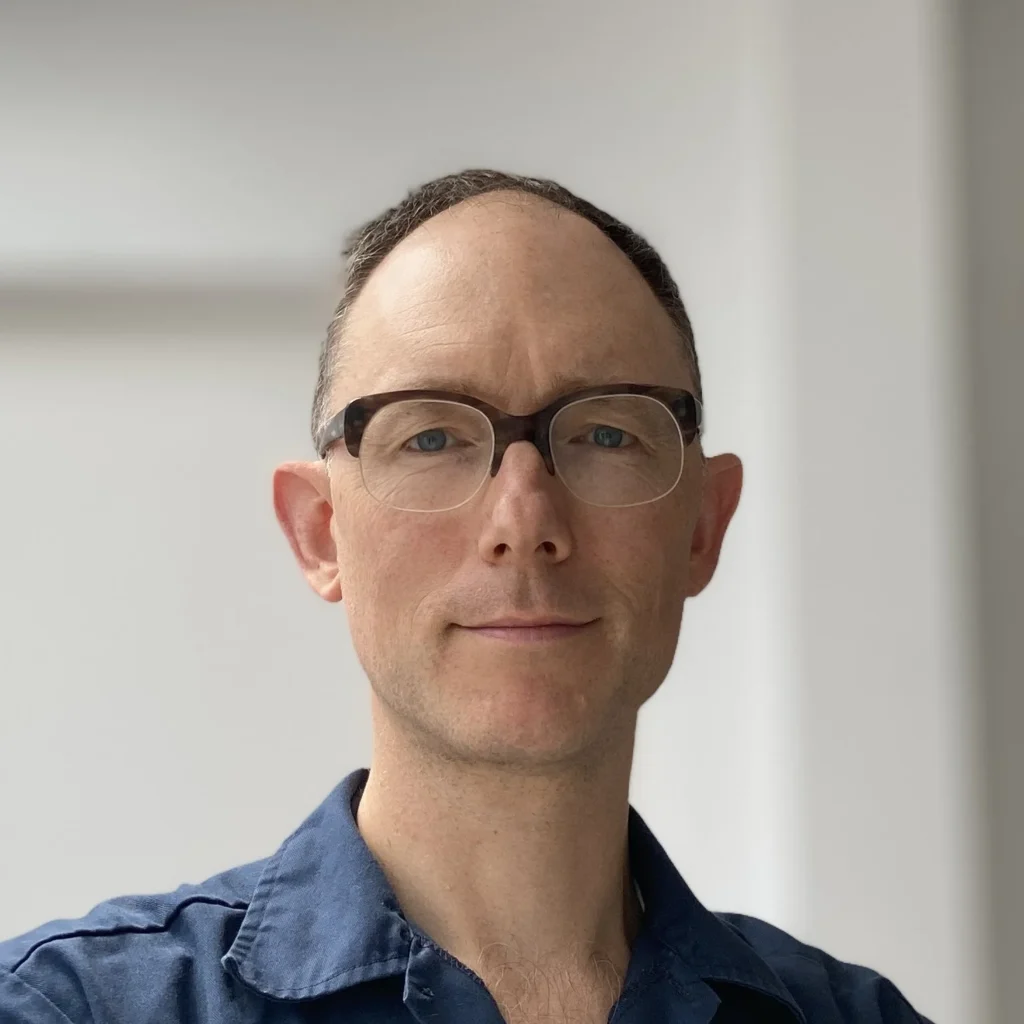
Peter Ayres is a London-based designer, artist and educator with over 25 years of experience working in the UK, US and Japan. He holds a BA in Architecture from Oxford Brookes University and an Advanced Diploma in Architecture from London Metropolitan University. Peter’s work combines hand-crafted quality with mathematical precision. He is known for his folded paper sculptures made from single, unbroken sheets, and for using diagram drawing to explore mental structures and how we perceive the world. He also designs brand identities and logos for a wide range of clients and contributed graphics to the bestselling book Information is Beautiful. In addition, he has designed buildings internationally, using paper in concept models for projects such as the East Beach Café in Littlehampton and the NTU Learning Hub in Singapore. Peter has led workshops for over ten years, including regular drawing sessions for architects and engineers with Drawing At Work. Through his creative practice, he turns ideas into visual pieces that are accessible and meaningful across different fields.