Audrey Rangel Aguirre
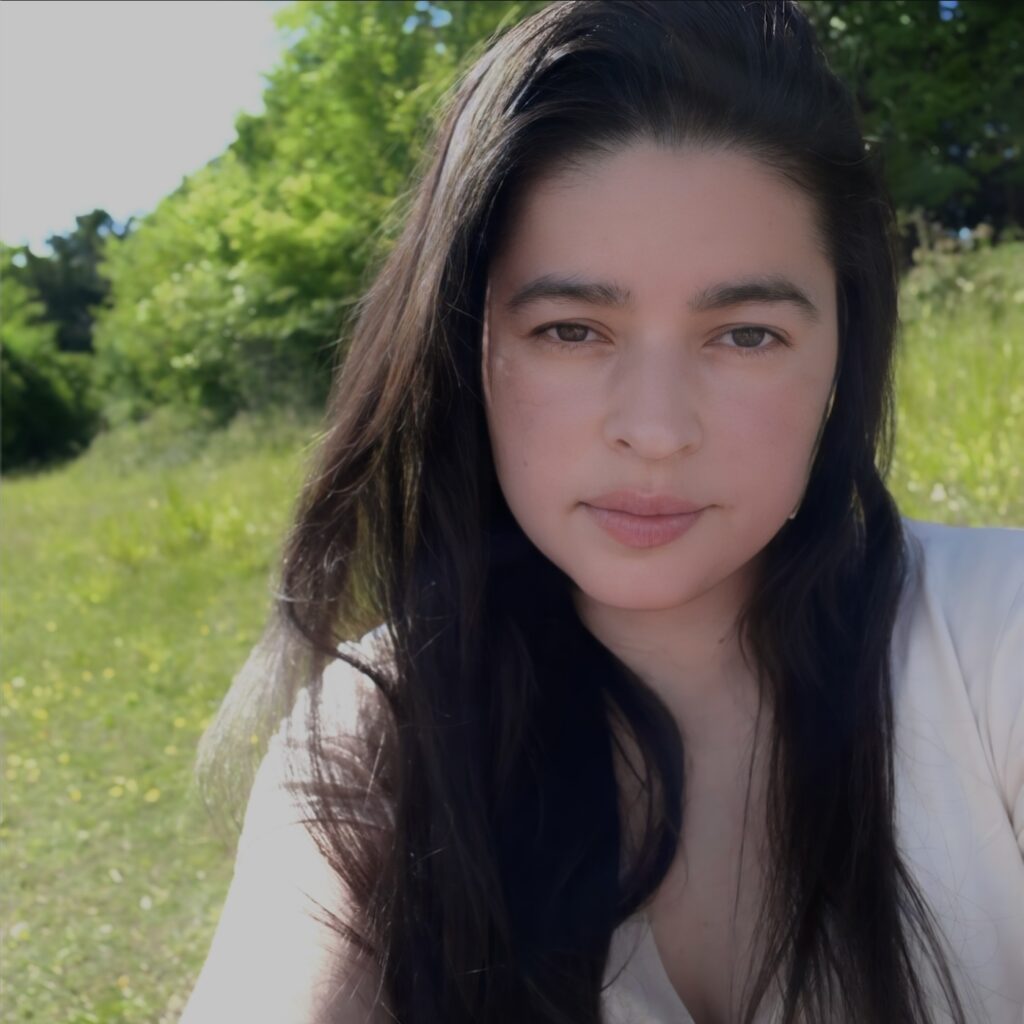
Audrey Rangel Aguirre is an Interdisciplinary Mexican artist based in England, researching at the intersection of art and science, focusing on artistic intuition to create new systems and speculative scenarios that belong to the future of human civilisation. Currently developing the research project Terras Lux, focusing on the relation between energy on microbial microecosystems on soil and the energy on human body. The core and intellectual structure of my project Terras Lux is the energy as electricity produced by microbial ecosystems on soil related with the energy of the human body, I present soil as a natural source of renewable energy that will be the future technology on future systems for human civilisation. The current convergence of art and science may be the key to unlock the development of human consciousness towards the next phase of civilisation. In my research, I allow myself to free artistic intuition to power and enhance scientific research with the aim of the creation of new systems that belong to the future of human civilisation, in which, with the collaboration of other beings like microbes and ecosystems, a new way of living and collaborating between all beings on Earth can be achieved, through reciprocity. I use creative intuition as a tool to create speculative scenarios that may be a possibility for our nearest future as society, and merge it with diverse branches of science as biology, biotechnology, microbiology, energy harvesting technology, physics, philosophy and spirituality. Intuition, reciprocity and caring for others as a way for weaving politics, poetics, and consequences through contemporary art practices.
Carolyn Davison
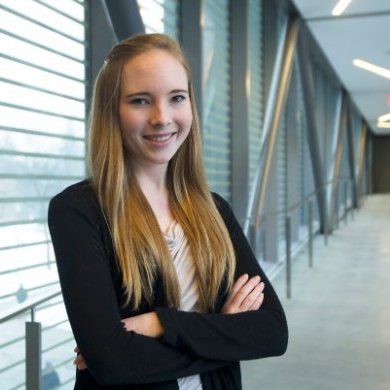
I am a PhD candidate, course instructor, and textile artist. I study age-related changes in the neural representations of information in working memory and embroider pieces related to neuropsychology.
Ruxandra Lipan
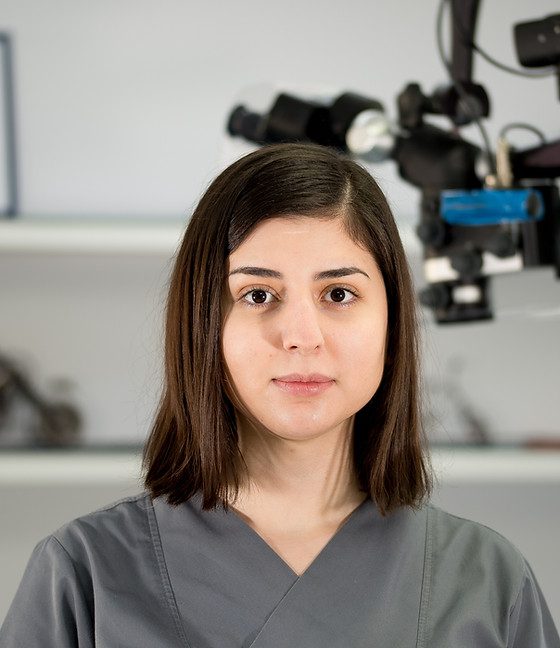
With a background in visual arts and architecture, and currently a full time job as a general dentist, I’m excited to follow my heart and explore the artistic side of my brain.
Sofia Papa
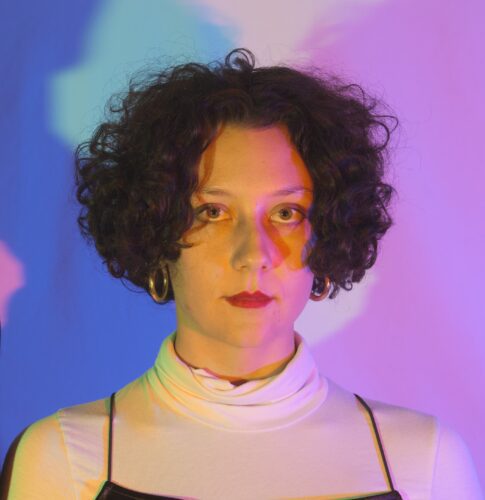
I am Sofia Papa, a researcher in Physics. I am doing my PhD at the Institute of Biorobotics at the Scuola Superiore Sant’Anna in Pisa and I am also a contemporary dancer! My personal research involves explaining some physics concepts with dance and introducing these two seemingly distant worlds. I am working on articles about unifying concepts between physics and dance, and I am working on a dance performance explaining the piezoelectric effect. I am very excited about something like yours, given my personal commitment to it!
José Octavio Contreras Sánchez
My name is José Octavio Contreras Sánchez, I am dedicated to research and dissemination of art, science and technology, as well as management in innovation and transformation from a new circular economy. I have worked in outreach for more than 7 continuous years, supporting and developing prototypes in areas of environmental and basic education, both inside and outside the university. My objectives focus on generating a bond of understanding of knowledge through art, science and technology, seeking to create new learning interactions and break paradigms in new research topics. I have a broad vision in gender equality, personal and humanistic development, and I am dedicated to the contribution of new professionals. Additionally, I have sought to reach a larger population through public outreach events through forums, presentations, talks and workshops, accumulating valuable management experience. My topics of interest include environmental awareness, emerging technologies, virtual reality and innovation.
Gaz Lawrence
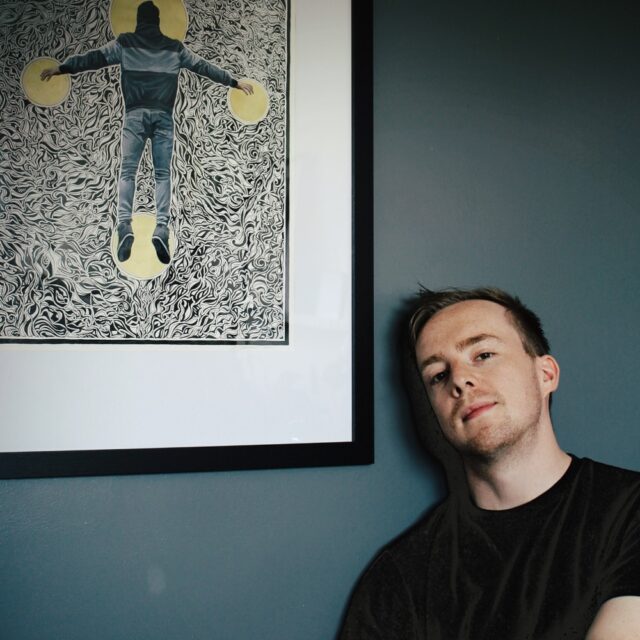
Gaz Lawrence is an interdisciplinary artist and STEAM educator working from Bristol. He is the founder of The MoSAIC (The Museum of Science, the Arts & Interdisciplinary Collaboration – www.themosaic.uk). The MoSAIC is a virtual museum providing learners of all ages and educators with a place to explore how the arts can help communicate science and to demonstrate the power of cross-curricular learning. The MoSAIC’s latest virtual exhibition: ‘The Art of Astrophysics’ is a collaboration with researchers from the University of Oxford and the California Institute of Technology, showing astronomy research from a new perspective using visual art and poetry. Gaz’s artwork uses different media including ink, oil, acrylic, spray paint and digital media to create expressive figurative and abstract artworks that subtly explore the intersection between science, tech and fine art.
Claire T. Honda

Claire Honda is a scientist and artist who is passionate about dance, music, and languages. She is currently completing a PhD in neuroscience at McGill. By measuring brainwaves and using neurostimulation, she aims to understand how neural activity relates to language abilities and how we can help adults to learn languages more easily. Besides her curiosity about languages and the brain, music has always been a central part of her life; her parents are musicians, and she has been playing the violin since the age of four. She is also an avid tap dancer, having performed with the TapCo Youth Ensemble and traveled to tap dance events in the US, France, Spain, Germany, and Sweden. Since 2020, she has had the privilege of being part of the Piece of Mind Collective, with whom she has co-created two shows and performed in Canada and the US. Overall, Claire is passionate about bringing together scientific and artistic endeavours, and about promoting connection between people with diverse backgrounds and perspectives.
Nora Gibson
Gibson is a new media artist and choreographer who facilitates research-creation around the body-mind, selfhood, and conscious experience. She makes immersive/interactive installations, bio-reactive sound, video and light installation, dance, and full dome projection. Gibson earned a BFA in Dance from Tisch, at NYU and an MFA in Intermedia from Concordia University in Montreal. Gibson’s choreography has been presented by New Dance Alliance at Joyce SOHO, Dance Place in Washington DC, Philadelphia Dance Projects, Performance Garage, Kaatsbaan, The Williams Center for the Arts, and the Franklin Institute. Her work has received consistent critical acclaim, heralded by the Philadelphia Inquirer as “the most authoritative work in Philadelphia. . .” Through the integration of new media, Gibson facilitates research-creation around the body-mind, selfhood, and conscious experience through immersive/interactive work, sound installation, bio-reactive video and light installation, and full dome projection. Her work in new media has been presented by MUTEK (MTL), Ars Electronica (AUT), the Satosphere (MTL) the Fels Planetarium (PHL), Contemporary & Digital Art Fair(“CADAF”) (NYC), Lightbox (NYC), Urban Screens Production (AUS), and The Hexagram Network (CA), . Her work has been further supported through an internship with the BIAPT neuroscience lab at McGill University. She teaches dance and new media practices.